
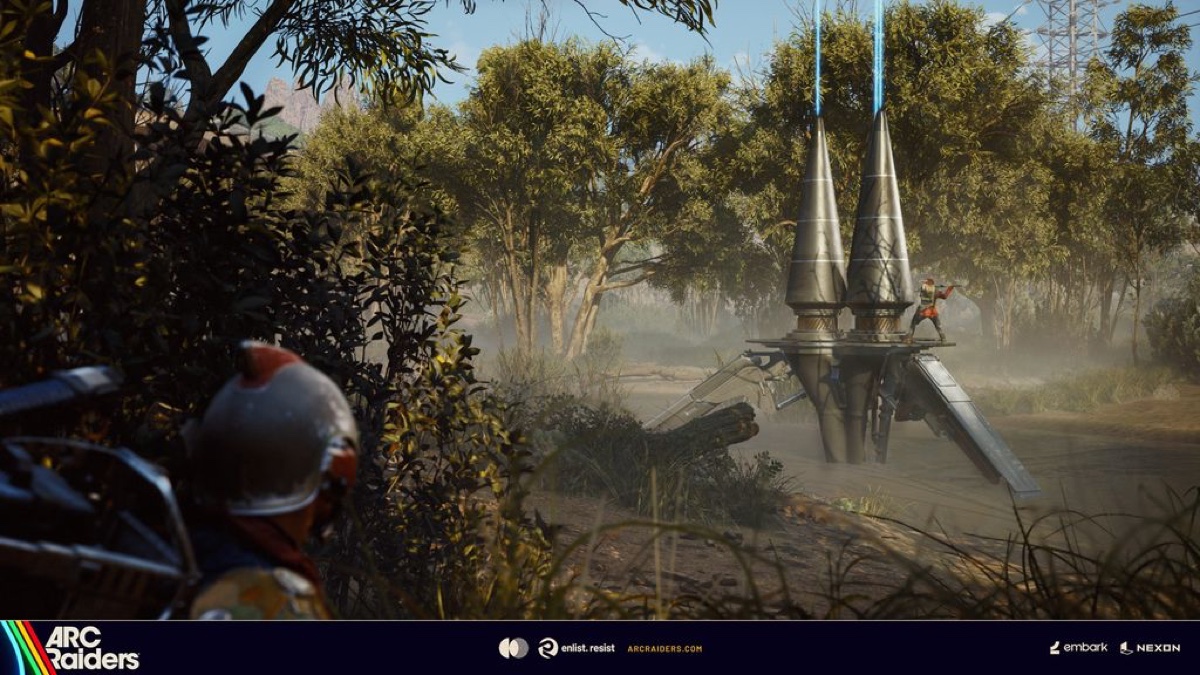
ARC Raiders Flashpoint Deep Dive: New Enemies, New Weapons, and Whether It's Enough to Bring Back Lapsed Raiders
Tomorrow, March 31, the Flashpoint update goes live across PC, PS5, and Xbox Series X|S. Embark Studios has finally pulled back the curtain on every piece of content arriving in their third Escalation update — and after weeks of cryptic teasers and a community growing restless over a five-week content drought, we now have the full picture.
The headline features: a new ARC operation called Close Scrutiny, a terrifying flying enemy called the Vaporizer, two new weapons (the Canto SMG and Dolabra energy shotgun), a deployable Surge Coil, the community-driven High Gain Antenna project, and a Scrappy feeding system that fundamentally changes your companion's utility. There's real substance here.
But the question hovering over every Flashpoint conversation isn't "what's new?" — it's "is it enough?" ARC Raiders has shed roughly 75% of its concurrent player base since the November 2025 all-time peak of 481,966. The game still pulls a healthy 115,000–147,000 daily on Steam, which most titles would envy, but the trend line has been moving in one direction. Flashpoint needs to be more than a good update. It needs to be the update that bends the curve.
Let's break down everything that's coming and whether it hits that mark.
ARC Operations: Close Scrutiny Changes the Extraction Formula
The biggest addition in Flashpoint isn't a weapon or an enemy — it's a structural change to how raids work. ARC Operations are a new category of map condition, and the first one, Close Scrutiny, rewrites the risk-reward equation entirely.
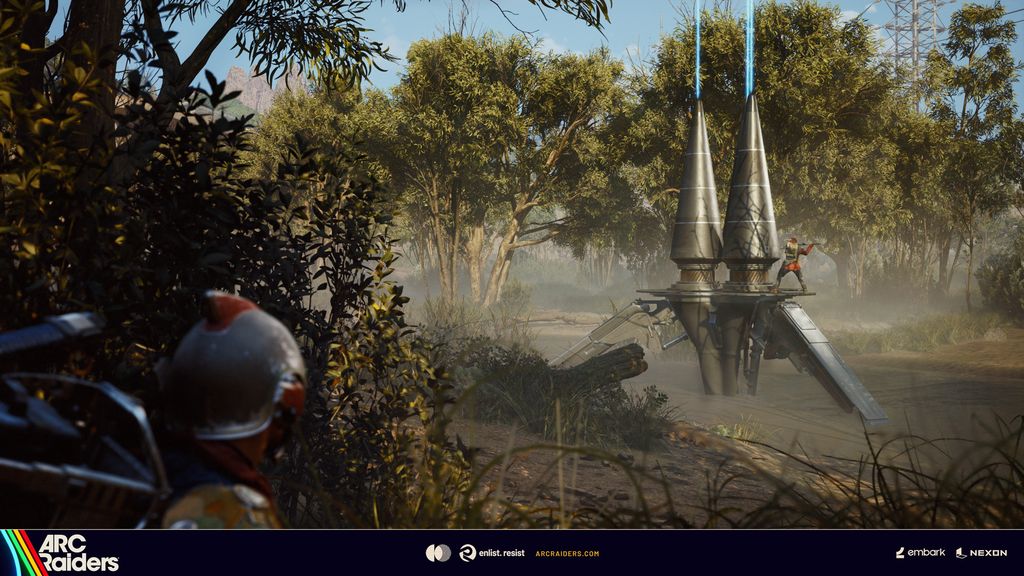
Here's how it works: when Close Scrutiny activates, loot availability across the entire map drops significantly. The good stuff — the gear worth risking your life for — gets concentrated inside the Assessor, a massive unarmed ARC machine that makes controlled landings in the zone. The Assessor itself isn't a combat threat. Everything guarding it is.
This is a fundamentally different proposition than running a standard raid. You're not scavenging and hoping for lucky drops anymore. You're making a deliberate decision to assault a fortified position where every other Raider on the map is headed too. It's a loot piñata surrounded by ARC patrols and desperate players — exactly the kind of high-stakes scenario that extraction shooter veterans crave.
The design is smart because it solves two problems simultaneously. For hardcore players who've been complaining about predictable raid loops, Close Scrutiny introduces genuine decision-making: do you bring your best gear and go for the Assessor, or do you play it safe in a map with reduced loot? For casual players, the operation creates natural drama even if you avoid the Assessor entirely — the map feels different, the stakes shift, and encounters with other players carry more weight when everyone is hungrier.
Whether Close Scrutiny delivers on that promise depends entirely on execution. If the Assessor loot is genuinely worth the risk and the encounters around it create memorable moments, this could be the endgame activity that ARC Raiders has been missing. If the loot isn't compelling enough, it becomes a novelty that veterans try once and ignore.
The Vaporizer: ARC Raiders Finally Gets a Skill-Check Enemy
Every extraction shooter needs enemies that punish bad play and reward mastery. ARC Raiders has been criticized for enemies that, once you learn their patterns, become predictable obstacles rather than genuine threats. The Vaporizer looks like Embark's direct answer to that criticism.
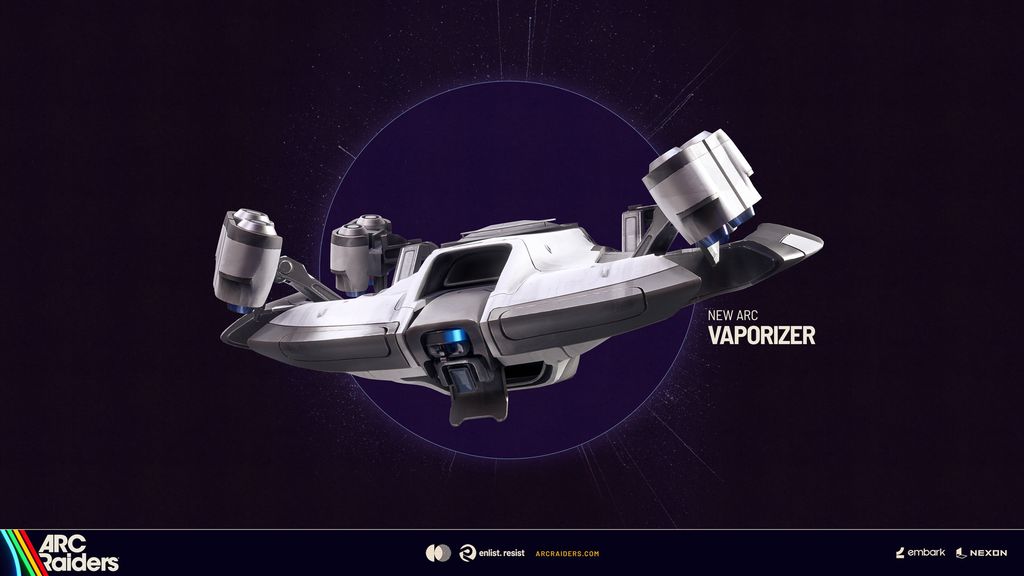
The Vaporizer is a flying ARC unit armed with devastating laser attacks. It patrols the areas surrounding ARC Operations, meaning you'll encounter it precisely when you're already committed to a high-risk play. Embark describes it as having "idiosyncratic attack patterns" — studio-speak for "you can't just strafe and shoot." The community is already buzzing about how the Vaporizer's aerial positioning will force Raiders out of their comfort zones. Cover that works against ground-based ARC units becomes meaningless when the threat is above you.
This is the right design philosophy. The best PvPvE extraction shooters create AI encounters that feel like mini-bosses rather than speed bumps. If the Vaporizer forces you to bring specific loadouts, coordinate with teammates, and genuinely fear dying to PvE rather than just other players, it'll be a major step forward for ARC Raiders' combat identity.
The concern? "Bullet sponge" mechanics. Community sentiment from early discussions shows players are cautiously excited but wary of enemies that are hard purely because of inflated health pools rather than interesting mechanics. Embark's track record with previous Escalation enemies (Headwinds and Shrouded Sky both introduced mechanically distinct threats) suggests the Vaporizer will lean toward pattern-based difficulty, but we won't know until tomorrow.
Shredders Unleashed: Stella Montis's Nightmare Goes Global
Here's a change that will fundamentally alter the feel of multiple maps: Shredders are no longer confined to Stella Montis. These enemies — widely considered the most dangerous PvE threat in the game — now spawn across Blue Gate, Buried City, Spaceport, and Dam Battlegrounds during map conditions.
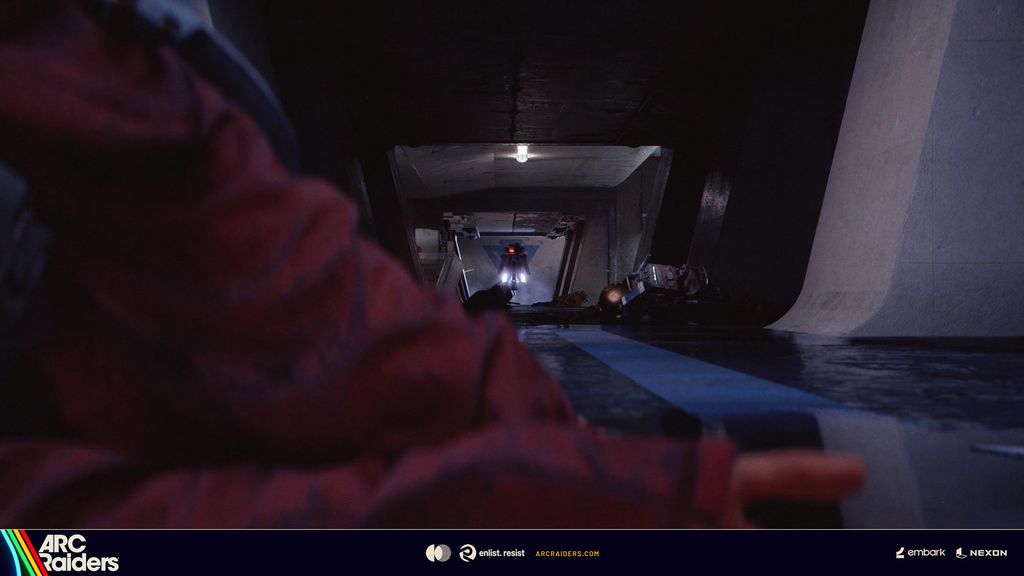
This is the change that's generated the most divided community reaction. Some players are thrilled — Shredders create the kind of "oh no" moments that make extraction shooters memorable, and spreading them across the map pool means more unpredictable raids. Others are frustrated. As one player on the Steam forums put it: "Shredders are the new Arc aren't they?" — expressing concern that Embark is recycling existing enemies rather than creating entirely new threats.
Both sides have a point. Expanding Shredders to new maps is technically content reuse, not new content creation. But it's effective content reuse because Shredders fundamentally change how you approach a map. A Spaceport run with Shredders present is a completely different experience than one without them — different routes become viable, certain extractions become suicide, and the PvP dynamic shifts because everyone is running from the same threat.
The real question is whether the community will accept Shredder expansion as a meaningful addition alongside the genuinely new Vaporizer and Assessor content, or whether it'll be seen as padding. In a vacuum, it's a solid change. In the context of a community already frustrated with content velocity, it's a tougher sell.
New Arsenal: Canto, Dolabra, and the Surge Coil
Flashpoint brings two new weapons and a deployable that could meaningfully shift the combat meta.
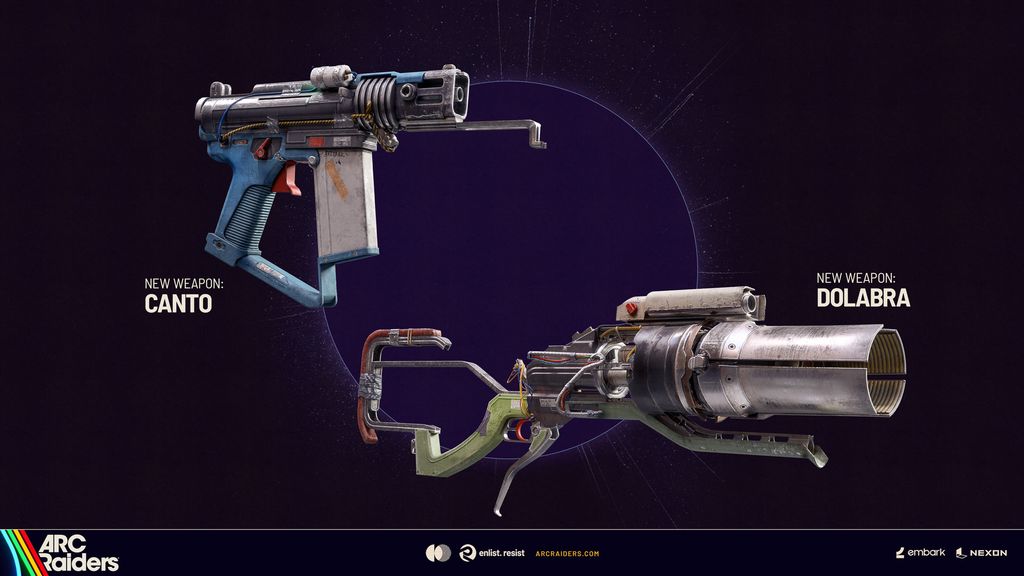
The Canto is a medium-ammo submachine gun built for close-quarters ARC engagements. ARC Raiders has needed more viable close-range options beyond shotguns, and the Canto fills that gap. Medium ammo is already one of the most commonly carried ammo types, which means the Canto slots into existing loadouts without forcing you to rethink your entire inventory — a smart quality-of-life consideration.
The Dolabra is where things get interesting. This energy shotgun features a variable focus mechanic: you can fire a wide burst for crowd control or funnel the electricity into a concentrated beam for armor penetration. That dual-mode functionality is new for ARC Raiders and opens up weapon skill expression that the game has been lacking. A skilled Dolabra player who can seamlessly switch between wide and focused fire mid-combat will have a meaningful advantage over someone who just holds down the trigger. Embark explicitly notes the Dolabra is best obtained from Close Scrutiny operations, creating a direct reward loop between the new game mode and the new weapon.
The Surge Coil is a deployable device that periodically electrifies its surroundings, shocking anything that enters its radius. It's a defensive tool that creates temporary safe zones — useful for holding positions during extractions, guarding flanks while looting the Assessor, or denying chokepoints to other Raiders. Area-denial deployables are a staple of tactical shooters, and ARC Raiders has been light on tools that let you control space rather than just contest it.
Together, these three additions push the meta toward more aggressive, close-range play. The message is clear: Embark wants Raiders fighting in and around the Assessor, not sniping from the perimeter.
Scrappy Gets Fed: A Companion System That Finally Matters
Since launch, Scrappy — your loyal companion rooster — has been... fine. It collects loot. It's cute. It doesn't do much else. The Flashpoint update introduces a feeding system that transforms Scrappy from a novelty into a genuine strategic asset.
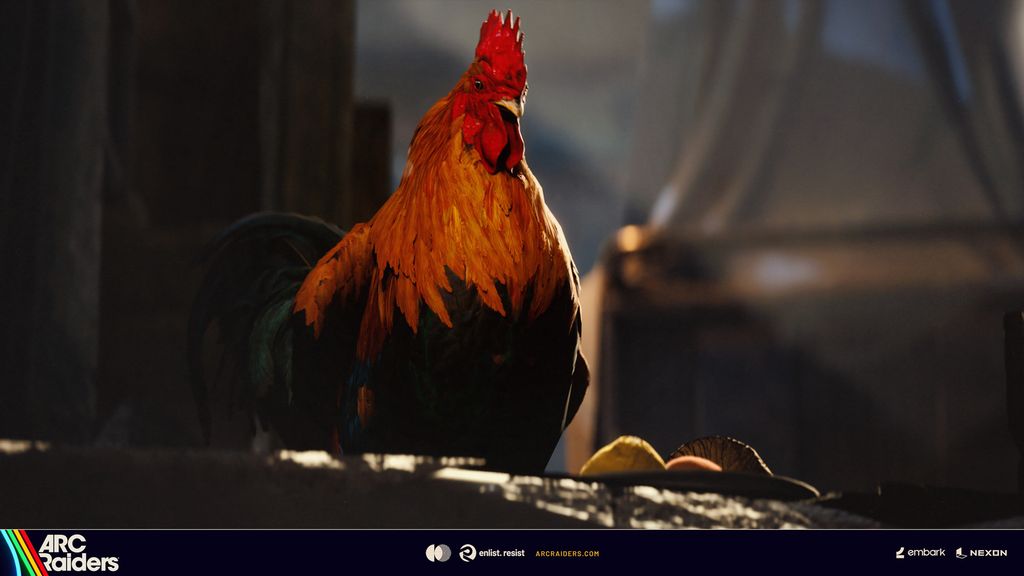
The mechanic works like this: you feed Scrappy specific items, and in return, Scrappy increases the types and rarity of loot it collects for you. Feed it what you need, and it'll prioritize finding more of it. The system essentially lets you soft-target your loot drops, reducing the randomness that's been a consistent pain point for players grinding specific materials.
This is one of those changes that sounds small but could have outsized impact on daily play. Extraction shooters live and die by their loot loops. If players feel like they're making progress toward specific goals — crafting a weapon, completing a project, upgrading gear — they keep logging in. If every raid feels like a slot machine pull with no agency over outcomes, fatigue sets in fast. The Scrappy feeding system adds a layer of player-directed progression that ARC Raiders has needed.
Embark also mentions Scrappy will drop "more valuable items" as long as you continue feeding it, creating a maintenance loop. Keep your rooster happy, get better drops. Ignore it, and you're back to random scavenging. It's simple, but it gives players a reason to engage with the companion system beyond just existing.
Crafting QoL: Small Changes, Big Impact
The crafting system gets a streamlined overhaul that addresses one of the community's longest-running complaints: tab-switching hell. Previously, crafting an item with missing materials meant jumping between multiple menus to recycle, refine, or purchase what you needed. Flashpoint consolidates all of that into a single window.
When you're missing materials, you'll now see a list of every available source — recycle this, refine that, or buy it outright — all without leaving the crafting screen. It's the kind of quality-of-life improvement that doesn't make trailers but makes the daily experience of playing the game dramatically less annoying.
For lapsed players considering coming back, QoL improvements like this matter more than they get credit for. Nobody quits a game because of one bad UI. But bad UI contributes to the cumulative friction that makes logging in feel like work rather than fun. Removing friction lowers the barrier to return.
The High Gain Antenna: Community Projects Get a Narrative Purpose
Flashpoint introduces the High Gain Antenna as the new community project — a server-wide goal where players collectively gather resources to build a satellite monitoring system. The narrative framing comes from Celeste and Shani needing to track ARC's "repeating pulses" that are growing too dense to monitor with current equipment. It's the same community project framework from Headwinds and Shrouded Sky, but with tighter integration into the Flashpoint storyline.
Community projects are Embark's answer to the "why should I log in today?" problem. They create short-term goals with exclusive rewards, social pressure to contribute, and a sense of collective progress. The Stella Montis event was completed faster than Embark expected — design director Virgil Watkins acknowledged the "huge influx of players" caught the team off guard and that they're reconsidering "how they're paced."
If the High Gain Antenna project is calibrated better — challenging enough to last the update cycle but achievable enough to feel rewarding — it could be the engagement backbone that keeps daily player counts healthy between major content drops.
The Hard Question: Is Flashpoint Enough?
Here's where we get honest.
Flashpoint is a good update. Probably the most substantial Escalation drop yet. Close Scrutiny introduces a genuinely new way to play. The Vaporizer and Shredder expansion add meaningful PvE threats. The Canto and Dolabra expand the weapon sandbox. Scrappy feeding gives players agency over their loot. Crafting QoL removes friction. The community project gives everyone a shared goal.
On paper, this is everything you'd want from a content update. But "good" isn't the same as "enough," and the math working against Embark is brutal.
The Retention Reality
ARC Raiders peaked at 481,966 concurrent players on Steam in mid-November 2025, roughly two weeks after the October 30 launch. By January, Headwinds kept things healthy around 410,000. By February, the number dropped to roughly 290,000. Today, the game sits at a 30-day average of roughly 120,000 concurrent with daily peaks around 147,000 — still strong by any measure, but a clear downward slope.
For context: 120,000 concurrent is still massive. It beats Marathon, Battlefield 6, and Black Ops 7 on Steam. The game has sold over 14 million copies worldwide. By any reasonable standard, ARC Raiders is a hit.
But live-service games aren't measured by absolute numbers. They're measured by trajectory. And the trajectory says that roughly 360,000 players who were there at peak have moved on. Some will never return — they got their money's worth and they're done. But a meaningful chunk are lapsed players who drifted away during the five-week gap between Shrouded Sky and Flashpoint, and those are the players Embark needs to win back.
What Lapsed Players Actually Want
Based on community feedback across Reddit, Steam forums, and the PC Gamer interview with design director Virgil Watkins, the complaints from lapsed players cluster around three themes:
1. Endgame content. Once you've hit the progression ceiling, raids start feeling repetitive. Watkins acknowledged this directly: players "reaching the end of our content" are a "top focus" and "we want more for them." Close Scrutiny is a step in the right direction, but one new operation isn't an endgame system — it's a single activity that'll get optimized within a week.
2. The PvE vs. PvP debate. Watkins noted a "strong appetite" for PvE content that was "somewhat surprising" to the studio. A significant portion of the player base wants dedicated PvE options. Embark's official position is that "the balance between PvE and PvP is very intentional" and they support "that range of playstyles" — but they haven't committed to a dedicated PvE mode. For players who bounce off extraction shooters specifically because of PvP anxiety, no amount of new ARC enemies will bring them back without a safe space to enjoy them.
3. Content velocity. Four major updates across the entire Escalation period — Headwinds, Shrouded Sky, Flashpoint, and the upcoming Riven Tides — with nothing but balance patches in between. In a genre where competitors ship weekly events and rotating playlists, monthly drops with multi-week silences create windows for player attention to drift elsewhere.
The Mushroom Wars Signal
One of the most telling signs of ARC Raiders' community health is what's happening organically between updates. The Mushroom Wars — emergent PvPvE skirmishes over rare organic resources needed for Expedition projects — have become a genuine community phenomenon. Players are fighting over mushroom spawns with the intensity usually reserved for boss loot in MMOs.
This is both encouraging and cautionary. Encouraging because it means the core PvPvE loop is fundamentally compelling — players are creating their own content around the game's systems. Cautionary because Embark didn't design for Mushroom Wars. They happened despite the content drought, not because of a planned feature. When your community is generating more engagement from an emergent mushroom economy than from your planned content drops, that's a signal to pay attention to what players actually find fun and design directly toward it.
The Flashpoint update seems to lean into this by making resources harder to extract and concentrating them around the Assessor. If the same organic competitive loops that spawned Mushroom Wars emerge around Close Scrutiny, Embark may have accidentally stumbled into their engagement formula.
Cosmetics and the Cash Shop
Alongside the gameplay content, Flashpoint brings a wave of cosmetics — and Embark is clearly investing in making Raiders look as good as they play.
The Wasp Hunter Set
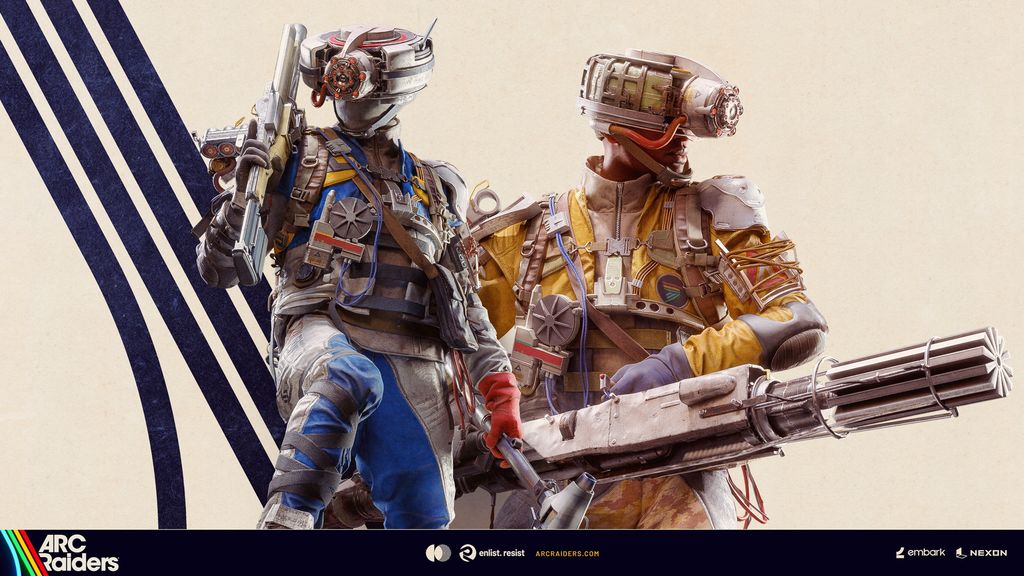
The second cosmetic bundle, the Wasp Hunter Set, is now available to purchase on all platforms. The concept is gnarly: your Raider tears ARC machines limb from limb and harvests the parts for a mechanistic outfit. The set comes with four unique colorways, the Diver Backpack (White), a new Scrappy Helmet, the Thruster Hammer Raider Tool, and 2,400 Raider Tokens bundled in.
April's Cosmetic Pipeline
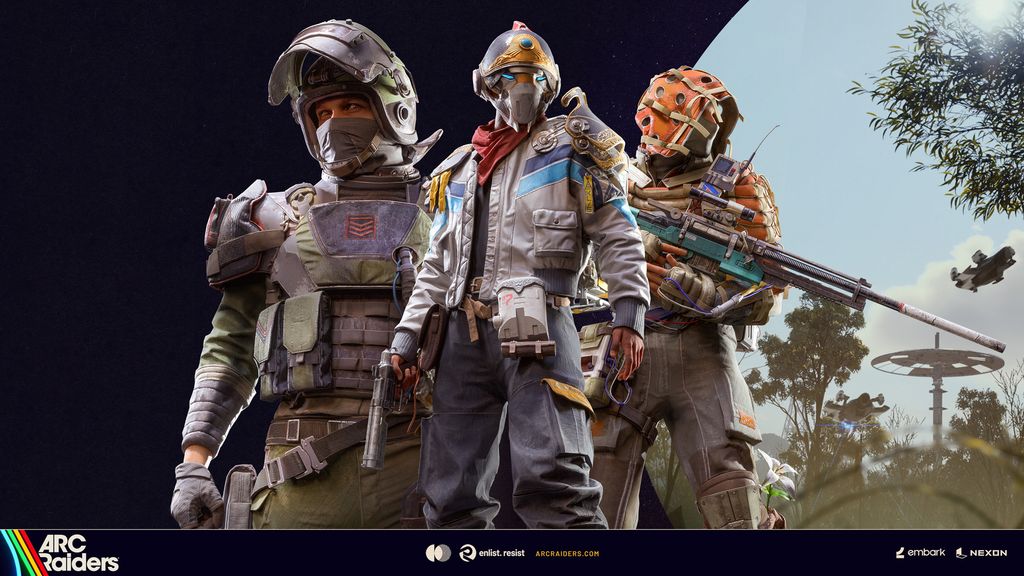
Embark isn't stopping there. Three new outfit sets will drop periodically throughout April:
- The Brigade Set pulls the resolve of a Roman centurion into the present day with a stylish bomber jacket, kerchief, and piercing blue irises. It's the "I came here to command, not to hide" energy.
- The Vanguard Set gets you ready for a riot — whether that's swarms of Ticks or unwelcome Raiders. Think tactical, think aggressive, think first-through-the-door.
- The Nascosto Set is for the ghosts. With a ghillie-style hood and shoulder pads, the modus operandi is shoot... then shoot off. If you're the type who extracts without anyone knowing you were there, this is your skin.
Cosmetics are worth mentioning because they're part of the retention equation. Players who invest in cosmetics are more likely to keep playing — it's basic sunk-cost psychology. The steady drip of themed outfits gives fashion-conscious raiders a reason to engage with the store, and the variety here (centurion, riot gear, stealth ghillie) suggests Embark is paying attention to how the community actually plays.
Strong Update, Unresolved Question
Flashpoint is the best Escalation update yet. Close Scrutiny introduces genuine strategic variety to the extraction loop. The Vaporizer forces loadout rethinking. The QoL changes and Scrappy feeding system reduce friction that was driving session-to-session frustration. The community project gives short-term goals beyond the core loop.
None of that answers the harder question: can ARC Raiders hold 14 million copies' worth of players on a monthly update cadence? The game has shed roughly 75% of its concurrent peak since November. Flashpoint will slow that decline — Close Scrutiny alone is enough to pull some lapsed raiders back in. But one strong update doesn't fix a pacing problem. Embark needs Riven Tides to arrive before the next content drought empties the servers again, and they need mid-cycle events filling the gaps between major drops.
The foundation is there. Fourteen million copies sold. A core loop that generates emergent gameplay. A community frustrated precisely because they want the game to succeed. What's missing is velocity.
Sources
- ARC Raiders Official: Flashpoint Content Update
- ARC Raiders Flashpoint Trailer (YouTube)
- Game Rant: ARC Raiders Reveals All New Content Coming in Flashpoint
- Pocket Tactics: Design Director Interview on Flashpoint and PvE Appetite
- GamesRadar: Lead Dev on Players Reaching End of Content
- PC Gamer: Players React to Flashpoint Direction
- FRVR: ARC Raiders Hits 14 Million Copies Sold
- Beebom: ARC Raiders Player Count March 2026
- Insider Gaming: Flashpoint Release Date & All Content Explained
- AltChar: Flashpoint Update Details

Founder of GGS Blog and Site Reliability Engineer at Box. I write about gaming, AI in gaming, and game development with a technical lens — 10+ years in software engineering, 20+ years as a gamer. My work focuses on what the tech actually means for players.
Never miss a post
Subscribe to the GGS Blog newsletter for gaming news, tech insights, and AI in the game industry — delivered straight to your inbox.
Free. No spam. Unsubscribe in one click.
Comments
What to Read Next
Continue exploring our coverage of gaming, technology, and AI.
 Gaming
GTA 6 Is $80. Here's What Rockstar Still Hasn't Told You.
Rockstar confirmed GTA 6 pricing at $79.99 Standard and $99.99 Ultimate. The silence around PC, regional pricing, and GTA Online structure tells a bigger story than the price tag. Here's how to think about the $80 ask.
 Gaming
GTA 6's Cover Art Is Beautiful. June 25 Is About Something Else.
Rockstar revealed the official GTA 6 cover art on June 18, and it's a confident piece of franchise mythology. But pre-orders opening June 25 carry a question bigger than bonus content: is this the moment gaming crosses the $100 line?
 Gaming
I Hadn't Touched Spider-Man in Years, Then Spider-Man 2 Yanked Me Off the Roof
I came back to web-swinging after a long break, expecting to bounce off it. Instead I lost a whole weekend gliding over Marvel's New York and grinning like an idiot.