
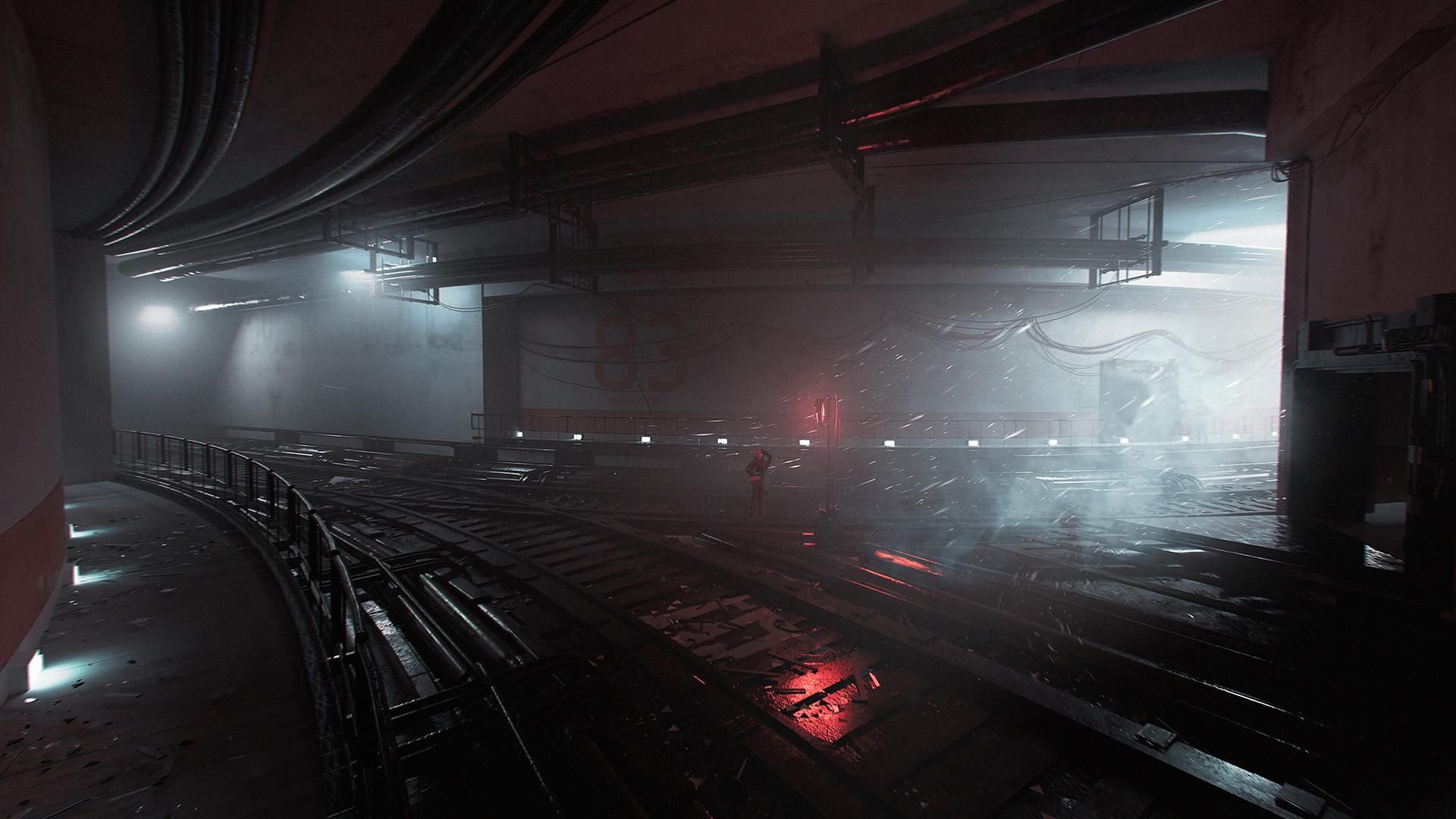
Arc Raiders vs Marathon: Which Extraction Shooter Deserves Your Time in 2026?
The Extraction Shooter War Just Got Real
Two studios. Two radically different visions of the same genre. One has already proven itself as the biggest mainstream extraction shooter success story in gaming history. The other carries the pedigree of the studio that built Halo and Destiny, launching in just days with something to prove.
Arc Raiders, developed by Embark Studios, dropped in October 2025 and has since sold over 12 million copies worldwide, won Best Multiplayer Game at The Game Awards 2025, and built a player base that regularly peaks near 500,000 concurrent users on Steam. Marathon, Bungie's long-awaited return to the franchise that started it all, releases on March 5, 2026, following a Server Slam beta that drew 143,000 concurrent Steam players in its first day.
Both are extraction shooters. Both want your time, your attention, and your money. But they could not be more different in how they approach the genre.

The Core Split: Casual Survival vs Competitive Lethality
The most fundamental difference between these two games comes down to a single question: how fast do you die?
Arc Raiders uses a third-person perspective with a relatively high time-to-kill. Firefights are drawn-out affairs where positioning, cover usage, and gadget deployment matter as much as raw aim. Getting shot does not mean instant death -- it means you have a window to react, reposition, and fight back. This is by design. Embark Studios built Arc Raiders to be the extraction shooter for people who thought the genre was too punishing, and it worked.
Marathon is the opposite. First-person, low time-to-kill, Bungie gunplay. Encounters are fast and lethal. You can be downed before you register where the shot came from. If Arc Raiders feels like a survival adventure with PvP tension, Marathon feels like a competitive arena shooter that happens to have loot. The DNA of Halo and Destiny is all over its combat -- every weapon has weight, every trigger pull feels deliberate, and the audio design makes every gun sound like it means business.
PC Gamer's Morgan Park captured the adjustment problem perfectly when he asked whether Marathon's time-to-kill was genuinely too fast, or whether he had simply become "too Arc Raiders-pilled" to appreciate what Marathon was going for. The answer, for most players, depends entirely on what they want from the genre.
Atmosphere: Living World vs Mechanical Arena
This is where Arc Raiders pulls away from Marathon in a way that numbers and mechanics cannot fully capture.
Arc Raiders creates genuine immersion. Its post-apocalyptic Earth -- overrun by hostile ARC robots -- feels like a place that exists whether or not you are playing. The sound design is exceptional. Returning to your underground base after a successful extraction, hearing NPCs chatter, seeing other players prep for their own runs -- it creates a sensation that few multiplayer games achieve. As Game Rant put it, "Its world doesn't feel like a game so much as it feels like an actual, tangible reality completely separate from my own."
Even death feels meaningful in Arc Raiders. When you get killed, it rarely feels random. You were outplayed, outmaneuvered, or overwhelmed by a world that did not care whether you were ready.
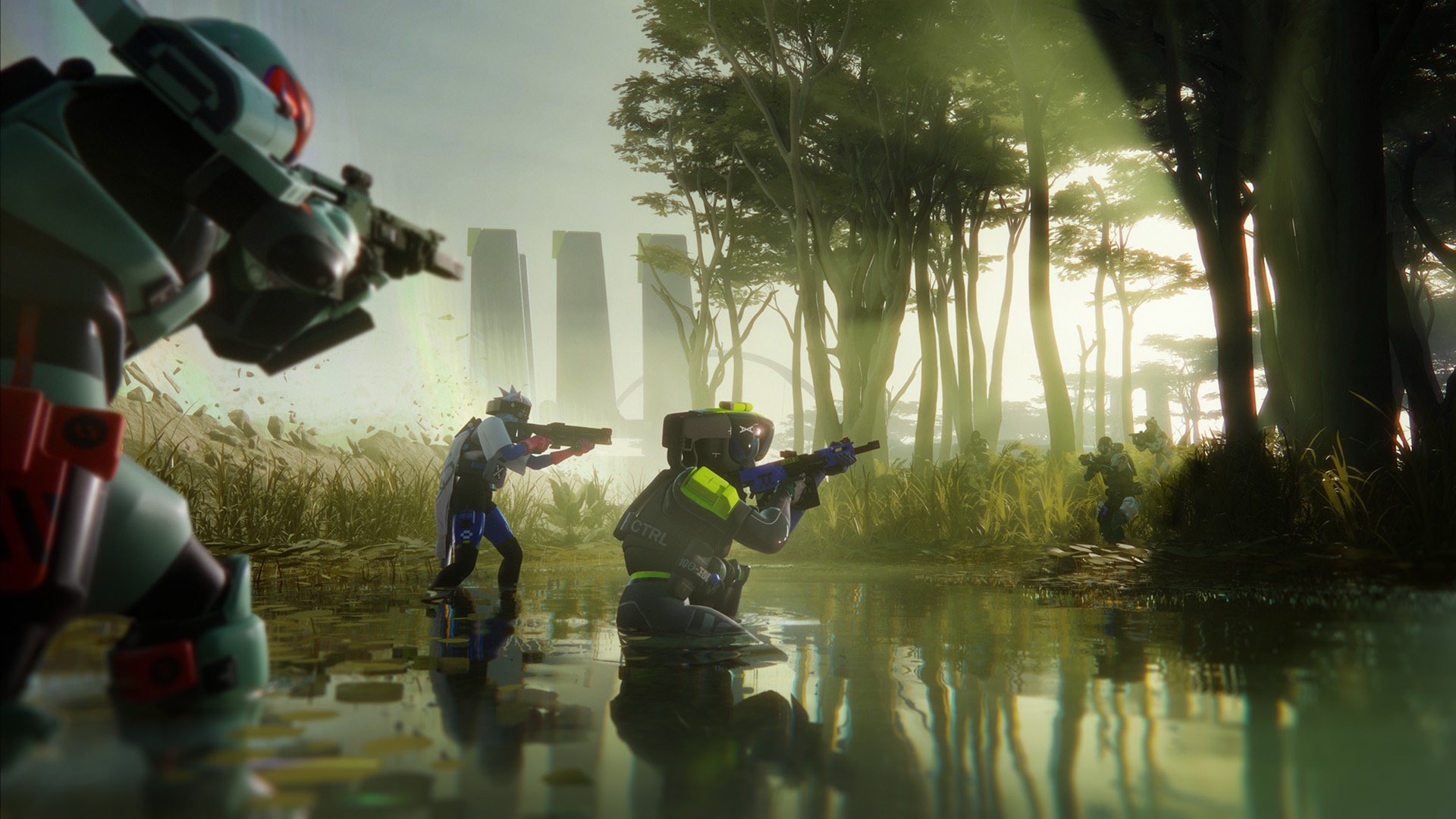
Marathon takes the opposite approach. Its world is a neon-drenched sci-fi colony on Tau Ceti IV, and it looks stunning -- the colorful, futuristic art style is immediately striking, and every environment is dripping with visual personality. But multiple reviewers noted that the world feels more like a stage for mechanics than a place you inhabit. Loading into Marathon, as one critic noted, presents "a bunch of systems at work. Loadouts, UI panels, menus, and a bunch of boxy, bright geometry."
That is not necessarily a flaw. Competitive games do not need atmospheric immersion -- Counter-Strike never had it and nobody cares. But for players coming from Arc Raiders or Tarkov expecting that "I'm trespassing in a dangerous world" feeling, Marathon might feel hollow.
Gunplay: Where Bungie Still Reigns
If atmosphere is Arc Raiders' trump card, gunplay is Marathon's. And it is not close.
Bungie has spent over two decades perfecting how a gun should feel in a video game. That expertise shows in every weapon across Marathon's 28-gun roster spanning eight categories. Shotguns have devastating close-range punch. Assault rifles tear through the air with aggressive, percussive audio. Even the sci-fi energy weapons have a digital menace to their sound design that makes pulling the trigger satisfying on a primal level.
Kotaku's Zack Zwiezen, reviewing the Server Slam, highlighted the weapons as a standout: "assault rifles rip apart the air with aggressive blasts while laser-y pistols sound digital and mean." The consensus across reviews is clear -- Marathon's shooting feels powerful, and being shot at creates genuine tension.
Arc Raiders' gunplay, by contrast, is its weakest element. Multiple outlets have described it as "casual and clunky compared to other shooters," which is a surprising criticism given that Embark Studios also developed The Finals, a game praised for its combat feel. The third-person perspective, combined with higher time-to-kill and less responsive weapon feedback, makes Arc Raiders' combat functional but unremarkable. You play Arc Raiders for the world, the atmosphere, and the loop -- not for the moment-to-moment satisfaction of landing shots.
Progression and Build Depth
Both games offer progression systems, but they serve different purposes.
Marathon leans hard into buildcrafting. Faction reputation unlocks new gear, implant systems modify how your Runner Shell behaves, and weapon mods can fundamentally change your loadout's identity. The depth is real -- this is a game where theorycrafting optimal builds will become its own meta-game within weeks of launch. For players who loved min-maxing in Destiny 2 or Path of Exile, Marathon's systems will feel familiar and rewarding.
Arc Raiders keeps things grounded. Progression revolves around crafting and incremental skill upgrades. You find materials, build better gear, unlock new perks -- but the systems refine your performance rather than redefine your playstyle. There are no ability-based character classes. Every player operates on the same foundational toolkit, differentiated by equipment and skill investment rather than character powers.
This distinction matters more than it might seem. Marathon's deeper build systems reward time investment and knowledge, creating a widening gap between experienced and new players. Arc Raiders' flatter progression keeps the playing field more level, which is a major reason why casual players gravitate toward it.
The Matchmaking Question
How each game handles player skill differences tells you everything about their target audience.
Arc Raiders uses aggression-based matchmaking that separates players by playstyle rather than pure skill rating. Aggressive PvP-focused players get lobbied together, while more cautious, PvE-oriented players find themselves in calmer sessions. This is brilliant design for mainstream appeal -- it means that a new player who wants to explore and fight robots is unlikely to repeatedly encounter a squad of geared-up PvP hunters.
Marathon uses no skill-based matchmaking at all. Every player is thrown into the same pool. A day-one newcomer can load into a session and immediately face someone with hundreds of hours of experience and optimized gear. This is the Tarkov approach -- brutal, uncompromising, and deliberately exclusionary. Marathon is not trying to be fair. It is trying to be dangerous.
Technical Performance
The technical gap between the two games is worth noting.
Marathon runs on 60Hz servers with responsive hit registration and smooth netcode. When you shoot someone, the feedback is instant and reliable. This is critical for a game with low time-to-kill -- if deaths feel laggy or inconsistent, the entire experience falls apart. Bungie has invested heavily in server infrastructure, and it shows.
Arc Raiders operates at 20Hz tick rate, which creates occasional desync issues during intense PvP encounters. Shots that should connect sometimes do not. Movements that looked clean on your screen were not clean on the server. For a game focused on PvE atmosphere and slower combat, 20Hz is manageable. But for dedicated PvP players, the inconsistency is a real frustration -- and one of the top community complaints heading into 2026.
The Cheating Problem
Marathon implements aggressive anti-cheat measures: permanent bans for confirmed cheaters, dedicated servers, a "Fog of War" system that limits information available to potential cheaters, and sophisticated player movement tracking. Bungie learned hard lessons from Destiny 2's cheating problems and appears to be taking no chances.
Arc Raiders has struggled on this front. The game relies on temporary bans that do not effectively deter repeat offenders. Community reports of wall clipping, item spawning, and exploit abuse persist. For a game built on the tension of risking your loot, knowing that some deaths came from cheaters rather than skill erodes trust in the entire loop.
Price and Accessibility
Arc Raiders launched at full price and has sold 12 million copies at roughly $40, proving that the extraction genre can achieve mainstream commercial success when the barriers to entry are lowered.
Marathon launches at $40 for the Standard Edition with Deluxe options available. It supports full cross-play and cross-save across PS5, Xbox Series X|S, and Steam from day one. The lower entry price compared to most AAA launches is a smart move -- it reduces the risk for curious players who are not sure if a competitive extraction shooter is for them.
Both games are available on all major platforms with cross-play support.
Who Should Play What?
This is not a situation where one game is objectively better. These are two games that happen to share a genre label while targeting completely different players.
Play Arc Raiders if you want:
- A welcoming, atmospheric extraction experience
- PvE-focused gameplay with optional PvP tension
- A world that feels alive and immersive
- Forgiving combat that rewards strategy over reflexes
- Active content updates with a clear 2026 roadmap (Shrouded Sky in February, Flashpoint in March, Riven Tides with a new map in April)
Play Marathon if you want:
- The best gunplay in the extraction shooter genre
- Deep buildcrafting and competitive progression
- Fast, lethal PvP encounters that reward mechanical skill
- Bungie's signature weapon feel and audio design
- A competitive scene that will likely develop quickly after launch
Play both if you want the full spectrum of what extraction shooters can be in 2026. They complement each other surprisingly well -- Arc Raiders for the evenings when you want to explore and decompress, Marathon for the sessions when you want your hands shaking after a clutch extraction.
The Bigger Picture
The fact that two major extraction shooters can coexist with such different identities is a sign of the genre's maturity. Two years ago, extraction shooters were a niche dominated by Escape From Tarkov's hardcore audience. Arc Raiders proved the genre could go mainstream. Marathon is proving it can go competitive without copying Tarkov's homework.
The real winner here is the player. Whether you want your extraction shooter relaxed or ruthless, atmospheric or mechanical, third-person or first-person -- you now have a genuine choice. And with Arc Raiders' 2026 roadmap delivering monthly content updates and Marathon launching with Bungie's full live-service infrastructure behind it, both games are positioned to evolve significantly throughout the year.
The extraction shooter war is not about which game wins. It is about which version of the genre speaks to you.
Sources
- Beebom -- Marathon vs Arc Raiders: Similarities, Differences and Which Extraction Shooter Should You Play?
- Game Rant -- ARC Raiders' Biggest Win is Marathon's Biggest Loss
- FandomWire -- Marathon Does One Thing Better Than ARC Raiders
- PC Gamer -- Is Marathon's Time-to-Kill Too Fast?
- Kotaku -- Marathon Impressions: Open Beta Looks Great, But Is It Good?
- NotebookCheck -- Marathon Server Slam Beta Hits 143,000 Steam Players
- ARC Raiders Official 2026 Roadmap
- Bungie -- Marathon Releases March 5, 2026

Founder of GGS Blog and Site Reliability Engineer at Box. I write about gaming, AI in gaming, and game development with a technical lens — 10+ years in software engineering, 20+ years as a gamer. My work focuses on what the tech actually means for players.
Never miss a post
Subscribe to the GGS Blog newsletter for gaming news, tech insights, and AI in the game industry — delivered straight to your inbox.
Free. No spam. Unsubscribe in one click.
Comments
What to Read Next
Continue exploring our coverage of gaming, technology, and AI.
 Gaming
GTA 6 Is $80. Here's What Rockstar Still Hasn't Told You.
Rockstar confirmed GTA 6 pricing at $79.99 Standard and $99.99 Ultimate. The silence around PC, regional pricing, and GTA Online structure tells a bigger story than the price tag. Here's how to think about the $80 ask.
 Gaming
GTA 6's Cover Art Is Beautiful. June 25 Is About Something Else.
Rockstar revealed the official GTA 6 cover art on June 18, and it's a confident piece of franchise mythology. But pre-orders opening June 25 carry a question bigger than bonus content: is this the moment gaming crosses the $100 line?
 Gaming
I Hadn't Touched Spider-Man in Years, Then Spider-Man 2 Yanked Me Off the Roof
I came back to web-swinging after a long break, expecting to bounce off it. Instead I lost a whole weekend gliding over Marvel's New York and grinning like an idiot.