
Marathon's Microtransaction Mess: How Bungie Fumbled Its $40 Launch in Four Days
Bungie Had Four Days. It Took Two for the Backlash to Start.
Marathon launched on March 5, 2026. By March 7, the conversation had already shifted from "how's the gameplay?" to "why is Bungie charging free-to-play prices in a $40 game?" Two days. That is how long it took for the monetization discourse to overshadow everything else about Bungie's long-awaited extraction shooter.
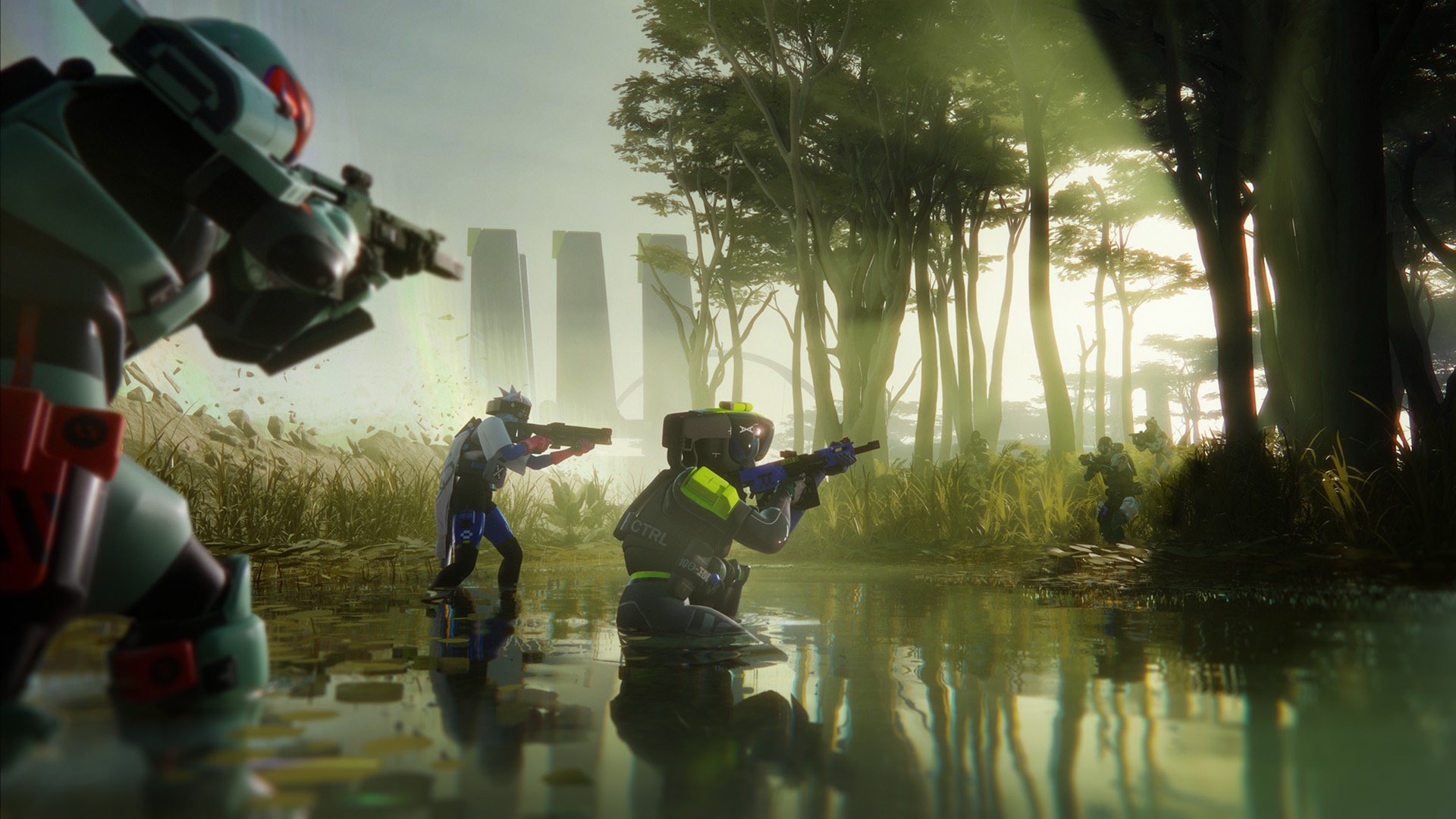
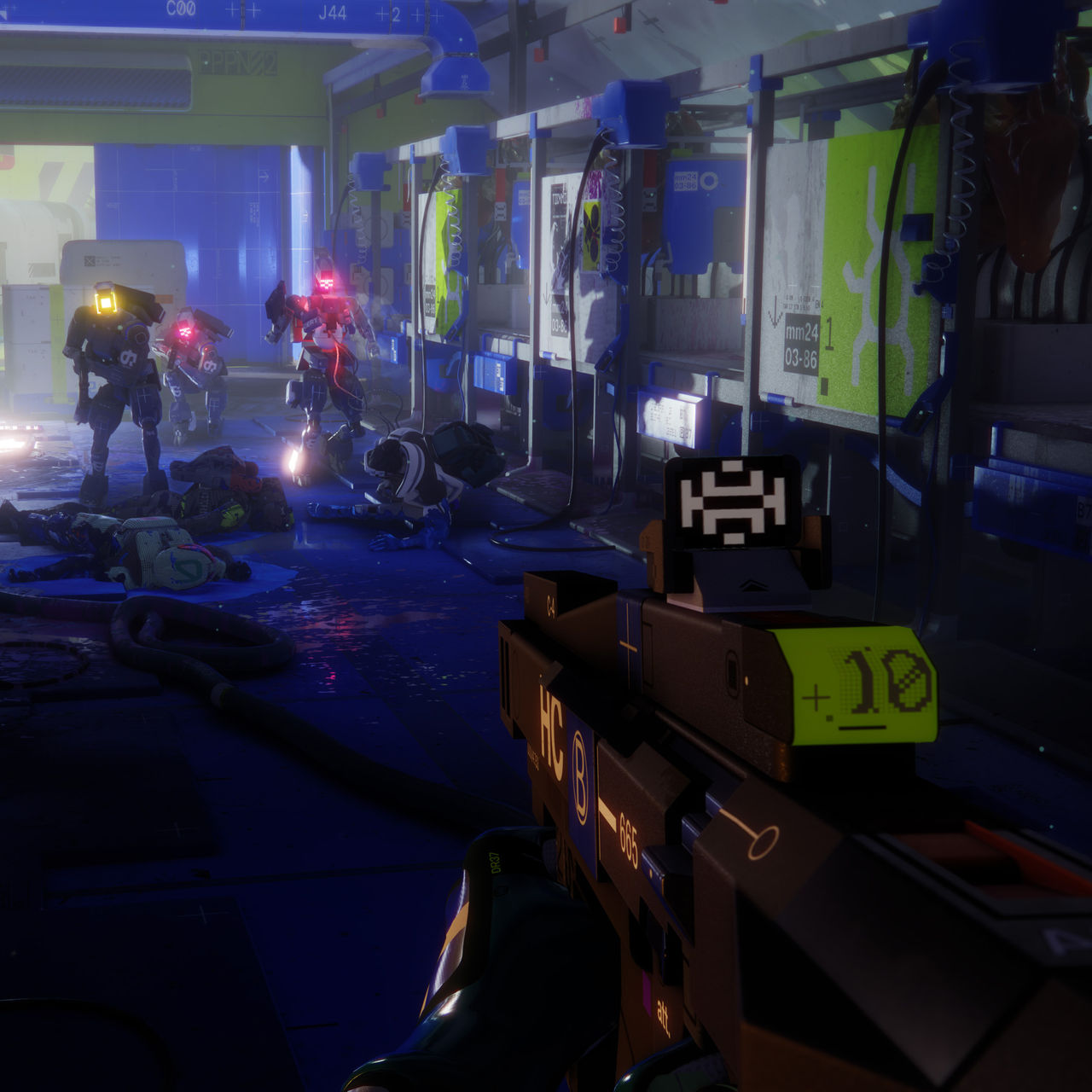
The game itself is not bad. In fact, it is doing reasonably well -- 88,000 peak concurrent players on Steam at launch, "Very Positive" user reviews, a 4.68 star rating on PlayStation Store. The gunplay is tight, the sci-fi aesthetic is striking, and the extraction loop has genuine tension. Marathon has the bones of something good.
But the skeleton is wearing a $15 skin.
And that is the problem. Bungie did not just launch Marathon with microtransactions. It launched a premium-priced game with a monetization system so aggressively calibrated that it produced three separate controversies in its first weekend: a premium currency gap engineered to force overspending, a battle pass widely called the "worst value for money" in the genre, and cosmetic restrictions that players immediately compared to one of Bungie's own worst mistakes from Destiny 2.
The 20 Lux Gap: Nickel-and-Diming as Game Design
The most surgical piece of criticism centers on Marathon's premium currency, called Lux. The math is simple, and that is exactly why it made people angry.
Runner skins -- the main cosmetic item players want -- cost 1,120 Lux in the in-game store. The $10 Lux bundle grants 1,100 Lux. That is a gap of exactly 20 Lux. Twenty. Not enough to round up, not close enough to ignore, and precisely calibrated to make a $10 purchase feel incomplete.
To actually buy the skin you want, you need to purchase an additional $5 bundle (500 Lux), bringing your total spend to $15 for a single Runner skin and leaving you with 380 Lux of orphaned currency sitting in your account -- not enough to buy anything meaningful, but just enough to make you consider topping up again.
This is not a new trick. The gaming industry has been using misaligned currency bundles since at least the early days of Microsoft Points on Xbox 360. But most studios in 2026 have gotten smarter about it, either aligning bundles to common purchase prices or offering enough bonus currency on larger purchases to smooth over the gap. Bungie went the other direction. The $10 tier -- the most common impulse purchase threshold -- was exactly 20 Lux short. That level of precision does not happen by accident.
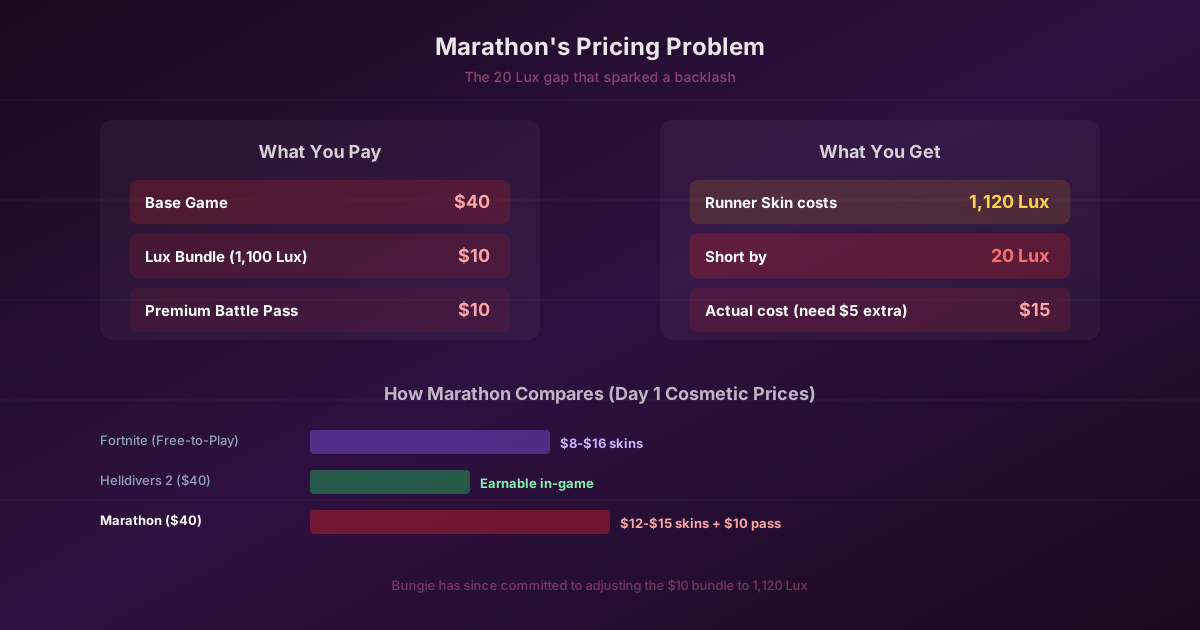
The community response was swift and unambiguous. Within 48 hours, Bungie issued a statement: the $10 bundle would be updated to grant 1,120 Lux instead of 1,100, and any player who had already purchased the bundle would receive a retroactive credit of 20 Lux per bundle purchased. Bungie stated they want to ensure "when you spend in Marathon you feel like you are getting great value" and are "discussing ways to improve this experience."
Credit where it is due -- the turnaround was fast. But "we will fix the thing we deliberately designed" is a weird flex. The original pricing was not an oversight. Someone in a meeting decided that 1,100 was the right number for the $10 tier while the most popular cosmetics cost 1,120. That was a choice. Reversing it under pressure is good, but it does not undo the fact that the original plan was to extract an extra $5 from every player who wanted a skin.
The Battle Pass: Where Stickers Go to Die
If the Lux gap was the sharpest piece of criticism, the Season 1 Battle Pass was the broadest. At $10 for the premium track, it offers a collection of rewards that players have called the "worst value for money" in the extraction shooter space.
Here is what you get:
- The flagship item is a single Runner Shell skin for the Vandal character, inspired by Bungie's animated short film. It is legitimately cool. It is also the only character cosmetic in the entire premium pass.
- The rest is dominated by weapon stickers, charms, basic color swaps, and profile items. Most of these are the kind of filler rewards that exist to pad out a progression bar rather than to excite anyone who unlocks them.
- Stickers and charms have artificial scarcity. You get limited quantities and cannot apply the same sticker to multiple weapons simultaneously. If you want the same charm on two guns, you need two copies of that charm. Players immediately recognized this as a repeat of Destiny 2's launch-era shader system, where cosmetic items were single-use consumables. Bungie eventually fixed that in Destiny 2 after years of complaints. They shipped the same design in Marathon.
- The pass earns zero premium currency. Complete the entire premium track and you get 0 Lux back. Compare this to Fortnite, which gives you enough V-Bucks through its battle pass to purchase the next season's pass. Compare it to Helldivers 2, where premium currency is earnable through gameplay. Marathon gives you nothing.
The "Welcome back launch Destiny 2 shaders" comment that circulated on Reddit captures the frustration perfectly. Bungie has been through this exact cycle before -- ship a restrictive cosmetic system, absorb the backlash, eventually fix it, then somehow ship the same problem again in a different game. It is the studio's most consistent design pattern.
The Bigger Question: Why Does a $40 Game Need This?
Strip away the specifics and you arrive at the question that sits under every piece of Marathon monetization discourse: why does a game that costs $40 upfront have the monetization structure of a free-to-play title?
Marathon is not free. It launched at $40 on PS5, Xbox Series X/S, and PC. That price buys you access to all gameplay content -- all maps, all Runner shells, all weapons. Bungie has been clear that nothing gameplay-affecting is behind a paywall. The monetization is cosmetic-only.
But "cosmetic-only" has never been the get-out-of-jail-free card that publishers want it to be. Cosmetics are content. In a game where your Runner's appearance is one of the few persistent elements that carries between seasonal progress wipes, skins are progression. Charging $12-15 per skin on top of a $40 base price, while offering a battle pass that gives nothing back, positions Marathon's economy closer to a free-to-play game that forgot to be free.
The comparisons write themselves:
- Fortnite (free-to-play): $8-16 skins, battle pass earns premium currency for next season
- Apex Legends (free-to-play): Similar pricing, with earnable cosmetics through gameplay
- Helldivers 2 ($40): Premium currency earnable through gameplay, cosmetics priced lower, generally praised monetization
- Marathon ($40): $12-15 skins, $10 battle pass with no currency return, $15 bundles on day one
Helldivers 2 is the most relevant comparison because it sits at the same price point and launched to enormous goodwill partly because its monetization felt fair. Arrowhead Game Studios treated the $40 price as a reason to be more generous with cosmetics, not less. Bungie treated it as a floor, not a ceiling.
The Sony-Shaped Elephant in the Room
None of this happens in a vacuum. Marathon is not just a Bungie game anymore. It is a Sony game, the product of a $3.6 billion acquisition completed in 2022. That acquisition was Sony's biggest bet on the live-service model -- the idea that PlayStation's future depended on games that generate ongoing revenue through seasons, battle passes, and cosmetic stores.
The pressure on Marathon to monetize aggressively is not subtle. Sony's live-service ambitions have been a slow-motion car crash. The company originally planned to release 12 live-service games by the end of fiscal year 2025. That target was halved to six after internal reviews, delays, and cancellations. Concord, another Sony live-service title, launched and shut down within two weeks. FairGame$, another planned live-service title, has faced its own development turbulence.
Marathon is, in a very real sense, the last standing flagship of Sony's live-service strategy. If it fails, it is not just a bad game launch. It is a $3.6 billion thesis statement that was wrong.
That context explains -- though does not excuse -- why Marathon's monetization is calibrated the way it is. Someone at Sony or Bungie looked at the revenue models and decided that a $40 game needed to generate free-to-play levels of cosmetic spending to justify the investment. The 20 Lux gap, the no-currency battle pass, the day-one $15 skin packs -- these are not bugs. They are the business model working as intended, at least until the players push back hard enough to force changes.
Bungie also entered this launch already bruised. The studio laid off approximately 100 employees in October 2023 and another 220 in July 2024 as part of Sony-wide cost-cutting. Marathon itself was delayed after "passionate feedback" from the community and hit by art plagiarism claims that Bungie acknowledged. The studio that shipped Marathon is a leaner, more pressured version of the Bungie that was acquired, and that pressure shows in every monetization decision.
The Player Count Story
Marathon's launch numbers tell their own story. The game peaked at 88,337 concurrent players on Steam roughly six hours after launch on March 5. By the weekend, that number had declined -- reports indicate player counts dropping more than 50% at low points, bottoming out below 32,000 concurrents before stabilizing.
Those numbers are not catastrophic. They are also not great. For context, the game's pre-launch Server Slam beta hit 143,000 concurrent players on Steam. The actual launch drew significantly fewer players than the free beta, which is unusual and suggests either soft marketing, post-beta disinterest, or both.
On the positive side, Marathon earned "Very Positive" user reviews on Steam and strong PlayStation Store ratings. The people who are playing it are largely enjoying the core experience. The negative sentiment is concentrated specifically around monetization and, to a lesser extent, difficulty (which Bungie is also addressing with an upcoming patch that increases resource spawns and waypoint visibility).
The question is whether the monetization backlash suppresses the game's growth during the critical first-month window. Extraction shooters live or die on player population. If the early adopter frustration drives negative word-of-mouth that discourages fence-sitters from buying in, the $40 price tag becomes a harder sell with each passing week. Free-to-play games can absorb early backlash because the barrier to trying them is zero. Marathon does not have that cushion.
Bungie's Track Record: The Cycle Continues
What makes this controversy feel particularly exhausting is that Bungie has done this before. Multiple times.
Destiny 2 launched in 2017 with single-use shaders that infuriated the community. Bungie eventually made them permanent unlocks -- but it took years. The Eververse store in Destiny 2 was a constant source of friction, with players feeling that the best cosmetics were gated behind microtransactions while the actual gameplay rewards looked increasingly generic. Bungie adjusted, pulled back, pushed forward again, in a cycle that lasted the entire life of the game.
Now Marathon ships with limited-use stickers (the shader problem reborn), a pass that earns no premium currency (a monetization structure more aggressive than Destiny 2's), and day-one skin prices that match free-to-play competitors despite a $40 entry fee. The studio has a pattern: ship aggressive, absorb backlash, make targeted concessions, repeat.
To Bungie's credit, the response time has improved. The Lux fix was confirmed within days, not months. The difficulty adjustments are coming in the first patch. The studio is clearly monitoring sentiment in real time and willing to move quickly. But "we will fix it fast when you complain" is a different thing than "we will ship it right the first time." One of those builds trust. The other erodes it incrementally, even when the fixes land.
Where This Goes Next
Marathon is not dead. Let's be clear about that. The core gameplay has fans, the extraction loop is satisfying, and Bungie has decades of experience running live-service games. If the studio commits to meaningful monetization reform -- not just fixing the Lux gap, but restructuring the battle pass to earn premium currency, reducing skin prices to reflect the $40 entry cost, and making cosmetic restrictions less punishing -- Marathon has a real shot at building a healthy long-term player base.
But the window is not infinite. The extraction shooter market is competitive. The Finals is free and fun. Arc Raiders has its own audience. Escape From Tarkov and its Arena mode are not going anywhere. Marathon needs to convert its launch population into retained players within the next few months, and that means the second season's monetization structure matters more than the first season's fixes.
What Bungie does next will say more about Marathon's future than anything that happened in the first four days. The Lux fix was the easy one. The real test is whether Bungie treats the battle pass overhaul, the cosmetic pricing reset, and the currency economy redesign with the same urgency -- or whether they do the minimum to quiet the conversation and hope the gameplay carries the rest.
History suggests the answer is somewhere in between. And that might not be enough.
Sources
- Bungie Issues Statement on Marathon Microtransactions -- OpenCritic
- Marathon Microtransaction Backlash Explained -- GAMES.GG
- $40 Marathon Launches With $15 Cosmetic Packs -- Kotaku
- The Marathon Battle Pass Is Bad -- Kotaku
- Marathon's Battle Pass Slammed as Worst Value -- GamesRadar+
- Marathon Dev Tweaking Monetisation and Difficulty -- Push Square
- Marathon Fans Freaking Out Over Player Count -- Kotaku
- Bungie Promises Changes and In-Game Refunds -- Gameranx
- Marathon's PS5 Launch Puts Sony's $3B Live Service Gamble to the Test -- Push Square
- Marathon Blasted Over Predatory Microtransactions -- Screen Rant
- Marathon Server Slam Beta 143K Players -- NotebookCheck

Founder of GGS Blog and Site Reliability Engineer at Box. I write about gaming, AI in gaming, and game development with a technical lens — 10+ years in software engineering, 20+ years as a gamer. My work focuses on what the tech actually means for players.
Never miss a post
Subscribe to the GGS Blog newsletter for gaming news, tech insights, and AI in the game industry — delivered straight to your inbox.
Free. No spam. Unsubscribe in one click.
Comments
What to Read Next
Continue exploring our coverage of gaming, technology, and AI.
 Gaming
GTA 6 Is $80. Here's What Rockstar Still Hasn't Told You.
Rockstar confirmed GTA 6 pricing at $79.99 Standard and $99.99 Ultimate. The silence around PC, regional pricing, and GTA Online structure tells a bigger story than the price tag. Here's how to think about the $80 ask.
 Gaming
GTA 6's Cover Art Is Beautiful. June 25 Is About Something Else.
Rockstar revealed the official GTA 6 cover art on June 18, and it's a confident piece of franchise mythology. But pre-orders opening June 25 carry a question bigger than bonus content: is this the moment gaming crosses the $100 line?
 Gaming
I Hadn't Touched Spider-Man in Years, Then Spider-Man 2 Yanked Me Off the Roof
I came back to web-swinging after a long break, expecting to bounce off it. Instead I lost a whole weekend gliding over Marvel's New York and grinning like an idiot.