
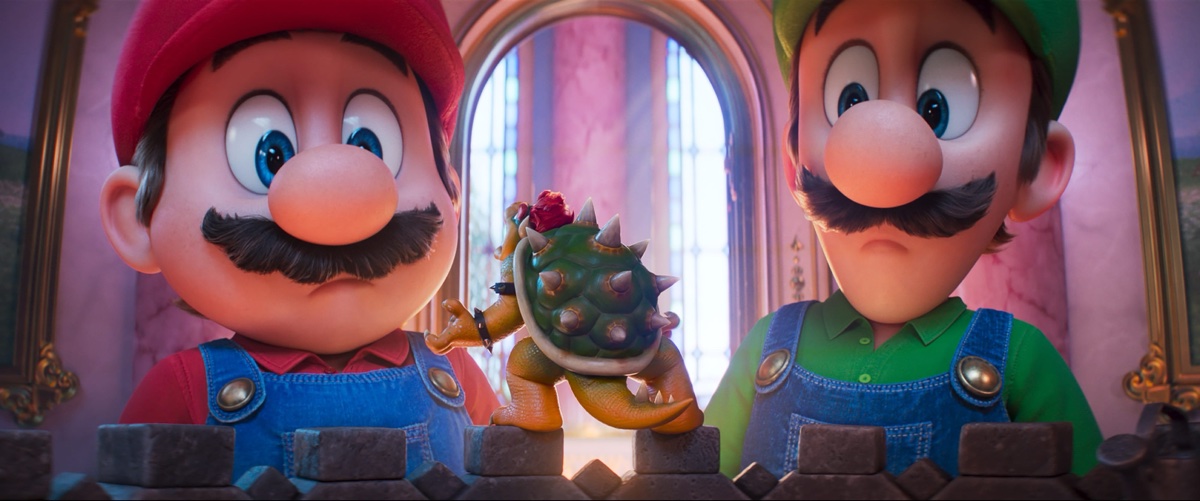
The Super Mario Galaxy Movie Just Did $372 Million — Here's Whether It's Worth a Family Trip
I was scrolling Fandango on Sunday night trying to figure out what my family could agree on for next weekend, and the answer was already sitting at the top of every chart: The Super Mario Galaxy Movie. Not because the marketing wore me down — because the numbers attached to it were absurd enough that I had to read them twice.
$372.5 million globally in five days. A sequel to a 2023 film that already broke records, doing it again — barely slower, on a higher base, against a 44% Rotten Tomatoes score that should have hurt it. None of that tells me whether my kids will sit still for 92 minutes. But it tells me something more useful: a lot of other parents already made the same decision I'm about to make, and the post-screening surveys came back with five stars.
So I went deeper. Here's what the numbers say about this movie, what the critic-audience split means if you're picking it for family movie night, and whether I'm pulling the trigger on tickets.
The Number That Made Me Look Twice
Universal and Illumination's The Super Mario Galaxy Movie opened to $130.9 million over the three-day domestic weekend and $190.1 million across its first five days, with an additional $182.4 million internationally for a $372.5 million global launch. That's the biggest worldwide opening of 2026 so far, and it lands on a budget reported at around $110 million — meaning the film cleared more than three times its production cost before most people had finished their popcorn.
The records it broke are the kind that usually get spread across a decade of releases:
- Fifth-largest global opening in Universal's 113-year history
- Fourth-biggest US animated opening of all time, behind only Zootopia 2, Moana 2, and the first Mario film
- Illumination's second-biggest global debut ever, behind only its predecessor
- Fourth-largest five-day domestic opening for any film, joining Moana 2, the first Mario movie, and Transformers: Revenge of the Fallen
And here's the line that made every analyst on Deadline and Variety sit up: Super Mario is now the only animated film franchise in history with two titles opening globally above $350 million. Not Pixar. Not DreamWorks. Not the studios that built modern family animation. A franchise that started life as a two-screen arcade game in 1981.
The 2023 Super Mario Bros. Movie did $387.8 million over the same five-day window, so Galaxy lands a hair behind. Most game adaptations never get a sequel at all, let alone one that opens within 4% of the original.
What This Says About Game Movies (And Why It Matters Beyond Mario)
For most of the last 30 years, game-to-film was the genre that "didn't work." Super Mario Bros. (1993) was a famous disaster. Doom, Max Payne, Prince of Persia, Assassin's Creed — every one of them showed up promising to break the curse and every one of them shipped to mediocre numbers and worse reviews. When The Last of Us hit on HBO and the first Mario film cleared $1.36 billion, the consensus shifted to: "OK, the curse is broken, but it's still hit-or-miss."
A second Mario film opening at $372 million is the moment that "hit-or-miss" framing stops fitting. This is no longer one studio getting lucky with one beloved IP one time. This is a franchise — meaning Universal, Illumination, and Nintendo have built a repeatable system: take a Nintendo property with 40 years of visual shorthand, hand it to Illumination's animation pipeline, score it like a roller coaster, and trust that every parent in the theater is going to recognize at least three things on screen.
It also has implications for what's coming. Sony's Uncharted movies. The slate of Zelda and Donkey Kong projects Nintendo has reportedly been developing. Amazon's God of War TV show. Every one of those bets just got cheaper to justify because Mario proved the audience shows up twice. Studios will still pick wrong — the next 10 game adaptations will not all be Mario — but the budget conversations changed this weekend.
The Critic vs. Audience Split Parents Should Know About
Here's the part that made me stop and think before buying tickets: critics did not love this movie. Galaxy sits at 44% on the Tomatometer, a noticeable drop from the first film's already-divisive 59%. The recurring complaints in the reviews are familiar: thin script, underdeveloped Mario and Rosalina arcs, an overstuffed cast that races between set pieces without giving any of them room to land.
If you're a parent who reads reviews before deciding, 44% would normally be a yellow flag. The audience numbers tell a different story:
- CinemaScore: A- (general audiences)
- PostTrak: 5 out of 5 stars from family viewers, 4 out of 5 from general audiences
- Rotten Tomatoes audience score: 91%, with over 1,000 verified ratings
That gap is one of the widest splits I've seen on a major release this year. The honest read: this isn't a movie for critics. It's a movie for an eight-year-old who has been pretending to do Yoshi spin-jumps off the couch for two years, and for the parent next to them who recognizes the Comet Observatory the second it appears on screen because they played Galaxy on the Wii in 2007.
The reviews aren't wrong about the script. But for picking a Saturday matinee with a six-year-old, the audience score is the metric that matters.
Is It Actually Good For Kids?
This is the question I care about, and the post-screening data is unusually clear.
PostTrak surveys exit theaters in real time and break results out by demographic. When family ratings outperform general-audience ratings on the same film, it almost always means the movie is doing what families came for — bright, kinetic, unambiguously fun, no scary tone shifts that send a six-year-old hiding behind a seat. Galaxy hit that mark.
A few specifics worth knowing before you pick a screening:
- Pacing is fast. Critics complained about it; kids reportedly love it. Action set pieces follow each other with very few quiet stretches.
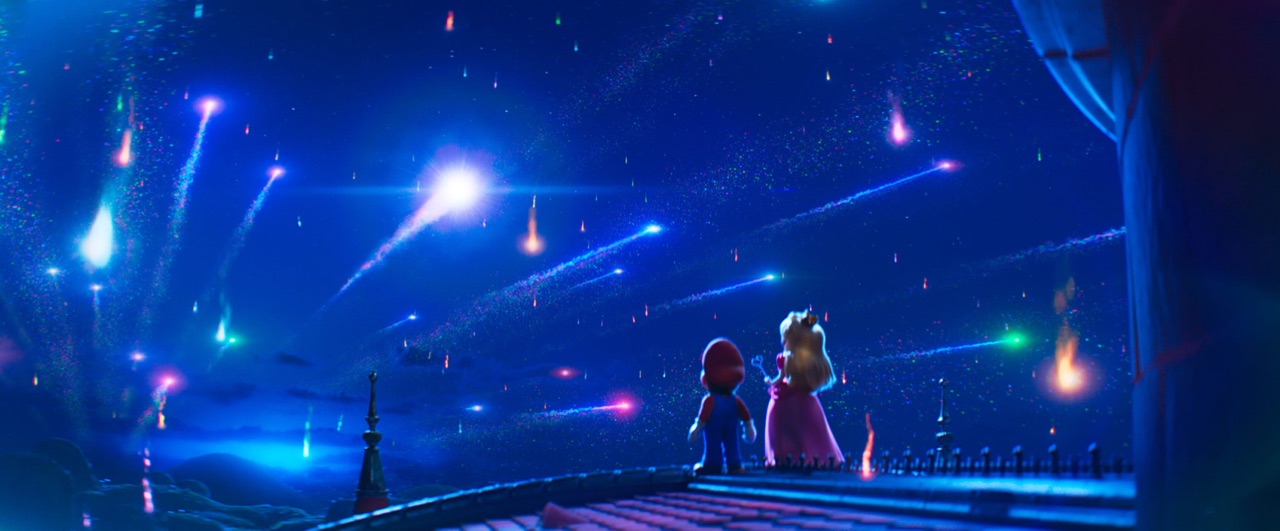
- Visuals are the strongest element. Even reviewers who panned the script gave the animation team credit. The Galaxy setting hands Illumination environments they couldn't touch in the first film — gravity-bending platforms, ringed planets, comet trails.
- No real "dark" moments. Unlike some recent family animation that drifts into surprisingly heavy themes, the emotional stakes here stay light. Bowser is a threat, not a trauma source.
- Runtime is 92 minutes. If your kids start fading at the 75-minute mark of every movie, you have a 17-minute runway here, not a 40-minute one.
What Galaxy Borrows From the Game (And Why Newcomers Still Get It)
The 2007 Wii game Super Mario Galaxy is, for a lot of people my age, one of the best Mario games ever made. It introduced Rosalina, the Comet Observatory, the Lumas, and a level design philosophy built around tiny spherical worlds with their own gravity. Rich source material for a 92-minute film.
From what I've gathered across reviews and early reactions, the movie leans hard on the iconography: planet-hopping, gravity-flipping platform sequences, the Lumas as supporting characters, Rosalina as a major addition to the cast. If you played the game, you'll recognize entire sequences. If you didn't — and your kids almost certainly didn't — none of it requires homework. The film treats the Galaxy setting the way the original Star Wars treated the Death Star: a self-explanatory location whose rules you absorb in real time.
That's part of why these movies keep working. Mario's visual language is global. A red hat, a green pipe, a coin sound. You don't need lore. Three-year-olds and 73-year-olds parse it the same way.
The Bigger Picture: Nintendo's Hollywood Flywheel
There's a business story underneath all of this that's worth naming, because it's going to shape what gets made next.
Two years ago, Nintendo was the company that famously would not license its IP for film. Decades of bad adaptations had left it gun-shy — if you wanted Mario, you bought a Switch. The first Super Mario Bros. Movie broke that policy, and the $1.36 billion gross vindicated the gamble. Galaxy's opening doesn't just confirm it; it converts a one-time experiment into a flywheel.
Here's what that flywheel looks like:
- Movies sell games. Pokemon Pokopia just added $14 billion to Nintendo's market cap on the back of cozy momentum — imagine what a successful Mario film does for Mario Galaxy-style Switch 2 software in the next 18 months.
- Games sell movies. Every kid playing Wonder or Bowser's Fury on Switch 2 is a future ticket buyer.
- Theme parks sell both. Super Nintendo World at Universal Studios Hollywood and Orlando exists in part because of the IP partnership. Every ride sells the next movie, every movie sells the next ride.
Disney spent decades building this flywheel and rode it to the most valuable entertainment company in history. Nintendo has been quietly assembling its own version on a much shorter timeline, and Galaxy is the moment it's clearly spinning.
My Verdict — And How I'm Actually Going To Watch It
I'm going. The audience signals are too consistent to ignore — and at 92 minutes, the downside is small. I'm not looking for the next Inside Out 2. I'm looking for 90 minutes my kids will love and I won't hate.
A few things I'm doing to make it work:
- Matinee, not evening. Opening-week crowds are real. A Saturday morning showing will be packed but easier than a Friday night.
- Skip the preview reels. Show up 10 minutes after the posted start time. The feature usually begins 20-25 minutes in, and that buffer means less squirming before the lights drop.
- Seats near the aisle. Bathroom logistics with a six-year-old are non-negotiable.
- Don't pre-watch the trailers at home. Half the fun of a Mario film is the visual surprise of a new world appearing. Going in cold makes the planet-hopping land harder.
If your kids are between 4 and 12 and you've been hesitating, the audience data is about as clean a green light as you're going to get. If you're going without kids and you want a dense, character-driven animated film, the critics are probably right that this isn't that. Pick your screening based on which of those two people you are.
I'll be in the matinee, aisle seat, with a kid on each side. I'll know within twenty minutes whether this is the movie my family quotes for the next year.
Sources
- Box Office: 'Super Mario Galaxy Movie' Ignites to Blockbuster $190 Million — Variety
- Super Mario becomes the only animated movie series to open globally at more than $350 million twice — VGC
- 'The Super Mario Galaxy Movie' box office blasts off with $372.5 million globally — CNBC
- Box Office: 'Super Mario Galaxy Movie' Opens to Record $372M Global — Deadline
- The Super Mario Galaxy Movie — Rotten Tomatoes

Founder of GGS Blog and Site Reliability Engineer at Box. I write about gaming, AI in gaming, and game development with a technical lens — 10+ years in software engineering, 20+ years as a gamer. My work focuses on what the tech actually means for players.
Never miss a post
Subscribe to the GGS Blog newsletter for gaming news, tech insights, and AI in the game industry — delivered straight to your inbox.
Free. No spam. Unsubscribe in one click.
Comments
What to Read Next
Continue exploring our coverage of gaming, technology, and AI.
 Gaming
GTA 6 Is $80. Here's What Rockstar Still Hasn't Told You.
Rockstar confirmed GTA 6 pricing at $79.99 Standard and $99.99 Ultimate. The silence around PC, regional pricing, and GTA Online structure tells a bigger story than the price tag. Here's how to think about the $80 ask.
 Gaming
GTA 6's Cover Art Is Beautiful. June 25 Is About Something Else.
Rockstar revealed the official GTA 6 cover art on June 18, and it's a confident piece of franchise mythology. But pre-orders opening June 25 carry a question bigger than bonus content: is this the moment gaming crosses the $100 line?
 Gaming
I Hadn't Touched Spider-Man in Years, Then Spider-Man 2 Yanked Me Off the Roof
I came back to web-swinging after a long break, expecting to bounce off it. Instead I lost a whole weekend gliding over Marvel's New York and grinning like an idiot.