

Can a Solo Dev Ship an iOS Game in 2026 Using Only AI Tools? (Build Log, Day 0)
Can one person ship a real iOS game to the App Store in 2026 using only AI tools?
That's the question I want a real answer to, not a Twitter-thread answer. So I'm going to attempt it, and this is Day 0 — the reconnaissance post before I write the first line of Swift. The plan is to come back at fixed checkpoints with progress, failures, App Review correspondence, and revised predictions. No retroactive editing. If the answer turns out to be "no," I want the post that said "no" to be older than the evidence.
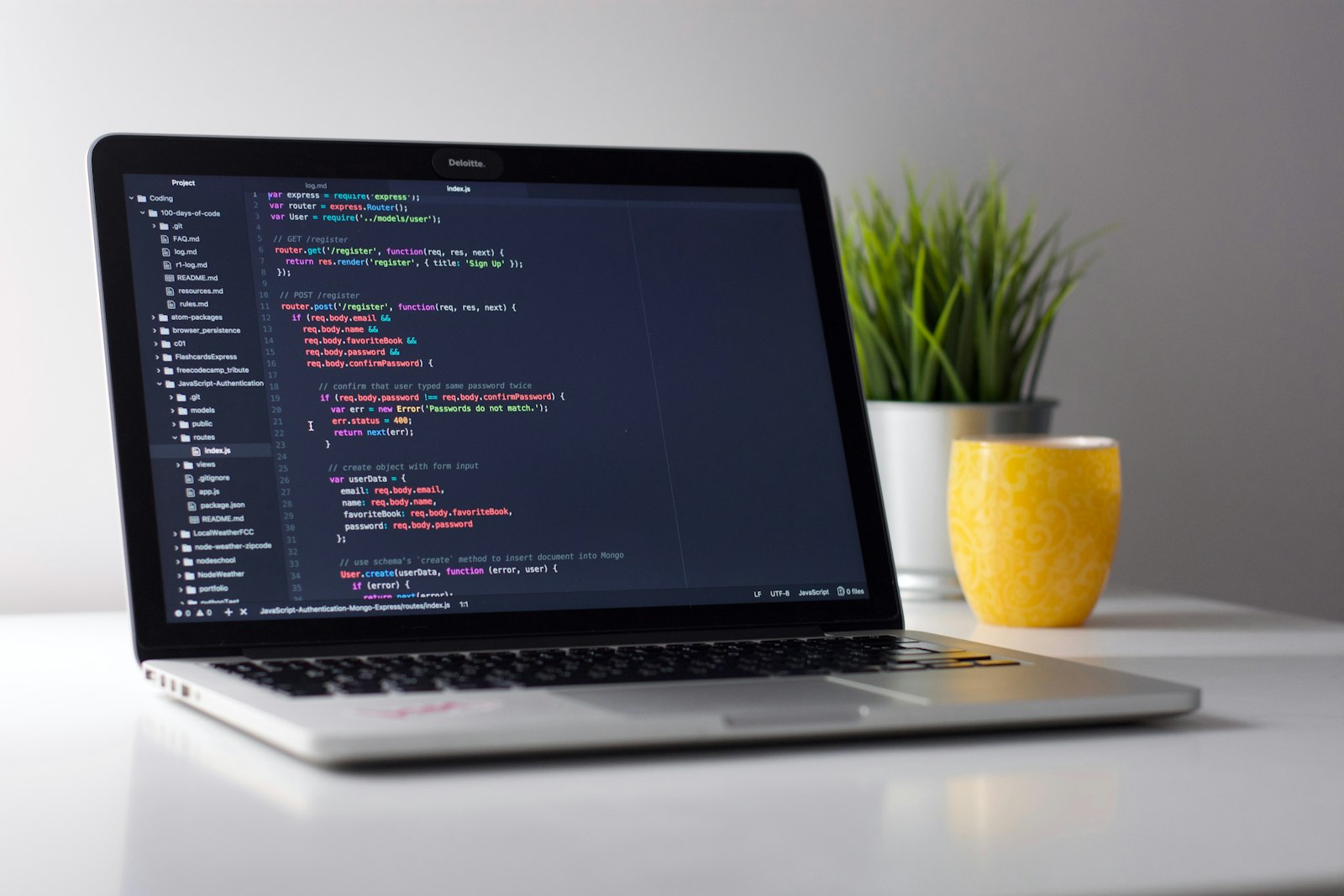
A clarification before anything else: "only AI tools" is doing a lot of work in that sentence, and it's where most takes I've read get sloppy. I don't mean a prompt-to-app builder that spits out a binary. I mean: I sit at a keyboard, I tell Claude Code, Cursor, and Xcode 26's built-in AI what I want, and they write the Swift. I direct, I don't type. The question is whether that workflow actually gets you through the App Store door in 2026, or whether the door is now locked from the inside by Apple's review team.
The question, sharpened
The version of this question that gets clicks — "Can AI build an iPhone game?" — is the wrong one. AI can obviously write Swift code in 2026. Claude Code lands 80.8% on SWE-bench Verified. Cursor passed $2B ARR in March. Xcode 26 ships with on-device predictive completion plus first-class Claude and ChatGPT integration through the Intelligence settings panel. The code generation part is solved enough to argue about.
The version that actually matters is narrower:
Can a developer who directs AI tools — but does not personally write the bulk of production Swift — get a non-trivial original game accepted by App Review, listed on the App Store, and onto a stranger's iPhone in 2026?
"Non-trivial" means it has state, real input, persistence, a payment surface (IAP or paid up-front), and content that isn't a Hello World re-skin. "Accepted" means it survives Guideline 4.3 (Spam) and the November 2025 third-party-AI disclosure update, not just that it compiles.
That is a much harder question than "can AI write Swift." The answer is also where most writeups quietly stop.
What AI handles well, based on actually using it
I've been using Claude Code and Cursor daily for general dev work for most of the last year, so I'm not coming into this blind. A few observations that are going to matter when I start:
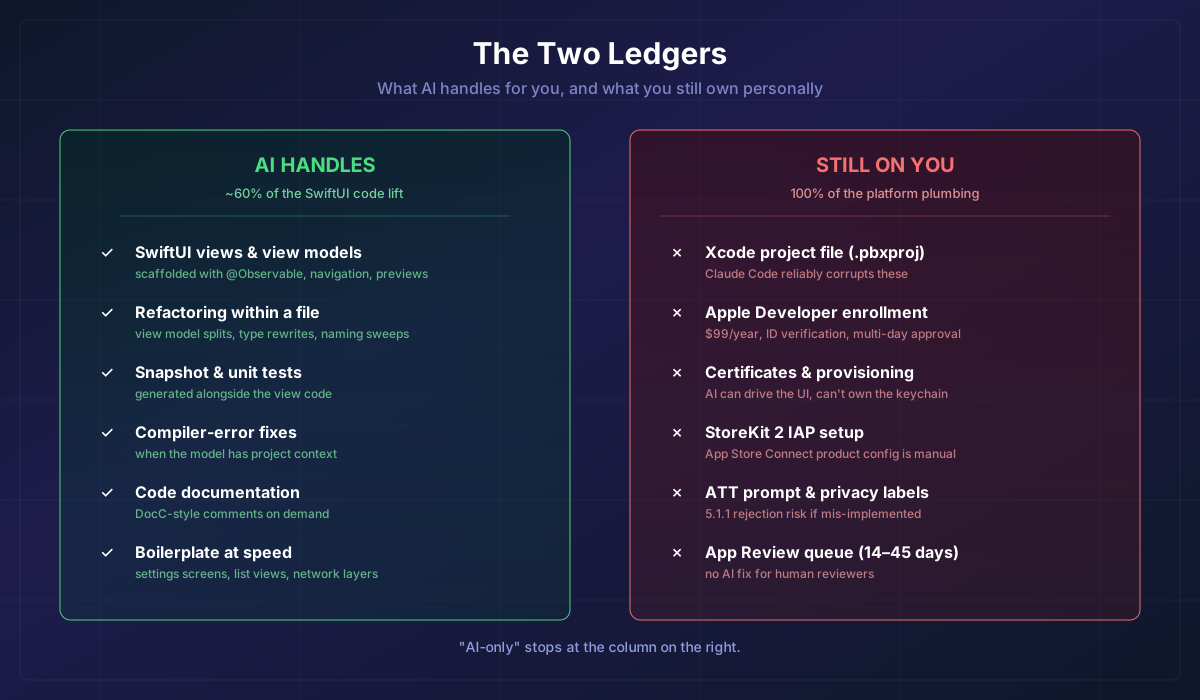
Claude Code is shockingly good at SwiftUI views and shockingly mediocre at everything that isn't a .swift file. A developer writeup that's been making the rounds claims ~60% time savings on pure SwiftUI iOS projects, dropping to 35–40% on mixed UIKit/SwiftUI codebases. That matches my experience exactly. When I ask Claude Code to scaffold a settings screen, it gives me clean @Observable view models, proper navigation, and a working preview. When I ask it to edit my .pbxproj to add a new build configuration, it produces a file Xcode refuses to open.
Claude Code defaults to UIKit when you don't pin it. This is the single most replicable failure mode I've hit. Ask for "a list view with swipe-to-delete" without specifying SwiftUI, and roughly half the time you get UITableView with delegate methods. Every iOS dev who's used Claude Code for more than a week has hit this. The fix is a CLAUDE.md at the project root that says "SwiftUI only, target iOS 18+, no UIKit unless explicitly requested." After that the substitution rate drops to maybe one in twenty.
Token efficiency matters more than benchmarks suggest. On a representative task I ran last week — refactoring a view model into two with shared state — Cursor's Composer 2 burned through 188K tokens to Claude Code's 33K for what I'd call comparable output. Composer 2 is a strong model, but if you're paying for API access rather than running on a flat subscription, this is where your bill comes from.
The frameworks I actually need are exactly where the training data is thinnest. SpriteKit, SceneKit, Metal, GameKit — these are barely in any AI-coding benchmark. SpriteKit hasn't had a meaningful update in years and there's no clear successor. Apple's first-party game stack is in maintenance mode, which means model training corpora are stale, which means I'm going to spend time correcting confidently wrong API suggestions. Flag: I'm working from a single source on that SpriteKit assessment, so I'll treat it as a hypothesis to verify.
So: 60% of the SwiftUI lift, near-zero help on the game-specific frameworks, and a hard wall at the Xcode project file. That's where the AI side of the ledger sits before I write a line.
The non-AI ledger — what I still have to do myself
Here's where the slogan dies. None of the following is going away because I subscribed to Claude Max:
- Apple Developer Program enrollment. $99 per year, ID verification, a human at Apple deciding I exist. (source)
- Code signing and certificates. Tools like
asccli.shandblitz-macgive MCP-style control over App Store Connect, but I personally own the Apple ID and the keychain. AI can drive the UI; it can't be me. - The
.pbxprojfile. Claude Code reliably corrupts these. I'll be hand-editing or using Xcode's GUI for every target, scheme, and capability change. - StoreKit 2 IAP wiring. The Swift side is fine. The product setup in App Store Connect — pricing tiers, localization, review notes, screenshots of the IAP flow — is manual, console-only, and gated on App Review approving each product separately.
- GameKit and Game Center. Leaderboards, achievements, matchmaking. Almost zero benchmark coverage. I expect to write more of this code myself than any other subsystem.
- ATT prompt and 5.1.1. If I miss the AppTrackingTransparency prompt or mis-implement it, I get rejected. Apple's enforcement here is mechanical and unforgiving.
- Privacy nutrition labels and the age-rating questionnaire. Both manual, both in App Store Connect, both legally consequential if I get them wrong.
- App Review itself. The submission, the screenshots, the review notes, the responses to rejections. Some of this is automatable via
asccliorblitz-mac. The judgment calls aren't.
This is the part the "I built and shipped an app in 4 minutes" demos never address. Every documented success I can find — Pieter Levels at $3.1M ARR, Maor Shlomo's $80M exit, Indragie Karunaratne's Context with ~1K hand-written lines out of 20K — is SaaS or a macOS dev tool shipped via GitHub. Not iOS. Not the App Store. I cannot find a single verified case of an indie solo dev shipping an AI-generated game to the iOS App Store in a way that survives scrutiny. Riley Brown's Vibecode demos exist, but the closest analogue to "AI-only iOS" is exactly the category Apple has been delisting.
The hostile climate — App Review in 2026
The other thing the slogan ignores is timing. App Review in May 2026 is not the App Review of 2023, and pretending otherwise is the fastest way to waste three months.
The numbers: App Store submissions hit ~557,000 last year, up 24% year over year, driven by what TechCrunch and others have started calling "AI slop." Vibe coding tools alone drove an ~84% jump in submissions. Review queues that used to clear in 24–48 hours are now 14 to 45 days in many categories, and Apple has been openly cracking down.
The crackdown has a specific shape, which is important to read carefully. Guideline 2.5.2 — the runtime-code-execution rule — is what got the Anything app pulled on March 26 and reinstated on April 3 after compliance changes. That rule targets apps that let end users generate apps, not developers who use AI tools at build time. Riley Brown can ship something Claude Code wrote. He can't ship a thing that lets you ship something Claude Code wrote, at least not without a lot of guardrails.
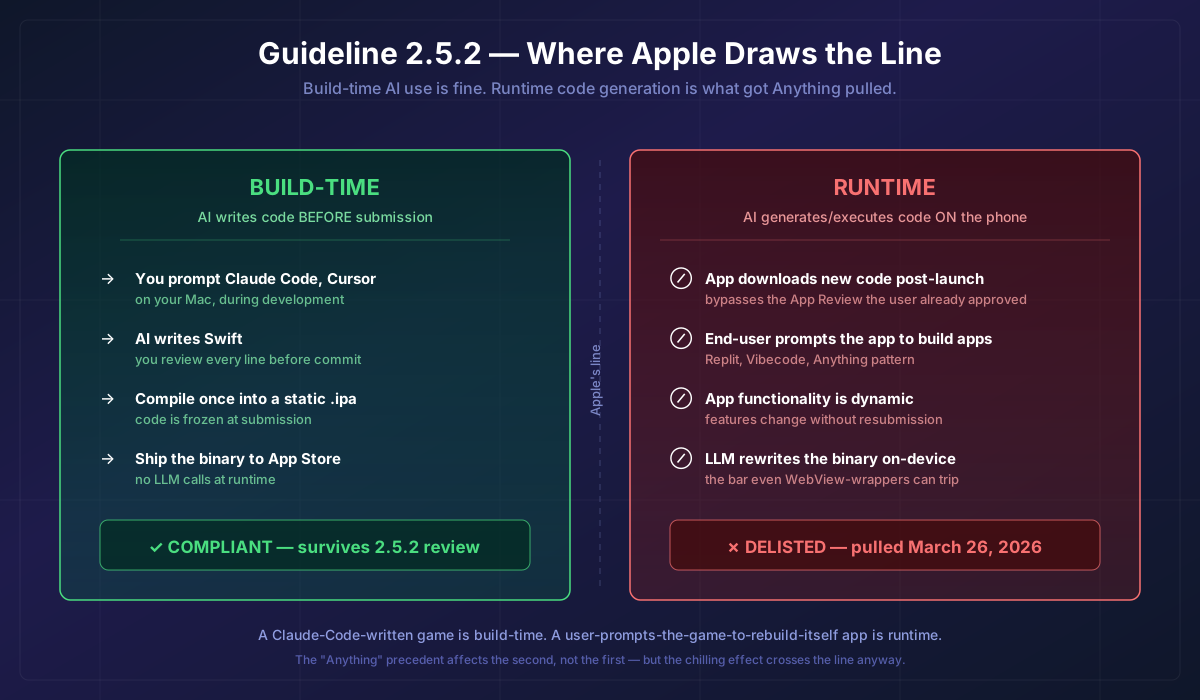
But the chilling effect bleeds across the line. Apple's November 2025 guideline update requires explicit user consent and provider disclosure for any third-party AI data sharing inside an app — if my game ever calls out to an LLM at runtime, that's a new compliance surface. And Guideline 4.3 (Spam) is now among the most-cited rejection reasons, and it's the one reviewers reach for when an app looks low-effort. I cannot find a documented case of an iOS game rejected purely for AI-generated art, but I also cannot find a documented case of an iOS game shipping with art that's obviously mid-journey output and surviving 4.3. The absence of either signal is itself a signal: nobody has tested this in public.
April 2026 added one more hard requirement: submissions must be built against the Xcode 26 SDK. That kills any workflow that depends on older toolchains, which most prompt-to-game services were still on as of last year.
The honest steelman against me
I want to spend a paragraph arguing the position I'm trying to prove wrong, because if I can't, I shouldn't bother starting.
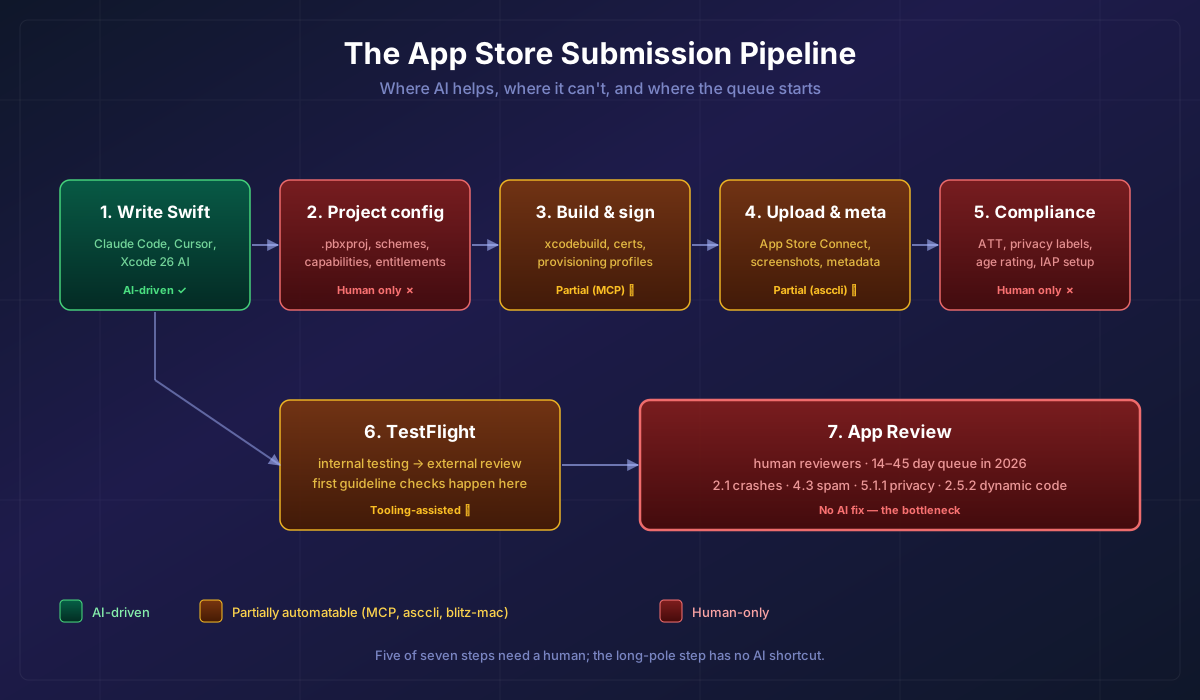
The strongest case against this project is that every documented success story is a SaaS app or a developer tool shipped outside the App Store, and the closest iOS analogue is the category Apple is actively delisting. The bottleneck was never the code. It was platform plumbing — certificates, IAP, review, ATT — and AI lowers exactly one of those bars and leaves the other six untouched. A founder in 2008 with $99 and a copy of iPhone App Development: The Missing Manual faced the same six bottlenecks I face in 2026. The honest framing is not "can AI ship an iPhone game" but "can a developer with one less skill than the 2008 founder still ship one?" That's a much less interesting question, and the answer is probably yes, with caveats.
The second strongest case is the GDC 2026 sentiment data — 52% of working game developers say generative AI is bad for the industry. They're not saying that because they're scared of the tools. They're saying it because they use the tools and have seen what the output looks like when nobody pushes back. Glen Schofield and Larian's publishing director both went on record dismissing xAI's "AAA with zero humans" claim. The people closest to the work are the most skeptical, which is usually a strong signal.
I take both points seriously. I think the project is still worth doing, partly because I'm not making the "zero humans" claim — I'm making the "one human, maximally leveraged" claim — and partly because the only way to find out where the actual wall is is to walk into it.
The rules of the experiment
Here is what I am committing to, so that I cannot quietly redefine success later:
- Original game, not a tutorial reskin. Some kind of small but real game loop with state, persistence, and a win/lose condition. Genre to be picked in the next post.
- AI writes the production Swift. I direct. I'm allowed to hand-edit
.pbxproj, code signing config, App Store Connect forms, and the ATT prompt scaffolding, because the experiment is about whether AI can clear the bar, not whether I'm capable of typing. Every.swiftfile in the shipped binary should be AI-generated and reviewed by me, not hand-written by me. - Apple Silicon Mac, Xcode 26, real Apple Developer account, real submission. No simulator-only victory laps.
- Public failure log. Every App Review rejection gets published in the next checkpoint post, verbatim, with the guideline cited.
- Budget cap: $1,800 over three months. That covers Claude Max, Cursor Pro, Midjourney or equivalent, ElevenLabs for music, Meshy if I go 3D, and the $99 developer fee. Hardware doesn't count because I already own the Mac. This matches the realistic indie burn I estimated before starting.
- No prompt-to-app builders. No Rosebud, no Buildbox AI, no FlutterFlow wrapper. Those are a different experiment.
Three falsifiable predictions for the next checkpoint
The next post will be Day 30, and these are the three predictions I'm locking in now so future-me can be wrong on the record.
Prediction 1: By Day 30, I will have a playable build running on my own iPhone, and at least one App Store Connect rejection on file — not from a final submission, but from a TestFlight external review or a metadata pre-check. I'm predicting rejection inside 30 days because the friction surface is wide enough that I'd be suspicious of a clean run. If I hit Day 30 with zero rejections, it almost certainly means I haven't actually pushed anything for review yet, which is its own failure.
Prediction 2: Claude Code will produce working, shipped-quality Swift for the SwiftUI views and game loop, and will be measurably worse than useless on at least one of: the .pbxproj config, StoreKit 2 product wiring, GameKit integration, or SpriteKit/SceneKit scene setup. "Measurably worse than useless" means I'll spend more time fixing what it generated than I would have spent writing it from a blank file. I'll quantify this with timestamps in the Day 30 post.
Prediction 3: The total time I spend on Apple ceremony — certificates, App Store Connect forms, privacy labels, ATT, screenshots, review responses — will exceed the total time I spend prompting and reviewing AI-generated code by at least 2:1.
Sources
- Apple Developer Program — $99/year membership terms
- 9to5Mac — Xcode 26 supports Claude alongside ChatGPT
- Medium — Reducing iOS Development Time by 60% with Claude Code
- NxCode — Cursor vs Claude Code vs GitHub Copilot 2026 comparison
- Fatbobman's Swift Weekly #90 — on SpriteKit's maintenance state
- Yahoo Finance — App Store flooded with AI slop
- Appbot — App Review approval times and vibe-coded delays in 2026
- TheNextWeb — Vibe coding drove 84% Apple App Store submission surge
- MacRumors — Apple pulls the "Anything" vibe-coding app
- TechCrunch — Apple's November 2025 third-party-AI consent guidelines
- OpenSpace — 2026 App Store rejection guide
- FindSkill.ai — Vibe Coding by the Numbers
- asc — App Store Connect CLI
- blitzdotdev/blitz-mac — Native macOS App Store Connect tool with MCP

Founder of GGS Blog and Site Reliability Engineer at Box. I write about gaming, AI in gaming, and game development with a technical lens — 10+ years in software engineering, 20+ years as a gamer. My work focuses on what the tech actually means for players.
Never miss a post
Subscribe to the GGS Blog newsletter for gaming news, tech insights, and AI in the game industry — delivered straight to your inbox.
Free. No spam. Unsubscribe in one click.
Comments
What to Read Next
Continue exploring our coverage of gaming, technology, and AI.
 Game Development
The Jobs Don't Come Back: What It Means to Be a Game Developer in 2026
Over 45,000 gaming jobs have been cut since 2022, and 55% of those laid off still haven't found new work. The Skillsearch 2026 report puts human numbers to a crisis that studios are now describing as permanent — and the people who built the games you love are the ones paying for it.
 Game Development
What Does a $200 Million Game Have to Sell to Break Even?
Three AAA live-service launches in April 2026 — Pokémon Champions, Crimson Desert, and Marathon — are testing whether the industry's standard playbook for recovering from a rough launch can actually work at this scale.
 Game Development
Tencent Unveils VISVISE AI Suite at GDC 2026: From Days to Minutes
Tencent dropped a full arsenal of AI game dev tools at GDC 2026 — VISVISE turns days of animation work into minutes, MagicDawn brings AAA lighting to Godot, and ASI World can generate an entire SRPG from a single prompt. Here's what it all means for developers.