
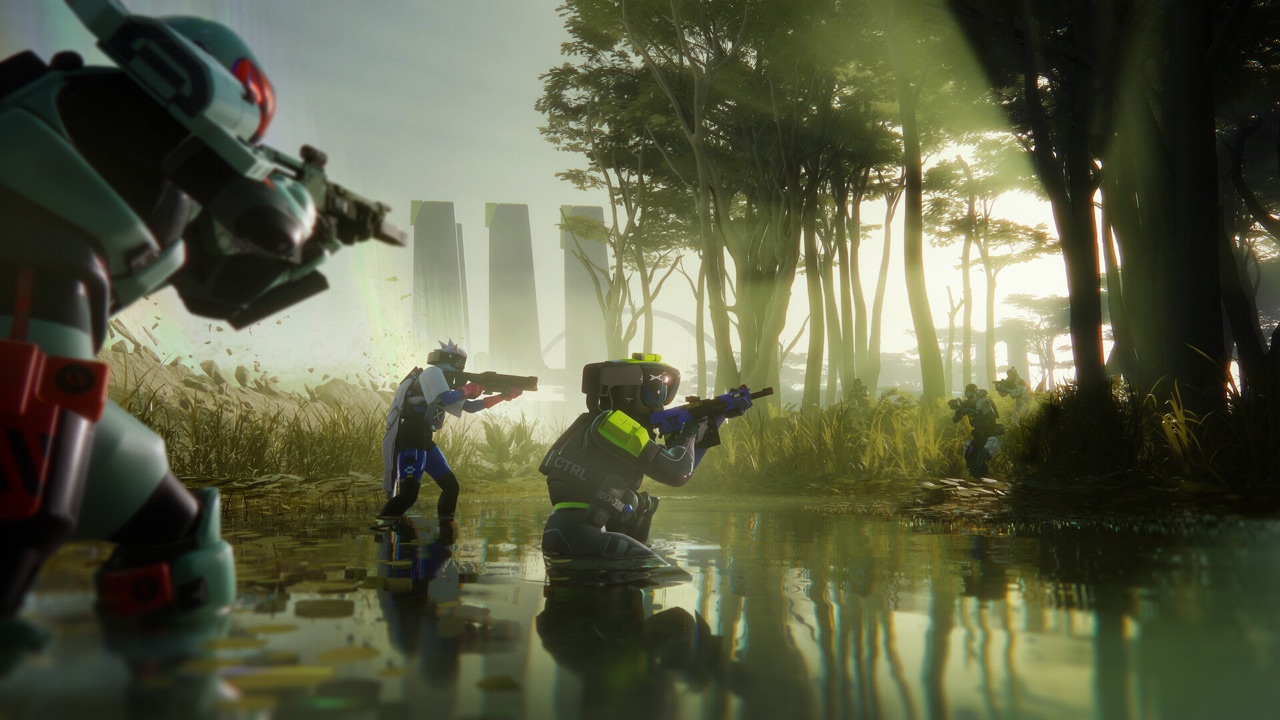
What Does a $200 Million Game Have to Sell to Break Even?
Nobody in the industry has a clean answer to this question: at what point does a live-service AAA game generate enough revenue — across launch sales, microtransactions, battle passes, and years of player retention — to justify the nine-figure production budget it took to ship? Not break-even in a quarterly report sense. Profitable enough that the studio doesn't get shut down or absorbed or quietly starved of headcount.
Right now, three separate games are running the experiment simultaneously.
The Problem With Pokémon Champions Isn't the Bugs
Two weeks before Pokémon Champions launched, Pokémon Pokopía sold 2.2 million copies in four days and added approximately $14 billion to Nintendo's market cap. A cozy life sim. No battles. Nearly zero marketing. Highest-rated game in the franchise's history.
Then Pokémon Champions arrived on April 8, 2026, and within 24 hours the developer was issuing a sincere apology.
The bugs themselves were real: the docked Switch 2 required undocking and re-docking every single boot to display at proper resolution; Gallade appeared female in the tutorial (impossible in the mainline games); Mega Evolution animations misfired when both players transformed simultaneously; attack selection locked up when hovering over the Mega Evolve button. Two maintenance windows in the first 48 hours. A Pokémon Home transfer bug that trapped transferred Pokémon in limbo — fixed before the apology went out, but it happened.
But the bugs aren't the real story. Only 187 of 1,000+ Pokémon were available at launch. The 6v6 Singles format — the format that competitive players actually care about — was absent. Held items like Life Orb, Choice Band, Choice Scarf, Assault Vest, and Heavy Duty Boots were missing entirely. Items shown in promotional trailers shown at Pokémon Day. Trailers that carried a disclaimer about "Pokémon unavailable at time of Nintendo Switch version's release" in fine print.
Nintendo Life called it "a fleshed out beta." That framing is charitable. The VGC community — the people Pokémon Champions is ostensibly built for — needed 6v6 and held items on day one because those are the formats they've been running for years. Launching without them isn't a soft start. It's launching the competitive platform without the competitive features.
What makes this specific situation worth examining closely is the economics underneath it. Pokémon Champions is free-to-play, which means the sustainable revenue model depends entirely on the player base sticking around long enough to spend money. A rough launch window is survivable in a premium game — you sell your copies, you patch the experience, you keep the players you have. In a free-to-play game, a rough launch window means players leave before they form any financial relationship with the game at all.
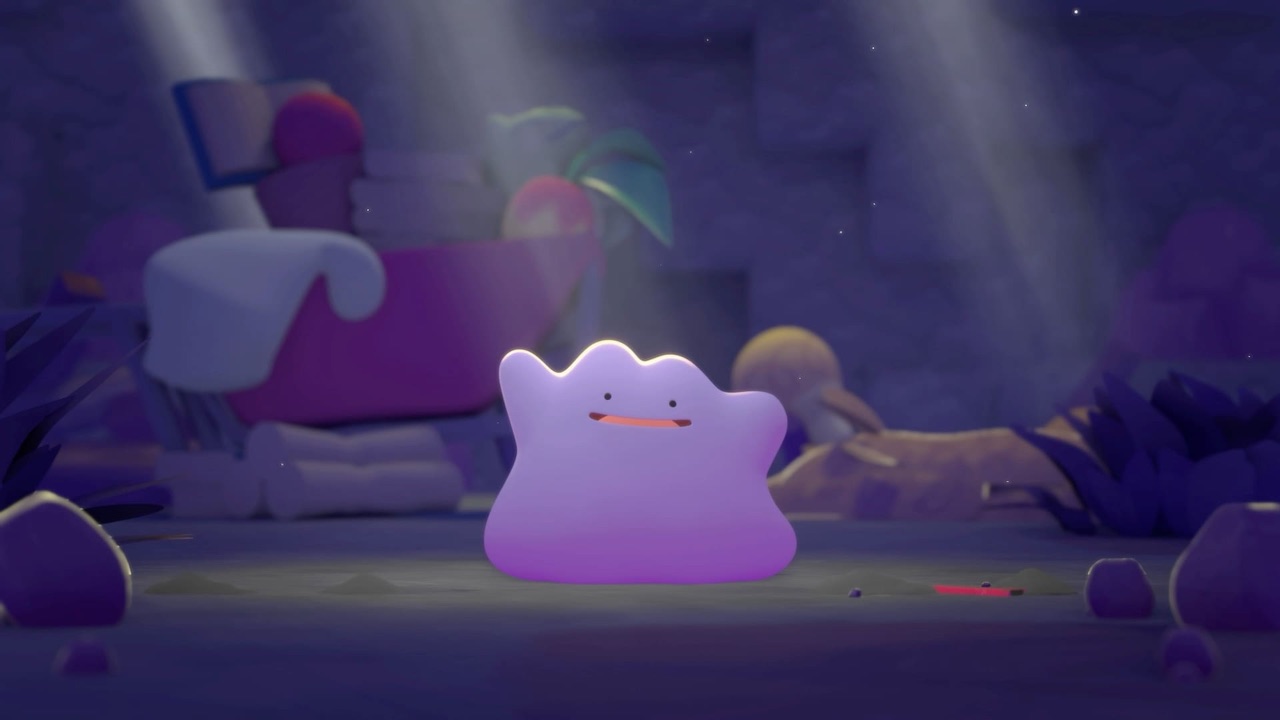
The apology was swift and the bug fixes were deployed within 48 hours — credit where it's due. Some VGC writers are arguing Champions "could seriously transform competitive Pokémon play" if it eventually ships the full feature set. The free-to-play model eliminating EV-training grind is a real accessibility win. That case depends entirely on whether the VGC audience comes back after being burned at launch, which is not a given — and the game's free-to-play model has no mechanism to compel return.
Crimson Desert's Recovery Is Impressive. The Math Is Still Uncomfortable.
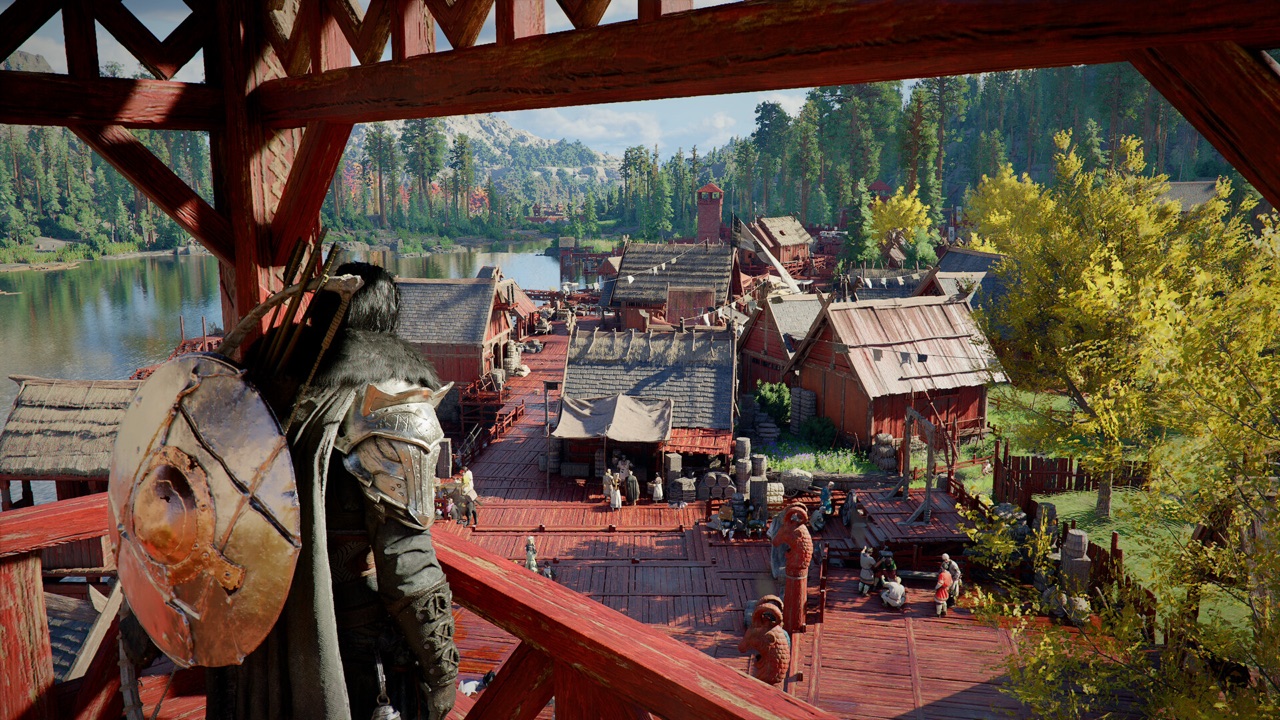
$135 million. Seven years. 2 million copies in under 24 hours. Stock down 29% in a single session.
That sequence tells you how the market evaluates a $135 million release in 2026. Pearl Abyss shipped a game that achieved commercial momentum almost immediately — 248,510 peak concurrent players on Steam at launch — and Wall Street still punished them because the review scores (Metacritic 78, Steam "Mixed" at launch) didn't match what a $135 million, seven-year production is supposed to deliver.
The community complaints were legitimate: boss fights that felt punishing in ways that felt arbitrary rather than designed; controls that took real time to internalize; a UI that never quite got out of its own way; a story that couldn't hold its narrative thread. And separately, a controversy that is still unresolved: AI-generated art found in environmental props, which forced Pearl Abyss into a public apology but left the question of whether those assets were actually removed unanswered.
We covered the launch in more detail here.
What's happened since is worth examining as a development story, not just a community relations story. The patch cycle has been fast. Steam ratings climbed: Mixed → Mostly Positive → now Very Positive. The April–June roadmap is specific and substantive — Boss Replay/Rematch system, Re-blockade (enemies recapture zones players previously liberated), difficulty settings on a spectrum from Easy to Hard, new skills for secondary characters Demian and Ungka, graphics improvements, keyboard/gamepad remapping, dedicated storage categories. The official OST as free DLC.
Pearl Abyss called the process "listening to your voices, contemplating the direction for a better play experience, and making improvements one by one." The difficulty settings addition is particularly telling — patches in the first weeks overcorrected and made the game too easy, so the community asked for a hard mode back. The developer shipped it. That is a responsive development loop.
The Games Hub described the turnaround as "one of the more impressive post-launch recoveries in recent memory." That framing is accurate. But there is a specific problem with Crimson Desert's recovery that distinguishes it from the usual live-service patch story: this is primarily a single-player open-world game. It doesn't have a battle pass. It doesn't have seasonal content that drives recurring spend. The path to profitability runs almost entirely through initial sales — copies sold, DLC, possibly a sequel — not through a years-long engagement loop.
Which means the 29% stock crash on launch day reflected something real. A premium single-player game with a live-service budget needs to sell enough at launch to justify the spend. Post-launch goodwill, however earned, doesn't retroactively fill the gap between what was spent and what came in.
Marathon's Numbers Are Being Read Two Different Ways Simultaneously
Sony paid $3.6 billion for Bungie in January 2022. Marathon launched on March 5, 2026, at $40.
Three weeks later, Alinea Analytics estimated Marathon had sold approximately 1.2 million copies, generating roughly $55 million in gross revenue. The production budget is reportedly over $200 million — possibly $250 million excluding post-launch costs, per an unconfirmed Forbes report citing anonymous Bungie insiders. Bungie has confirmed nothing.
Platform distribution is notable: ~70% Steam, ~19% PS5, ~11% Xbox. The platform whose manufacturer owns the studio at a $3.6 billion acquisition price accounted for roughly one in five copies sold. Sony CFO Hiroki Totoki previously described Bungie's "independence getting lighter." PlayStation Studios boss Hermen Hulst told PC Gamer that Sony is "not going to make the same mistakes" it made with Concord — Hulst described Concord as "insufficiently differentiated in a hypercompetitive market," and acknowledged that Marathon's alpha response had been "varied."
Concord had near-zero player engagement and universally negative reviews. Marathon has 380,000 daily active users across all platforms, 84.8% positive Steam reviews, and an endgame raid — Cryo Archive, unlocked on March 19 via a community ARG — that the player base organized a voluntary review moratorium to avoid rating the game before experiencing. After the moratorium lifted, Marathon's Metacritic score climbed above original Destiny's score. These are not Concord numbers.
The monetization controversy that nearly derailed the first weeks is documented here.
But the trajectory of player counts is what the sustainability question lives inside. Steam peak at launch: 88,337. Server Slam beta peak: 143,621 (higher than launch day). Current 24-hour Steam peak: approximately 25,392 — down from 88,337 at launch. Steam ranks Marathon 77th in daily active players. Average playtime sits at 27.8 hours on Steam, 16.5 on PS5 — healthy numbers for an extraction shooter. 22% of Steam players have logged over 50 hours; 7% over 100 hours. The players who stayed are playing.
Whether that core is large enough is a question Bungie's undisclosed microtransaction revenue would answer. They haven't disclosed it.
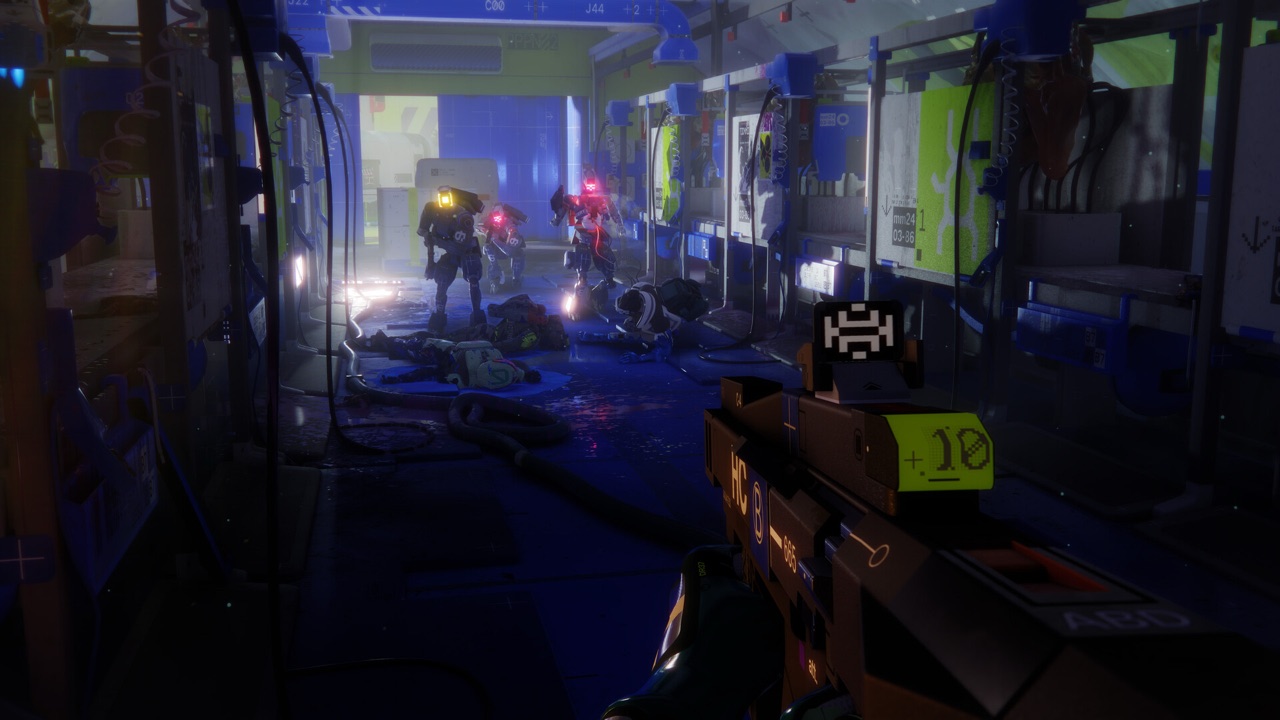
Bungie's public statement on the sustainability question was unambiguous: "We are in it for the long haul with Marathon. We look forward to many years of steady improvements to every aspect of the game." That commitment is easy to make. The structural reality is that Destiny 2, Bungie's other live-service game, is at historic concurrent lows on Steam. Marathon needs to be the growth engine. Whether ~380,000 DAUs — before any seasonal content drop, before the second map, before the first major content expansion — constitutes a foundation or a warning depends entirely on what the microtransaction revenue looks like.
The Development Economics of "We're Listening"
Post-launch recovery is now the plan, not the contingency. "Listening to your voices." "We are in it for the long haul." A sincere apology within 24 hours.
This is the live-service developer playbook in 2026. It is not cynical — the patches are real, the changes are substantive, and player communities are generally capable of distinguishing between genuine responsiveness and PR management. Crimson Desert's Steam rating recovery is real. Marathon's endgame design shows that Bungie built something players want to engage with at depth. Pokémon Champions' bugs were fixed fast.
The playbook exists because development timelines are compressed by publisher pressure and market windows. Features get cut to hit launch dates. The expectation, embedded in every one of these releases, is that the live-service model provides the runway to finish what shipped incomplete.
That calculation works differently depending on the revenue model. Crimson Desert's recovery, however genuine, happened in a game where the revenue window was primarily launch window. Marathon's recovery is happening in a game where the revenue window is theoretically indefinite — but depends on player retention at a scale the current numbers don't clearly support. Pokémon Champions' recovery is happening in a free-to-play game where the entire economic model requires the players who didn't spend money in week one to still be around in month six.
PUBG: Blindspot shut down 53 days after launch. We covered it here. Blindspot peaked at a few thousand concurrent players and never recovered — that is the floor case. Marathon's 24-hour peak of approximately 25,392 is multiples above Blindspot at its best. Whether that gap is enough is the question.
Sony spent $3.6 billion for a studio whose flagship game generated $55 million in first-month gross revenue on a $200 million production. Bungie has said they're in it for the long haul. The math of what "long haul" has to look like — how many seasons, how much microtransaction revenue per active user per month, at what retention curve — to justify that acquisition price has not been shared publicly by anyone involved.
Sources
- Pokémon Champions bugs and apology — Kotaku
- Pokémon Champions false advertising controversy — Kotaku
- Nintendo Life — "feels like a fleshed out beta"
- Crimson Desert April–June roadmap — GamesRadar
- Crimson Desert Steam "Very Positive" recovery — Games Hub
- Boss Replay and roadmap detail — Inven Global
- Crimson Desert sales and Pearl Abyss stock — Outlook Respawn
- Marathon development budget over $200M — Insider Gaming
- Marathon 1.2 million sales estimate — Games Hub
- Marathon player count down from peak — OpenCritic
- Marathon one month later — Kotaku
- PlayStation Studios boss on Concord comparison — PC Gamer
- Marathon "long haul" statement — The Gamer
- Marathon 19% PS5 platform split — Video Games Chronicle

Founder of GGS Blog and Site Reliability Engineer at Box. I write about gaming, AI in gaming, and game development with a technical lens — 10+ years in software engineering, 20+ years as a gamer. My work focuses on what the tech actually means for players.
Never miss a post
Subscribe to the GGS Blog newsletter for gaming news, tech insights, and AI in the game industry — delivered straight to your inbox.
Free. No spam. Unsubscribe in one click.
Comments
What to Read Next
Continue exploring our coverage of gaming, technology, and AI.
 Game Development
Can a Solo Dev Ship an iOS Game in 2026 Using Only AI Tools? (Build Log, Day 0)
Day 0 of a build log: I'm going to attempt to ship an iOS game to the App Store in 2026 using AI tools for as much of the work as possible. Today is reconnaissance — what AI can actually do, what it can't touch, and three falsifiable predictions for the next checkpoint.
 Game Development
The Jobs Don't Come Back: What It Means to Be a Game Developer in 2026
Over 45,000 gaming jobs have been cut since 2022, and 55% of those laid off still haven't found new work. The Skillsearch 2026 report puts human numbers to a crisis that studios are now describing as permanent — and the people who built the games you love are the ones paying for it.
 Game Development
Tencent Unveils VISVISE AI Suite at GDC 2026: From Days to Minutes
Tencent dropped a full arsenal of AI game dev tools at GDC 2026 — VISVISE turns days of animation work into minutes, MagicDawn brings AAA lighting to Godot, and ASI World can generate an entire SRPG from a single prompt. Here's what it all means for developers.