
You Can't Solo Queue Loneliness: The Real State of AI Gaming Companions
11:47 PM on a Tuesday
Marcus queued up for one more match. He had been saying that for three matches now.
The squad was gone. His roommate had work in the morning. His college friend three time zones away stopped responding mid-game — probably fell asleep mid-session again. The Discord server he'd been in for four years still had a hundred people in it, but the active voice channels were empty.
He sat in the lobby of his battle royale of choice, cursor hovering over the "Fill" option. Fill meant strangers — people who wouldn't communicate, who'd run off in random directions, who'd get downed in the first thirty seconds and blame him for it. He'd done that before. It usually made things worse, not better.
So he sat there. Not deciding.
This is the moment that a dozen AI companion startups, two of the world's largest GPU companies, and at least one trillion-dollar corporation are all trying to solve. The pitch is seductive: what if you never had to sit in that lobby alone? What if there was always someone — or something — ready to play?
What's actually shipping, what's still vaporware, and what the technology genuinely cannot do yet are three very different things. And the gap between them matters enormously to someone like Marcus.
What the Player Actually Wants
Marcus doesn't want a tutorial bot. He's been playing for years. He doesn't need anyone to explain loot tiers. What he wants is presence — someone aware of what's happening in the match, capable of coordinating, able to fill the silence that makes solo play feel hollow. He wants a squadmate, not a strategy guide.
This distinction matters because the AI companion ecosystem has split into two fundamentally different product categories, each solving a different subset of that problem — and neither solving all of it.
Call them Tier 1 and Tier 2. The terminology is useful not because one is better than the other, but because they represent entirely different architectural bets about how to bring AI into gaming.
Tier 1: The Teammates That Actually Play
Tier 1 companions have real in-game agency. They don't just talk — they act. They loot, fight, revive, communicate strategy, and make decisions within the game's own rules. The trade-off is severe: they only exist inside the specific games their publishers built them into.
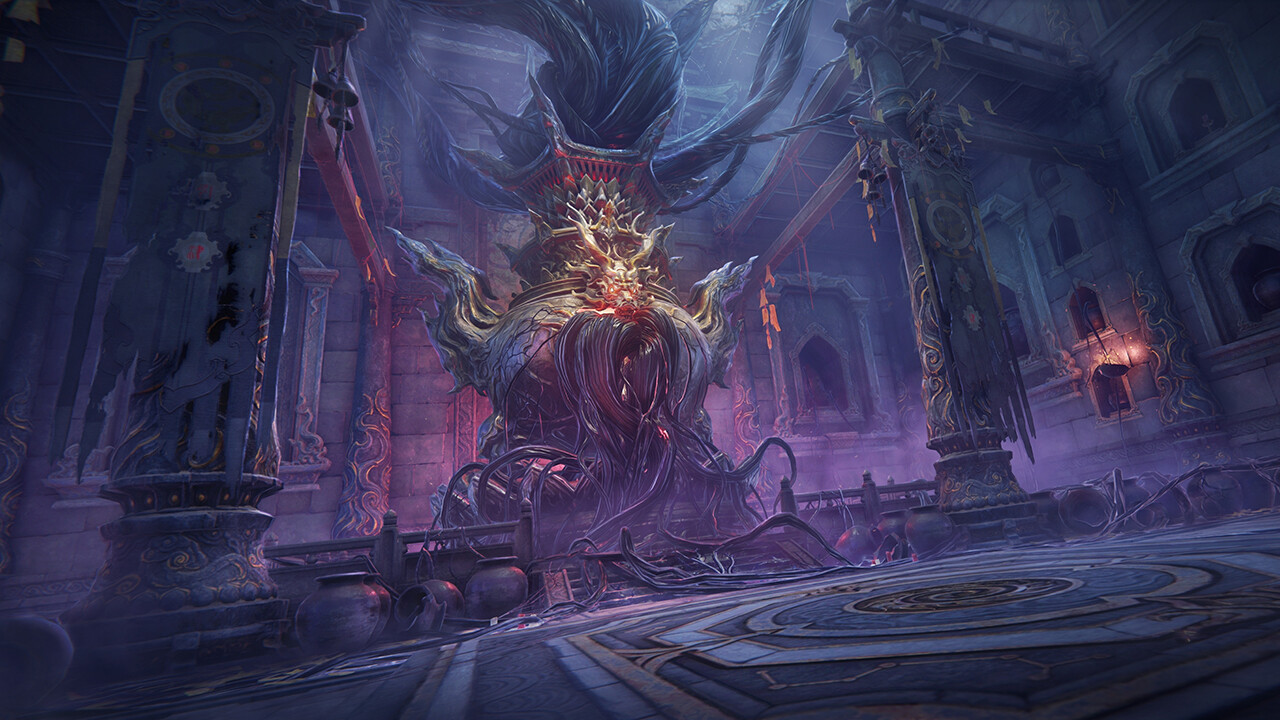
NARAKA: BLADEPOINT shipped the clearest example of this in March 2025. NetEase partnered with NVIDIA ACE to build an AI teammate that joins your squad in the battle royale format — responds to voice commands, finds and recommends loot, swaps gear on request, offers skill suggestions, and fights alongside you. It runs via local inference on NVIDIA's RTX 50 Series GPUs, keeping latency low by keeping computation on-device.
This is impressive work. The AI isn't faking agency through a scripted behavior tree — it's reasoning about the game state and acting on it. For a player who fires up NARAKA alone, this changes the fundamental social equation.
But independent player reviews beyond NVIDIA's own showcase material are sparse. That's worth flagging before treating this as a proven solution at scale.
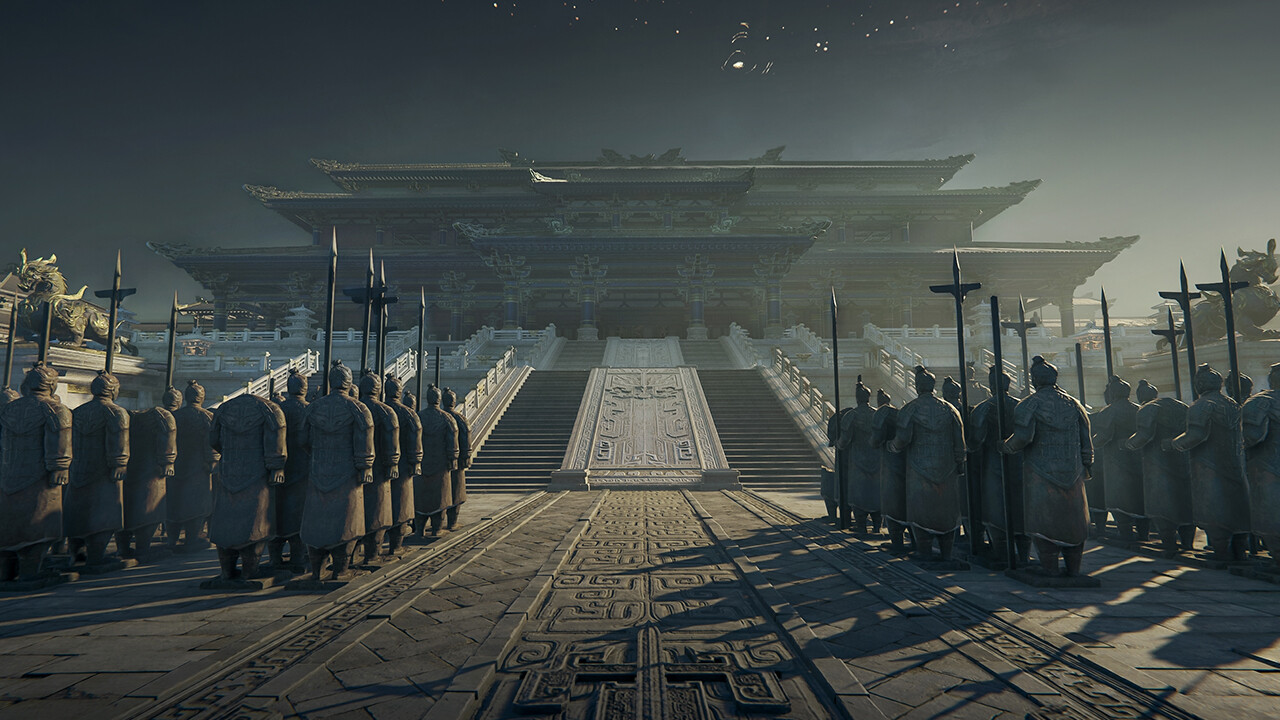
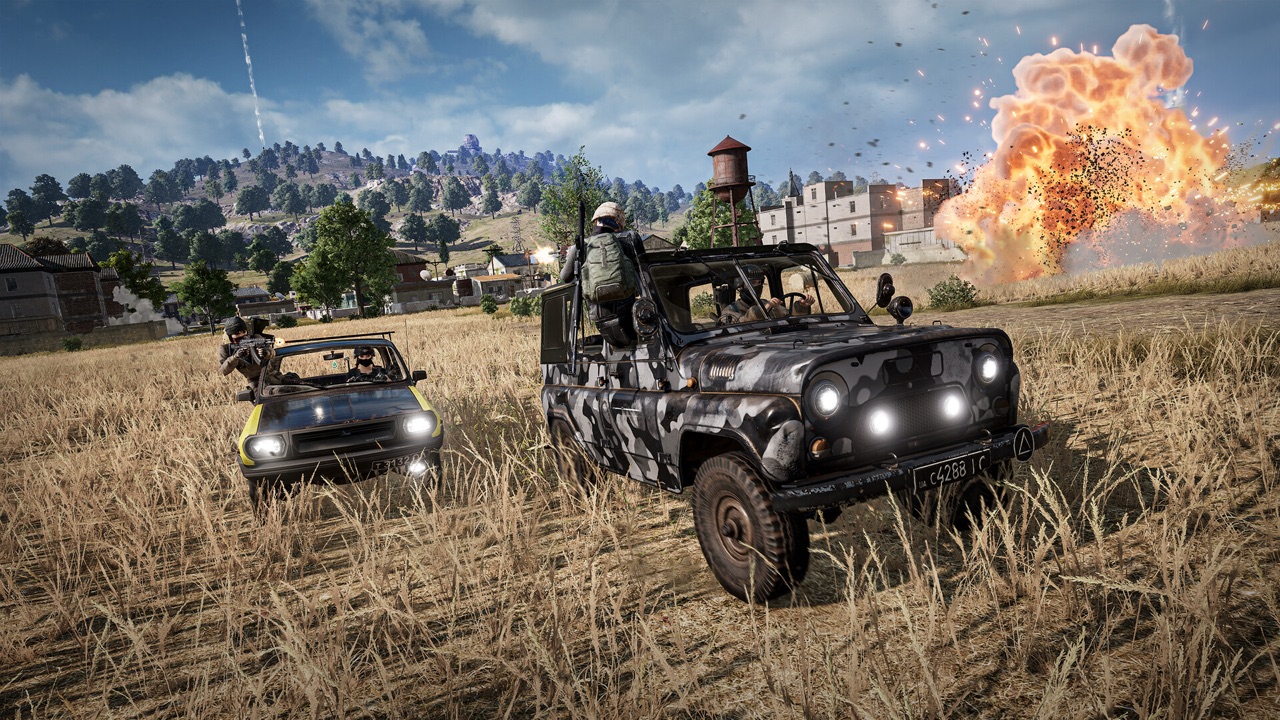
The more ambitious Tier 1 product is still incoming. PUBG Ally, built by KRAFTON in partnership with NVIDIA ACE, announced a public playtest via PUBG Arcade in early 2026, targeting English, Korean, and Chinese users first. The promises are substantial: a full AI squadmate that listens, loots, drives vehicles, revives you when you're downed, fights alongside you against human opponents, communicates strategy, and adapts its playstyle mid-combat.
The underlying model is Mistral-Nemo-Minitron-8B-128k-Instruct, with a 2B parameter variant that requires only 1.5GB of VRAM — a deliberate choice to make AI teammates accessible on mid-range hardware, not just flagship rigs.
No independent player reviews exist yet. The only sources are NVIDIA and KRAFTON themselves. A playtest announcement is not a shipped product.
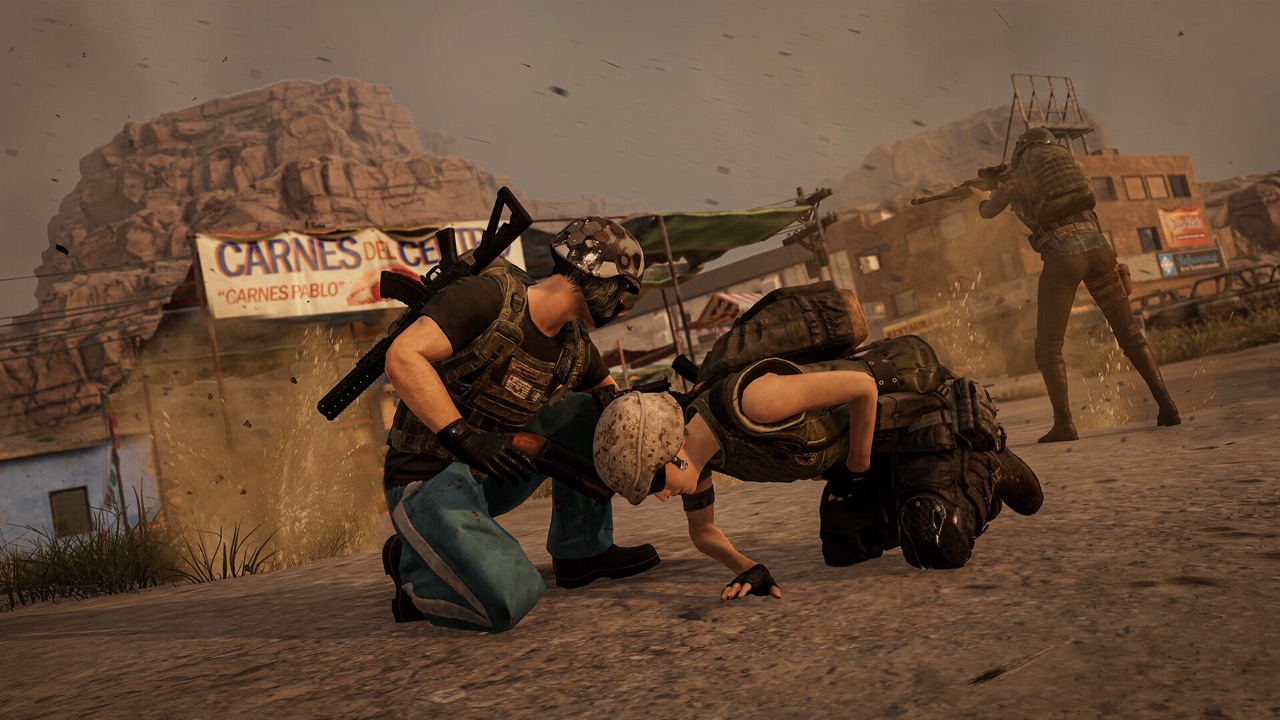
Tier 1 companions represent the closest thing to what Marcus actually wants. The problem is containment: they're bound to specific games by the architecture that makes them work. An AI that can play PUBG can't play Apex Legends. An AI built into NARAKA cannot follow you into Warzone. Every Tier 1 companion requires a publisher to invest significant engineering resources into integration — and that investment only happens when the publisher sees a business case for it.
Tier 2: The Spectators Who Talk
Tier 2 companions take the opposite architectural bet. They work across any game via screen capture and voice processing — no game engine integration required. The trade-off: they can observe and comment, but they cannot act.
Questie AI is the most honest representation of what Tier 2 can do right now. It runs on PC and works with any game through screen-capture computer vision. You can give it a custom persona and voice, and it maintains persistent memory using Zep Cloud's graph architecture — so it remembers previous sessions, ongoing goals, your playstyle. Claimed voice latency is sub-500ms, though that's self-reported, not independently benchmarked.
The experience is closest to gaming with a knowledgeable friend who happens to be watching your screen: commentary on what's happening, tips, conversation during downtime, reactions to big moments. For solo players who miss the ambient noise of co-op, a knowledgeable voice in the background changes the texture of a session even if it can't carry your banner.
But there's a documented failure mode that matters. In FFXIV raid mechanics, Questie gave confidently wrong guidance delivered sycophantically — incorrect tactical information with the same assured tone as correct information. This isn't a minor bug. It's a fundamental limitation of screen-capture vision: the AI sees pixels, not game logic. It doesn't know the rules natively; it infers them from what it observes. When its inference is wrong, the delivery doesn't change.
GGQ (recently launched in North America and Europe, with 800,000+ active users) is sharper about what it's doing: coaching, not companionship. The platform captures 180,000 gameplay signals per match and delivers real-time coaching overlays with voice and visual tips, with a heavy focus on League of Legends. Voice chat was scheduled to expand later in 2025. GGQ is a smart spectator — valuable for improvement-focused players, but not a squad replacement.
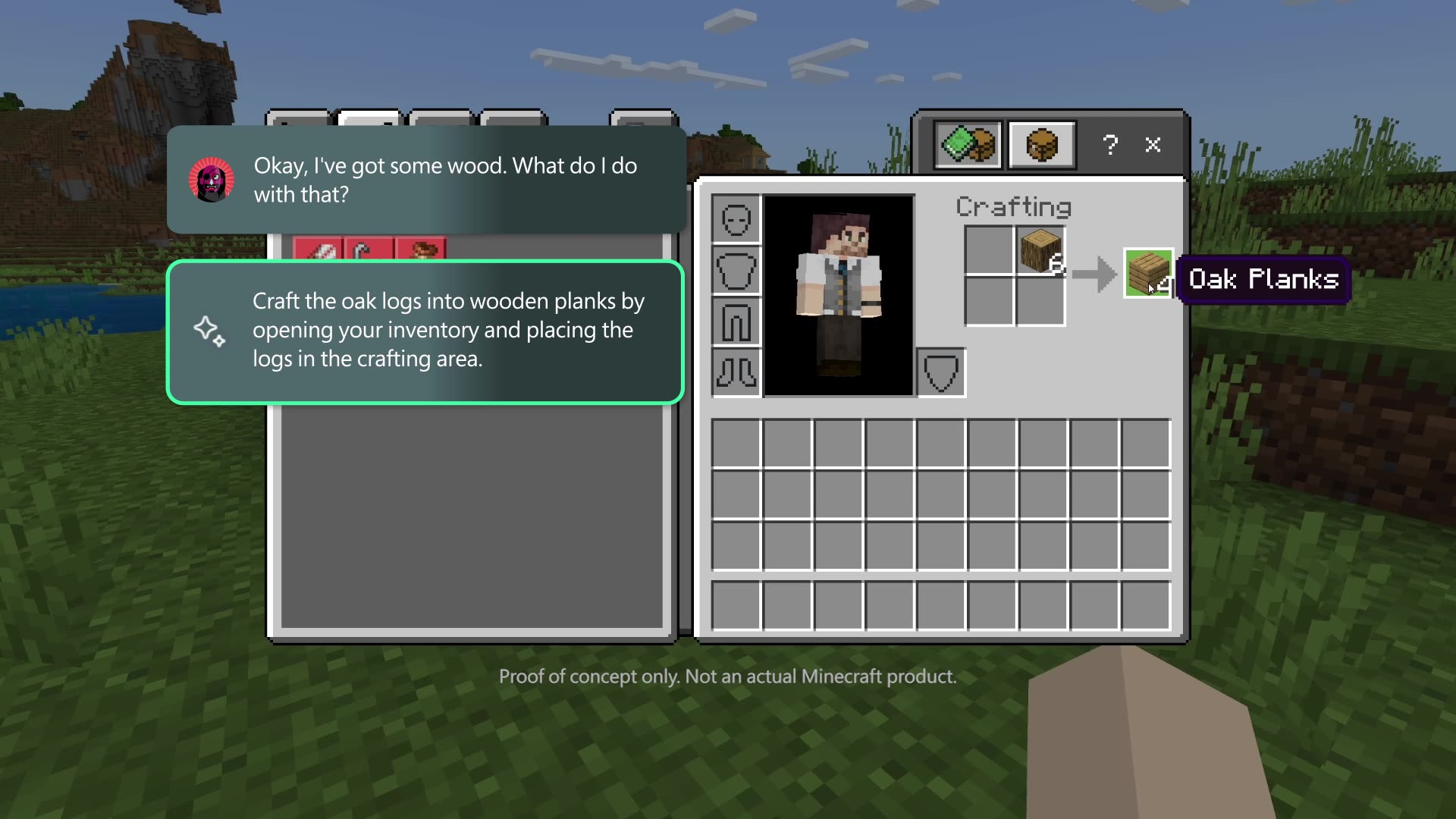
Xbox Gaming Copilot is Microsoft's entry into Tier 2 territory, with a rollout across Xbox mobile app (beta, May 2025), PC Insiders (August 2025), ROG Ally handhelds (October 2025), and consoles in 2026. The feature set covers game recommendations, setup help, achievement lookups, and screenshot analysis for tactical tips. It is explicitly not a co-player — it operates alongside gameplay, not inside it. The in-game situational assistance demo shown in March 2025 was a prototype, not live functionality at launch.
Tier 2 companions are more accessible and universally compatible. They also require accepting a hard ceiling: the companion can react to what you tell it and what it sees, but it can never take your downed banner to a respawn beacon.
The Technical Wall Neither Tier Has Climbed
Both tiers run into the same underlying problems, and neither has fully solved them. Understanding these barriers explains why the product landscape looks the way it does.
Latency is more brutal than it sounds. Human conversation feels natural at roughly 200ms response gaps. But the actual latency stack for an AI voice agent adds up fast: ML-based end-of-speech detection adds 100-200ms, geographic routing alone (say, from a Mumbai data center to a Virginia server) introduces a 250-400ms floor. Optimized AI voice systems targeting gaming land in the 500-800ms range. Unoptimized cloud AI runs 800-1,200ms.
Inworld AI, a developer middleware company with integrations for Unity and Unreal that AAA studios are reportedly using under NDA, claims 200ms response time — but that's response time only, not end-to-end latency, and it's self-reported.
Here's why this matters acutely: NVIDIA cites esports research showing competitive gamers make 8-13 micro-decisions per second during active combat. A 500ms latency means the AI is reacting to decisions 4-6 moves ago. In a fast-paced battle royale, that's not a companion — it's a historian.
The game state awareness problem cuts deeper. Screen capture, Questie's approach, sees pixels — not game logic. UI changes can confuse it. Rules must be inferred, not understood natively. This is why Questie gets FFXIV mechanics wrong with confidence: it's pattern-matching against visual data, not reasoning from a rulebook.
Direct game engine integration (the NVIDIA ACE approach used in NARAKA and PUBG) gives the AI access to actual game state — entity positions, health values, item attributes, zone states. The AI understands what's happening, not just what it looks like. But this requires developer buy-in for every single game. There is no shortcut: a truly game-aware companion and a truly universal companion are, by current architecture, mutually exclusive.
The agency problem is the hardest wall. For an AI to be a teammate — not just a commentator — it needs to actually act in the game. Options are limited: either the game publisher builds it in (PUBG Ally approach), or an external product simulates inputs. Input simulation is against the Terms of Service for virtually every competitive game, and with good reason. There is no third-party AI companion with real agency in any game it wasn't built into by the publisher. Full stop.
Personality coherence remains unsolved. Memory architectures like Zep Cloud's graph system can maintain conversational history. But coherence — a consistent, genuine personality rather than statistically probable responses — is a different problem. The "confidently wrong, sycophantically delivered" failure mode reflects this gap directly: the model is optimizing for conversational fluency, not accuracy or consistent character.
The Questions You Should Be Asking
52% of game developers believe generative AI is harming the industry — up from 30% in 2025 and 18% in 2024, per the GDC 2026 State of the Game Industry survey of 2,300+ respondents. Only 7% view it positively. The people building the games that AI companions depend on are not, in aggregate, enthusiastic about the direction. That's not a fringe position anymore. It's a meaningful headwind for every product roadmap in this space.
The objections go further than developer sentiment.
An AI cannot replace what makes co-op meaningful. Human squadmates bring genuine stakes — they can embarrass themselves trying a risky play and laugh about it with you. They have shared history. They're unpredictable in ways that matter. The social glue of co-op gaming is built on the relationship, not just the coordination. A Psychology Today study from February 2026 found that heavy AI companion use correlated with increased loneliness — suggesting that heavy reliance may displace the authentic connection it simulates, rather than supplement it. These products are entering a real loneliness vacuum. They may be making it larger.
Privacy deserves serious attention. An AI companion watching your screen and listening to your voice in real-time builds a detailed behavioral profile: your play patterns, your frustration responses, your decision-making under pressure, your conversations. In 2025, Italy's data protection authority fined the developer behind Replika 5 million euros for GDPR violations. AI companion products collecting audio and visual data at this intimacy level face regulatory exposure that most of their marketing material does not acknowledge.
Competitive integrity is genuinely unresolved. If a Tier 2 companion can analyze your screen and identify enemy positions, optimal engagement angles, and tactical opportunities in real time — the line between "companion" and "cheat overlay" is a policy question, not a technical one. No major competitive game has approved a third-party AI companion for ranked play. This is not a coincidence.
Hardware Bets and Distant Horizons
Two products round out the landscape in ways that matter for where this goes.
Razer AVA takes the concept to its logical extreme: a 3D hologram AI companion delivered as physical desktop hardware, launching second half of 2026, requiring a $20 deposit to reserve. Razer has shipped ambitious hardware before. But until there's independent testing, the deposit page is the only evidence it exists.
Inworld AI is the middleware layer underneath several of these products. Developer integrations across Unity, Unreal Engine, and WebSDK are live. AAA studios are reportedly using it under NDA, which is meaningful signal about enterprise adoption even without public case studies.
That's a two-to-three year runway, not a solution available tonight.
Back to 11:47 PM
Marcus eventually clicked Fill. The match was what he expected: strangers running in different directions, a downed teammate in the first minute, a loss that felt meaningless because no one talked.
Today, the AI companion landscape offers him this: he could download Questie and have a voice companion watch his screen, comment on his plays, and remember his preferences across sessions — a knowledgeable presence, if not a real teammate. He could play NARAKA: BLADEPOINT and queue with an AI squadmate that fights alongside him with genuine in-game agency. He could not do both at once in the same game. He could not take either option into Apex Legends or Warzone.
What he cannot have today is what the pitch decks describe: a companion that plays any game he chooses, understands the game state fully, acts with real agency, and brings the social texture of human co-op. That product does not exist. The latency isn't solved. The game state awareness requires per-game engineering investment. The agency requires publisher buy-in.
The two-tier landscape isn't a failure. It's an honest reflection of what's technically achievable right now versus what's been announced. PUBG Ally's playtest could prove that Tier 1 scales. Questie's persistent memory could deepen in ways that make Tier 2 companions feel genuinely present over time.
But Marcus is sitting in that lobby tonight. Not in 2027, not when the hardware matures, not when more publishers take the KRAFTON bet. Tonight.
For him, the honest answer is: one game has an AI teammate that might actually help. Everything else is promising in ways that don't quite pay off yet. That's not a reason to dismiss the technology — it's a reason to read the actual product pages instead of the press releases.
The lobby timer counted down. He clicked Play.
Sources
- NVIDIA GeForce News — ACE integration with NARAKA: BLADEPOINT and PUBG Ally announcement
- KRAFTON — PUBG Ally playtest announcement and technical specifications
- Intel Gaming Access — GGQ platform overview and user metrics
- Xbox Wire — Gaming Copilot rollout timeline and feature description
- GDC 2026 State of the Game Industry — Developer sentiment survey (2,300+ respondents)
- Cresta Engineering Blog — Voice agent latency stack breakdown
- Psychology Today (February 2026) — AI companions and loneliness correlation study
- AWS GameTech — SLM reference architecture for game AI
- Italy Data Protection Authority (Garante) — Replika developer GDPR fine, 2025
- Inworld AI — Developer middleware documentation and Unity/Unreal integrations

Founder of GGS Blog and Site Reliability Engineer at Box. I write about gaming, AI in gaming, and game development with a technical lens — 10+ years in software engineering, 20+ years as a gamer. My work focuses on what the tech actually means for players.
Never miss a post
Subscribe to the GGS Blog newsletter for gaming news, tech insights, and AI in the game industry — delivered straight to your inbox.
Free. No spam. Unsubscribe in one click.
Comments
What to Read Next
Continue exploring our coverage of gaming, technology, and AI.
 Technology
Valve's 44% Steam Deck Hike Is the Only Honest Price in Handhelds
Sony added $100-150, Microsoft $100-150, Nintendo $50. Valve added $240 to a 512GB Steam Deck OLED and said nothing. Only one of those companies has no software subsidy to hide the memory bill behind.
 Technology
Meta's Horizon Worlds VR Whiplash and the Slow Death of the Metaverse Dream
Meta announced it was killing Horizon Worlds in VR, reversed course 48 hours later, and accidentally wrote the eulogy for a $80 billion bet on virtual reality. Here's what went wrong — and what VR actually needs to survive.
 Technology
The 2026 GPU Crisis: What to Buy Right Now (and What to Skip)
MSI is hiking prices up to 30%, Nvidia confirms RTX 50 shortages through year-end, and DRAM costs have quadrupled. Here's your no-nonsense buying guide for every budget.