
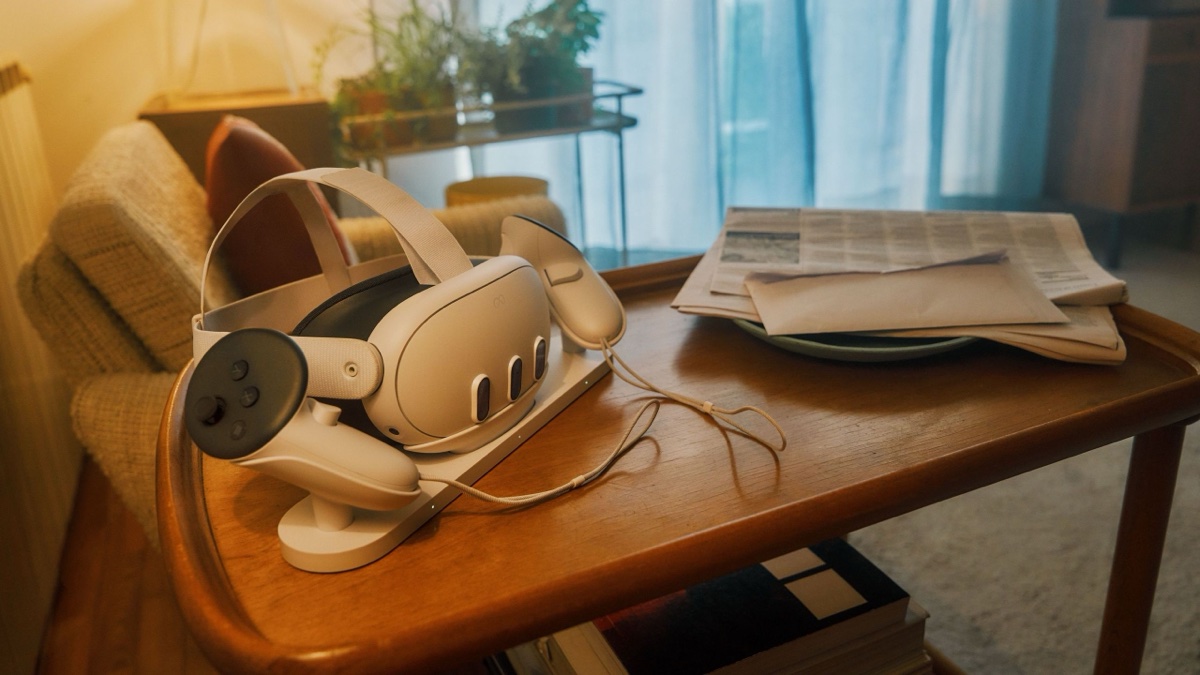
Meta's Horizon Worlds VR Whiplash and the Slow Death of the Metaverse Dream
The 48-Hour Reversal That Said Everything
On March 18, 2026, Meta announced that Horizon Worlds — the social VR platform that was supposed to justify renaming Facebook and spending tens of billions on virtual reality — would be pulled from the Quest store by March 31 and lose VR support entirely by June 15. The platform would pivot to mobile-only, where Meta said the "much bigger audience" actually lives.
The VR community, small but vocal, reacted exactly how you'd expect. Fans called themselves "heartbroken." Developers who built worlds on the platform questioned why they'd invested time in Meta's ecosystem. The backlash was immediate, loud, and pointed.
Within 48 hours, Meta CTO Andrew Bosworth appeared on an Instagram Stories Q&A and said the company had decided to keep Horizon Worlds running in VR "for the foreseeable future." The reversal was framed as listening to the community. The reality was simpler: Meta had accidentally made its internal strategy too public, too fast, and the optics were terrible.
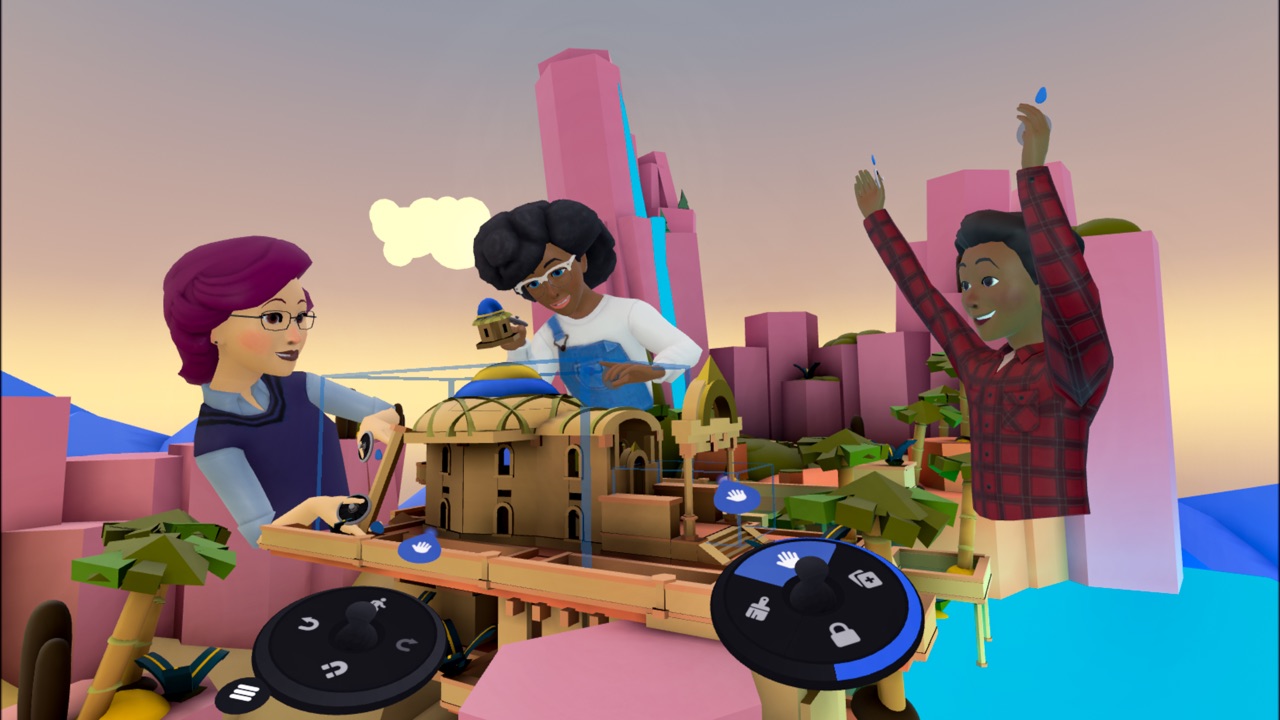
But here's what makes this incident worth analyzing beyond the PR fumble. The reversal didn't actually change anything meaningful. Existing games and experiences built on the older Horizon Unity engine will keep working in VR. But worlds created with Meta's newer Horizon Engine are flatscreen-only — no new VR content is coming, the app won't be promoted or featured, and the development focus is explicitly mobile. Meta didn't save Horizon Worlds in VR. It put it on life support and called it a reprieve.
This isn't just a story about one platform's messy pivot. It's the clearest signal yet that the "VR metaverse" — the concept that convinced Mark Zuckerberg to bet his company's identity on strapping screens to people's faces — is over as a mainstream consumer strategy. And the question that remains is whether VR itself can survive the fallout.
$80 Billion and Counting: The Reality Labs Money Pit
To understand why Meta's Horizon Worlds reversal matters, you need to understand the scale of the financial commitment behind it.
Meta's Reality Labs division — the unit responsible for Quest headsets, Horizon Worlds, and the broader metaverse vision — lost $19.1 billion in 2025 alone. That's up from $17.7 billion in 2024 and $16.1 billion in 2023. The Q4 2025 loss was $6.02 billion, pushing the division's cumulative operating losses past $80 billion since late 2020.
For perspective, Reality Labs generated just $2.2 billion in revenue across all of 2025 — against those $19.1 billion in losses. The unit burns roughly $9 for every $1 it earns. And in January 2026, Meta laid off more than 1,000 Reality Labs employees — about 10% of the division — in what was described as a pivot away from VR and toward AI and wearable technology.
Zuckerberg told investors that 2026 losses would be "similar to 2025 levels" but that this year would "likely be the peak, as we start to gradually reduce our losses going forward." He's been saying variations of that for three years.
The financial story of VR at Meta isn't one of patient long-term investment. It's one of a company that spent the GDP of a small country building something that never found its audience, and is now slowly — painfully — backing away while trying not to admit it.
The VR Market in 2026: Everyone Is Losing
Meta's crisis isn't happening in isolation. The entire VR headset market is contracting.
Global VR headset shipments declined 17% year-over-year in Q3 2025. IDC projects the overall market for mixed and virtual reality headsets dropped 42.8% for the full year. Meta shipped 1.7 million Quest headsets in the first three quarters of 2025, a 16% decline from the same period in 2024. For the first time in years, Meta didn't release a new Quest model in October 2025, breaking its annual refresh cycle.
Meta still dominates what's left of the market — the Quest lineup holds roughly 75-80% market share — but dominating a shrinking market isn't the victory it sounds like.
Then there's Apple, whose entry was supposed to catalyze mainstream VR adoption. The Vision Pro, launched at $3,499, has been a commercial disappointment by any metric. Total shipments for 2025 are estimated at around 80,000-90,000 units — a fraction of even modest expectations. Apple slashed its digital advertising spend for the device by over 95% in key markets. Production halted. The Vision Pro remains available in just 13 countries with no expansion planned.
Apple paused Vision Pro updates in 2025 and shifted engineering resources to smart-glasses projects. Even Apple — a company that can sell almost anything to its installed base — couldn't make people want a heavy, expensive face computer.
Why People Don't Want VR (Yet)
The VR industry has spent a decade assuming the problem is technical: make the headsets lighter, the screens sharper, the tracking more precise, and people will come. But the data tells a different story. The barriers to VR adoption are more fundamental than hardware specs.
The Comfort Problem
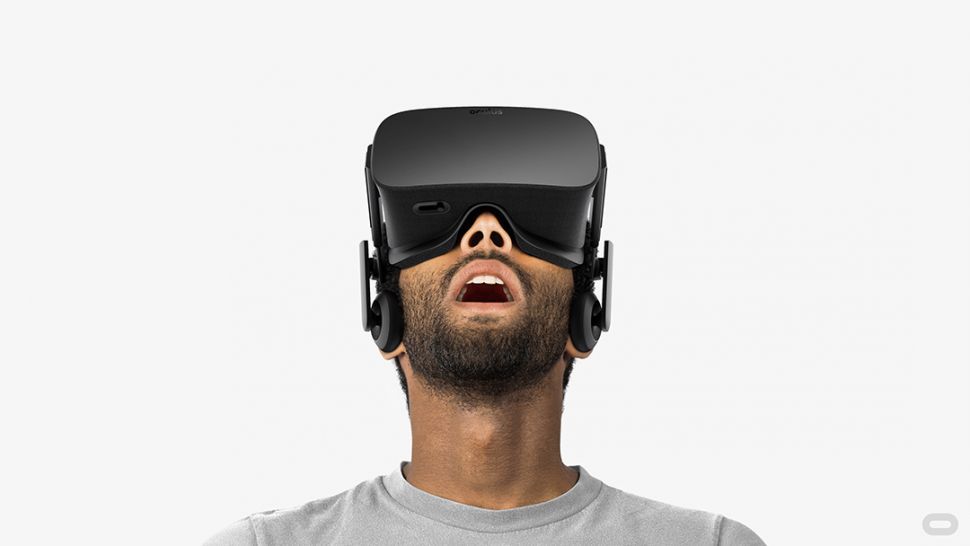
Between 40% and 70% of VR users experience motion sickness within the first 15 minutes. Extended sessions cause neck strain and "headset fatigue." Even the best headsets in 2026 are still heavy, hot, and isolating devices that most people don't want strapped to their face for long periods. The Apple Vision Pro proved that even a $3,499 device with cutting-edge engineering couldn't solve the basic physical comfort problem.
The Content Problem
This is the vicious cycle that has strangled VR growth for years. Developing VR games and experiences is expensive — you're building for a medium that requires fundamentally different design principles than flatscreen games. But the installed base is small, which means the potential revenue is small, which means publishers won't invest big budgets, which means there isn't a steady stream of compelling content, which means fewer people buy headsets.
VR still doesn't have its "killer app" — the single experience so compelling that non-enthusiasts feel they need to own a headset. Beat Saber came close. Half-Life: Alyx came close. But neither created the sustained, ongoing engagement that drives platform adoption. Industry surveys show that limited content is the single biggest barrier cited by organizations evaluating VR adoption, ahead of even price concerns.
The Social Problem
VR is inherently isolating. You put on a headset and you're cut off from the physical world around you. You can't see your phone, your family, your pet, your coffee. Social VR platforms like Horizon Worlds tried to solve this by creating virtual gathering spaces, but the experience of socializing through cartoon avatars in a virtual room is a poor substitute for what people actually want from social technology — which is staying connected while going about their lives.
This is why Meta's own data shows mobile is where the engagement is. Horizon Worlds hit 45 million total downloads across iOS and Android, with downloads up 53% year-over-year. But the platform generated only $1.1 million in total consumer spending — a monetization rate so low it borders on a rounding error. People will download a free app on their phone and poke around. They won't commit $300-$500 for a headset and hours of their day to do the same thing in VR.
The Price Problem
High-end VR headsets still run $400-$600 for consumer models, with the Vision Pro at $3,499 for the premium tier. That's a significant purchase for a device that most people use briefly and then leave in a drawer. Surveys consistently show that price is the second-biggest barrier after content, with most consumers unwilling to spend more than $300 on a device they're not sure they'll use regularly.
The Metaverse Hype Cycle: A Post-Mortem
It's worth remembering how we got here. In October 2021, Mark Zuckerberg announced that Facebook was renaming itself to Meta, signaling an all-in commitment to building "the metaverse" — a persistent, shared virtual world where people would work, socialize, and play. The announcement came amid a wave of hype: VR was going to be the next computing platform, the successor to smartphones, the thing that would make the internet three-dimensional.
Meta's stock surged initially. Other companies scrambled to announce metaverse strategies. Microsoft launched Mesh for Teams. Roblox and Fortnite positioned themselves as proto-metaverses. Consulting firms published breathless reports projecting the metaverse economy would be worth trillions by 2030.
Then reality hit. Horizon Worlds launched with cartoonish graphics and empty rooms. Users complained about harassment. The platform peaked at around 300,000 monthly active users in early 2022 before declining sharply — in a company that measures its core social platform in billions. Internal memos leaked showing Meta employees themselves didn't want to use the product. The metaverse keynotes that once generated excitement became punchlines.
By 2024, the narrative had fully shifted. AI became the technology du jour. Every dollar and every headline that once went to metaverse announcements now went to large language models and AI agents. Meta itself pivoted its messaging — Zuckerberg started talking about AI more than VR in earnings calls. The company's most successful Reality Labs product wasn't a headset at all, but the Ray-Ban Meta smart glasses, which sold well precisely because they don't try to replace reality. They just add a camera and AI assistant to something people already wear.
Meta's Real Bet Now: Glasses, Not Goggles
The Horizon Worlds reversal is the end of a chapter, but Meta hasn't abandoned wearable technology entirely. The company has just dramatically shifted which wearable it's betting on.
The Ray-Ban Meta smart glasses have been a genuine bright spot. Meta and EssilorLuxottica are reportedly planning to double production capacity to 20 million units per year by the end of 2026. The Gen 2 glasses — featuring a 12MP camera, 3K video, and Meta AI integration powered by Llama 4 — have driven Reality Labs revenue growth even as Quest sales declined. Meta CFO Susan Li confirmed that the revenue increase in the division was "due to increased sales of AI glasses, partially offset by lower Quest sales."
The Gen 3 glasses are already in development, with two variants: "Apparel" for extended battery life and advanced features, and "Bellini" for lightweight, prescription-friendly daily wear. Both will use a Qualcomm Snapdragon AR chipset and promise 6-8 hours of battery life.
This is Meta's actual strategy now, even if they won't state it bluntly: glasses that add AI and connectivity to your existing reality are a better product than goggles that replace your reality with a virtual one. The glasses succeed because they're socially acceptable, physically comfortable, and solve a real use case — hands-free AI assistance, quick photos and videos, and audio — without asking you to check out of the physical world.
The irony is thick. Meta renamed itself for the metaverse and ended up finding its wearable niche in something that has nothing to do with virtual reality.
What VR Actually Needs to Become Mainstream
Despite the market contraction and Meta's retreat, VR as a technology isn't dead. It's just been mispositioned. The path to mainstream adoption exists, but it requires the industry to be honest about what hasn't worked and what might.
Hardware That Disappears
Current VR headsets are too heavy, too hot, and too cumbersome for casual use. The next generation needs to approach the weight and form factor of ski goggles or large sunglasses — not construction helmets. Companies like Bigscreen have shown that pancake lenses and lighter designs are possible, but no one has shipped a headset under 200 grams that delivers a premium experience. Until someone does, VR will remain a "dedicated session" activity rather than something you reach for casually.
A Killer App That Justifies the Investment
VR needs its iPhone moment — not a single great game, but a use case so compelling that non-enthusiasts feel they're missing out by not having a headset. The most promising candidates aren't in gaming at all. Remote presence for work meetings where you genuinely feel like you're in the same room as colleagues. Virtual travel experiences that go beyond 360-degree video. Fitness applications that make exercise genuinely fun rather than a chore. The technology is capable of these things; the execution hasn't arrived at a level that justifies a $400+ purchase.
Solving the Isolation Problem
Mixed reality — blending virtual elements with the physical world — is more promising than full VR immersion for mainstream adoption. Being able to see your room, interact with physical objects, and still have virtual content overlaid on your environment removes the biggest social and safety objections to VR. The Quest 3's passthrough capability hints at this, but the resolution and latency of current passthrough cameras still create a noticeable disconnect.
A Price That Matches the Value
VR headsets need to reach the $200 price point — comparable to a game console — before casual consumers will buy in. The Quest 3S at $299 was a step in the right direction, but we're not there yet. And the price needs to be justified by content that people actually want, creating a positive cycle rather than the current negative one.
Breaking the Content Chicken-and-Egg
Someone — likely a platform holder like Meta, Sony, or Valve — needs to fund a wave of high-quality VR content at a loss, the same way console makers fund exclusive games to sell hardware. Meta tried this with a few titles but never committed at the scale of, say, Sony's investment in PlayStation exclusives. The VR content problem won't solve itself through market forces alone; the market is too small for that. It requires a patron willing to burn money on great content to grow the audience.
The Broader Signal: AI Ate the Metaverse
The deepest lesson from Meta's Horizon Worlds debacle isn't about VR hardware or software. It's about attention — both corporate and cultural.
In 2021, the metaverse was positioned as the next frontier of computing. In 2026, that slot belongs to AI. The same executives, investors, and media outlets that championed the metaverse now champion AI agents, large language models, and generative tools. The capital that might have funded ambitious VR content is flowing into AI startups instead.
This matters for VR because the technology needs sustained investment and attention to improve. VR headsets need better chips, better optics, better software, and better content — and all of that requires companies to believe the market will eventually justify the cost. When the industry narrative shifts to AI, VR development doesn't stop, but it slows. The best engineers want to work on the hot technology. The investors want to fund the hot technology. VR, for now, isn't it.
Meta itself embodies this shift. The company's AI division is where the growth is. Llama models, AI integration in Instagram and WhatsApp, AI-powered recommendation engines — that's what drives Meta's $200+ billion market cap, not Horizon Worlds. The metaverse division went from being the future of the company to a cost center being gradually wound down.
The Verdict: VR Isn't Dead, But the Metaverse Is
VR will survive Meta's retreat. PlayStation VR2 still exists. Valve is reportedly working on a standalone headset. Enterprise VR for training, healthcare, and education continues to grow — industry estimates suggest a growing share of universities are integrating VR into coursework, and a Forrester study found 69% of healthcare decision-makers plan to invest in VR applications.
But the consumer VR metaverse — the vision of millions of people spending hours daily in virtual worlds, socializing, working, and playing through avatars — is effectively dead as a near-term proposition. Not because the technology doesn't work, but because people chose differently. They chose phones. They chose smart glasses. They chose to stay in the real world and augment it rather than replace it.
Meta's 48-hour reversal on Horizon Worlds isn't the cause of this shift. It's the punctuation mark at the end of a sentence the market has been writing for three years. The metaverse hype cycle is over. What comes next for VR — if it's honest about what people actually want — might end up being better than what Zuckerberg originally promised. Just smaller, quieter, and a lot less expensive.
Sources
- Meta burned $19 billion on VR last year, and 2026 won't be any better — TechCrunch
- Meta is shutting down VR social platform Horizon Worlds — CNBC
- Meta U-turns on Horizon Worlds VR shutdown after user backlash — Euronews
- Horizon Worlds Reveals 45 Million Downloads And VR U-Turn — Glass Almanac
- Meta Keeps Horizon Worlds VR Alive After Backlash — Technology.org
- Apple Vision Pro Sales Plunge 95% as Production Halts — Next Reality
- Apple, Meta ship significantly fewer VR headsets in 2025 — The Register
- Ray-Ban Meta Smart Glasses Plan For 20M Units — Glass Almanac
- VR headsets 2025: Meta Quest 3 Dominates 74.6% Market — Next Reality
- Lack of 'killer' app keeps VR a niche consumer product — Verdict
- Does anyone care about VR anymore? — TechRadar
- Virtual Reality Statistics 2026 — 99firms

Founder of GGS Blog and Site Reliability Engineer at Box. I write about gaming, AI in gaming, and game development with a technical lens — 10+ years in software engineering, 20+ years as a gamer. My work focuses on what the tech actually means for players.
Never miss a post
Subscribe to the GGS Blog newsletter for gaming news, tech insights, and AI in the game industry — delivered straight to your inbox.
Free. No spam. Unsubscribe in one click.
Comments
What to Read Next
Continue exploring our coverage of gaming, technology, and AI.
 Technology
Valve's 44% Steam Deck Hike Is the Only Honest Price in Handhelds
Sony added $100-150, Microsoft $100-150, Nintendo $50. Valve added $240 to a 512GB Steam Deck OLED and said nothing. Only one of those companies has no software subsidy to hide the memory bill behind.
 Technology
You Can't Solo Queue Loneliness: The Real State of AI Gaming Companions
AI teammates that fight, loot, and revive are finally shipping — but they only work in the specific games their publishers built them into. Universal companions exist too, but they're spectators. Neither fully solves what a solo player actually needs.
 Technology
The 2026 GPU Crisis: What to Buy Right Now (and What to Skip)
MSI is hiking prices up to 30%, Nvidia confirms RTX 50 shortages through year-end, and DRAM costs have quadrupled. Here's your no-nonsense buying guide for every budget.