
Nintendo's Right-to-Repair Switch 2: What a Replaceable Battery Means for Gaming Hardware
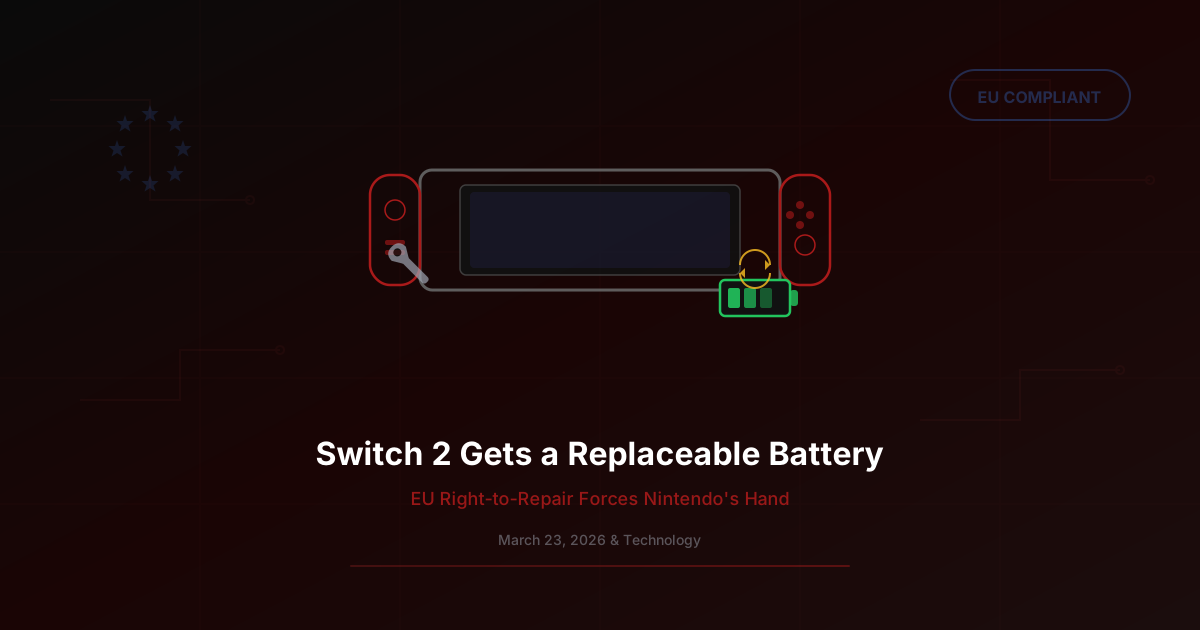
The Switch 2 has barely been on shelves, and Nintendo is already working on a hardware revision. Not because of overheating. Not because of Joy-Con drift 2.0. Because the European Union told them to.
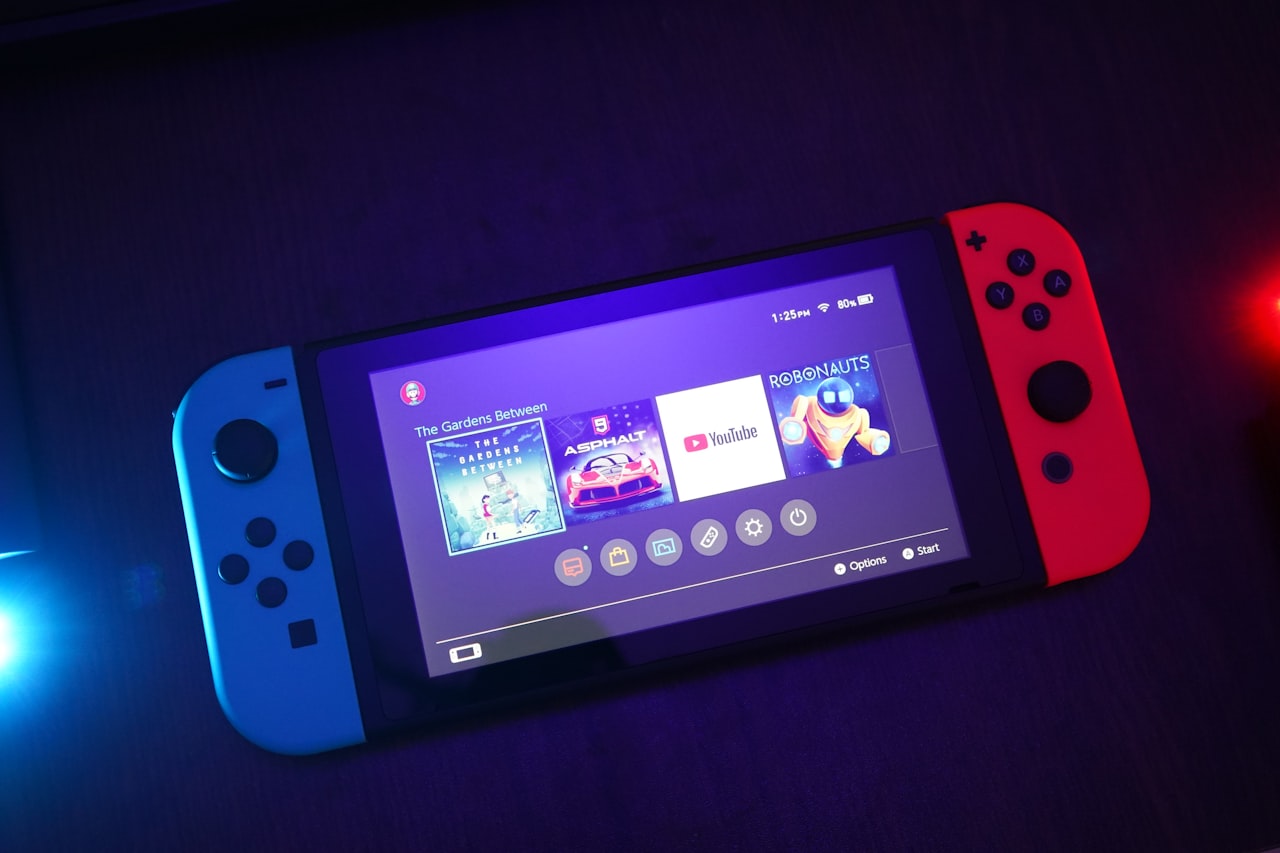
According to a report from Nikkei, Japan's largest financial newspaper, Nintendo is developing a revised Switch 2 model with user-replaceable batteries for the European market. Both the main console unit and the Joy-Con 2 controllers will be redesigned so that consumers can pop out the lithium-ion batteries and swap in fresh ones — no special tools, no soldering, no voided warranties.
The driver? EU Battery Regulation 2023/1542, specifically Article 11, which mandates that portable batteries in consumer electronics must be "readily removable and replaceable by the end-user" starting February 18, 2027. Nintendo is getting ahead of the deadline, and the result could be the most consumer-friendly handheld hardware design we've seen from a major console manufacturer in years.
This is a bigger deal than it sounds. Here's why.
What Nikkei Actually Reported
The original Nikkei report, published on March 20, 2026, included a direct statement from Nintendo:
"Nintendo will implement the 'right to repair' for its 'Nintendo Switch 2' console in order to reduce its environmental impact. Firstly, in line with European Union (EU) legislation, the company will modify the design to allow consumers to easily replace the console's battery."
A few critical details from the report and subsequent coverage:
- Both the Switch 2 tablet and Joy-Con 2 controllers will feature replaceable battery designs
- Users will be able to remove batteries with commercially available tools — think a standard Phillips screwdriver, not a specialty pentalobe bit
- The revised model is specifically for the European market, at least initially
- Nintendo acknowledged that if consumer awareness of right-to-repair grows in Japan and the United States, similar measures could follow in those regions
That last point is the quiet bombshell. Nintendo isn't ruling out a global rollout — they're watching to see if other markets demand it.
The EU Regulation Behind It All
To understand why Nintendo is redesigning hardware that just launched, you need to understand Regulation (EU) 2023/1542 — commonly called the EU Batteries Regulation.
What the Law Actually Says
The regulation was adopted in 2023 as part of the EU's broader push toward sustainability and a circular economy. Article 11 is the section that has every electronics manufacturer sweating. It states:
"Any natural or legal person that places on the market products incorporating portable batteries shall ensure that those batteries are readily removable and replaceable by the end-user at any time during the lifetime of the product."
The key phrase is "readily removable and replaceable by the end-user." This isn't a suggestion. It's a legal requirement, and it kicks in on February 18, 2027.
What Counts as "Readily Removable"?
The European Commission published detailed guidelines clarifying what manufacturers must do:
- Batteries must be removable using commercially available tools (screwdrivers, etc.) — not proprietary equipment
- The removal process cannot require solvents, heat, or specialized knowledge
- Software-based parts pairing is prohibited — meaning manufacturers can't use firmware to reject third-party replacement batteries
- Replacement batteries must be available as spare parts for at least 5 years after the last unit is sold
- Spare batteries must be offered at a "reasonable and non-discriminatory price"
What's Exempt?
Not everything has to comply. Full exemptions exist for:
- Implantable medical devices
- Smoke detectors
- Laboratory data-collection equipment
- Point-of-sale hardware
There's also a partial exemption for devices designed for wet environments (think waterproof speakers or dive equipment), where batteries can be replaceable by independent professionals rather than end-users — but only if the manufacturer can demonstrate that user-replaceability would compromise safety.
Gaming consoles? No exemption. The Switch 2's 5,220mAh battery falls squarely under the portable battery category.

What This Means for the Switch 2 Hardware
The standard Switch 2 that launched globally features a sealed battery design, much like its predecessor. Getting to that 5,220mAh lithium-ion cell requires removing screws, prying off panels, disconnecting ribbon cables, and handling components that most people shouldn't be touching.
The EU revision changes that fundamentally.
The Engineering Challenge
Making a battery user-replaceable in a portable gaming console isn't trivial. Nintendo has to solve several problems simultaneously:
Structural integrity. The Switch 2 is a handheld device that gets dropped, shaken, and shoved into bags. A battery compartment with a removable panel introduces potential weak points. Nintendo needs to maintain the same durability standard while adding an access point.
Thermal management. The Switch 2's battery sits close to the custom Nvidia chipset, which generates significant heat during demanding games. A removable battery design may require rethinking thermal pathways to ensure the battery contacts and compartment don't create hot spots.
Water and dust resistance. While the Switch 2 doesn't have an official IP rating, modern electronics are expected to handle minor spills and dust. A battery door needs proper sealing.
Joy-Con 2 miniaturization. The Joy-Con controllers are tiny. Fitting a replaceable battery mechanism into something that small, while maintaining the same button layout, haptics, and wireless connectivity, is a real engineering test.
The Upside: A Return to Swappable Batteries
Remember the Game Boy? The Nintendo DS? The PSP? All of those handhelds had user-replaceable batteries. You could buy spares, carry extras on long trips, and swap in a fresh one when your battery started degrading after a few years.
The sealed-battery trend that took over with smartphones eventually infected gaming handhelds too. The Switch, Steam Deck, and PlayStation Portal all glue or screw their batteries deep inside the chassis. When the battery degrades — and all lithium-ion batteries degrade — your options are either a costly repair or a new device.
The EU-compliant Switch 2 brings back the old model. Users could:
- Carry a spare charged battery for long flights or road trips
- Replace a degraded battery after a few years instead of buying a new console
- Purchase third-party batteries at competitive prices, since parts-pairing is banned
For a console with a 5,220mAh battery rated at 2 to 6.5 hours of gameplay, the ability to hot-swap a fresh cell mid-session is genuinely practical.
How Other Companies Are Responding
Nintendo isn't the only one staring down February 2027. Every company selling portable electronics with batteries in the EU has to comply.
Valve and the Steam Deck
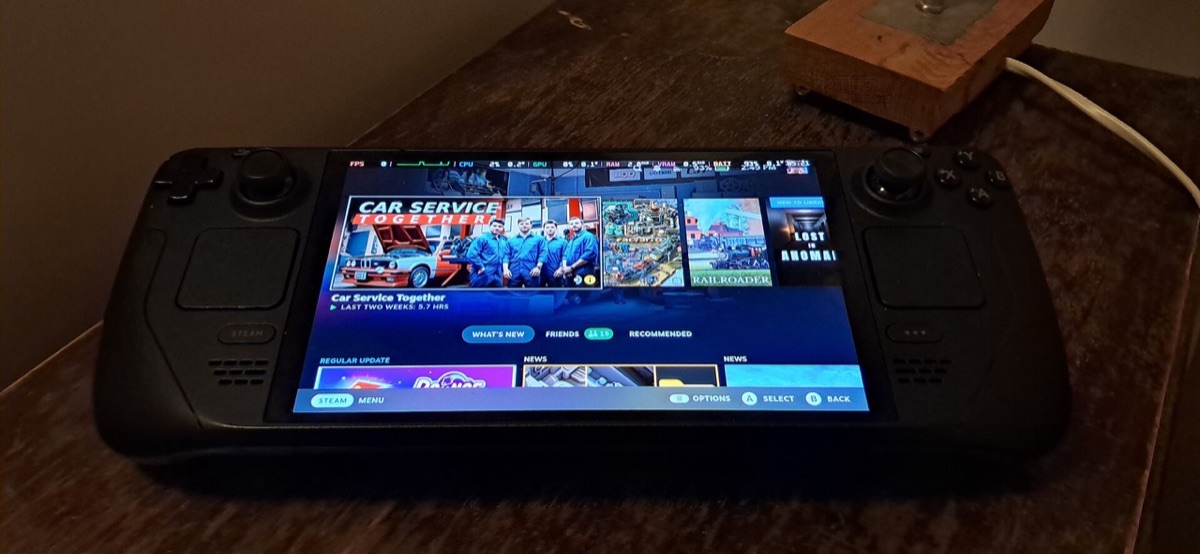
The Steam Deck's battery is buried deep inside the unit, requiring a full teardown to access. Valve has been notably repair-friendly — partnering with iFixit to sell replacement parts — but the current hardware design doesn't meet the EU's "end-user replaceable" standard. A Steam Deck revision with a user-accessible battery compartment seems likely before February 2027.
Sony and the PlayStation Portal
The PlayStation Portal's battery is sealed and difficult to replace. Sony hasn't publicly commented on how they plan to comply with the EU regulation for their portable devices.
Smartphones and Laptops
The regulation hits the smartphone industry hardest. Apple, Samsung, Google, and every other phone maker selling in Europe will need to redesign their devices. The smartphone exemption under the separate EU Ecodesign Regulation provides some flexibility for waterproof devices, but the battery regulation's requirements are strict.
For laptops, many already have relatively accessible batteries (especially business-class machines), but ultrabooks with glued-in cells will need redesigns.
The Regional Split Problem
Here's where things get interesting — and potentially messy.
Nintendo's current plan is to sell the replaceable-battery model only in Europe, while Japan, the US, and other markets continue with the standard sealed design. This creates a two-SKU situation that raises several questions:
Will Games and Accessories Work the Same?
Almost certainly yes. The battery change is internal — the external form factor, cartridge slot, dock compatibility, and Joy-Con attachment mechanism should remain identical. You shouldn't need "EU-specific" games or accessories.
Will the EU Model Cost More?
Probably not significantly. Replaceable battery designs can actually be cheaper to manufacture than sealed ones, since they reduce the precision needed for internal assembly and eliminate adhesive-based battery mounting. The engineering costs are front-loaded in the redesign phase.
Will People Import the EU Model?
This is the real question. If the EU Switch 2 offers genuine user-replaceable batteries with no other downsides, you can bet that repair-conscious consumers in the US and Japan will import them. Nintendo may find it simpler — and more profitable — to just manufacture one global SKU.
The Nikkei report hints at exactly this: Nintendo said similar measures could come to Japan and the US "if consumer awareness of the right to repair increases." Translation: if enough people ask for it, they'll do it.
Historical Precedent
This wouldn't be the first time EU regulations went global. USB-C charging standardization was an EU mandate that effectively became a worldwide standard. GDPR privacy rules inspired similar legislation across dozens of countries. The EU has a track record of setting regulatory standards that the rest of the world eventually adopts — what Brussels decides, Cupertino and Kyoto implement.
The Bigger Picture: Right-to-Repair in Gaming
The Switch 2 battery revision is a single product change, but it represents a much larger shift in how gaming hardware is designed and sold.
The Anti-Repair Era
For the past decade, gaming hardware has moved steadily toward sealed, non-repairable designs. Consoles are glued shut. Controllers use proprietary screws. Batteries are soldered to boards. When something breaks, the manufacturer wants you to buy a replacement — not fix what you have.
This isn't unique to gaming. It's the same pattern that led to smartphones with non-removable batteries, laptops with soldered RAM, and printers that reject third-party ink cartridges. But the EU's regulatory push is forcing a reversal.
What Right-to-Repair Could Mean for Consoles
Imagine a future where:
- Xbox and PlayStation controllers have user-replaceable batteries (Xbox already uses removable AA batteries or rechargeable packs; PlayStation's DualSense does not)
- Handheld consoles ship with tool-free battery compartments as standard
- Console SSDs are user-upgradeable without voiding warranties (the PS5 already allows this; others could follow)
- Replacement parts for buttons, joysticks, and screens are available from the manufacturer at fair prices for years after launch
This isn't fantasy. It's the direction the EU regulation is pushing, and the Switch 2 revision is the first concrete example of a major console maker adapting to it.

Community Reaction: Cautious Optimism
The response across gaming forums and social media has been largely positive, with a few common themes:
"Why can't we have this everywhere?" — The most common reaction. North American and Japanese consumers want the same repairability features, and the regional exclusivity feels arbitrary.
"This is how it used to be." — Older gamers remember the days of swappable Game Boy batteries and see this as a return to common sense rather than a radical innovation.
"Will it affect build quality?" — Some concerns that a battery door or removable panel could make the console feel cheaper or less durable. This is a legitimate engineering question, but modern laptop and phone designs have shown that removable batteries don't require sacrificing build quality.
"Nintendo only did this because they had to." — True. And that's exactly the point of regulation. Companies optimize for profit, not repairability, unless forced to do otherwise. The EU forcing Nintendo's hand benefits consumers regardless of the motivation.
Timeline: What Happens Next
Here's the expected sequence of events:
- Now (March 2026): Nikkei reports Nintendo's plans. Nintendo has not made a formal global announcement
- Mid-to-Late 2026: Expect Nintendo to officially announce the EU-specific Switch 2 model with details on design changes and availability
- February 18, 2027: EU Battery Regulation Article 11 takes effect. All portable electronics sold in the EU must comply
- 2027 and beyond: Other console and handheld makers release compliant revisions. Potential for Nintendo to expand the replaceable-battery design to other markets
The February 2027 deadline is firm. Any Switch 2 units sold in the EU after that date must have user-replaceable batteries. Nintendo's early action gives them a comfortable margin — and positions the Switch 2 as the first major gaming console to comply.
Why This Matters Beyond Batteries
The EU Battery Regulation is one piece of a much larger puzzle. Europe is building a comprehensive right-to-repair framework that includes:
- The EU Right to Repair Directive (2024): Requires manufacturers to repair products for a reasonable fee even after the warranty expires
- The Ecodesign for Sustainable Products Regulation: Sets sustainability standards for product design, including durability and repairability
- Energy labeling for electronics: Smartphones and tablets already carry standardized labels showing battery durability, repairability scores, and software support duration
Together, these regulations are reshaping the consumer electronics industry. And gaming hardware — long treated as exempt from sustainability concerns — is getting pulled into the fold.
For consumers, the message is clear: the days of sealed, disposable electronics are numbered, at least in Europe. And if history is any guide, the rest of the world won't be far behind.
The Bottom Line
Nintendo is redesigning the Switch 2 for Europe because the law requires it. But the end result — a handheld gaming console with a battery you can actually replace yourself — is something consumers have been asking for since manufacturers started gluing batteries into everything.
The Switch 2's 5,220mAh battery will eventually degrade. Every lithium-ion battery does. The difference is that EU Switch 2 owners will be able to spend a few euros on a replacement and keep playing, while everyone else will be looking at a repair shop or a new console.
Whether Nintendo expands this design globally depends on consumer demand. If you want a replaceable-battery Switch 2 outside of Europe, the best thing you can do is make noise about it. Nintendo said they're watching.
The EU just proved that regulation works. Now it's up to the rest of the world to decide if they want the same thing.
Sources
- Nikkei: Nintendo making Switch 2 revision with replaceable battery for the EU — My Nintendo News
- Nintendo reportedly planning Switch 2 revision with replaceable battery for Europe — Nintendo Everything
- Nintendo Could Be Forced To Shed An Anti-Consumer Practice — Kotaku
- Nintendo redesigns Switch 2 for EU rules with a user-replaceable battery — TechSpot
- Europe Might Be Forcing Nintendo To Revise The Switch 2 — Nintendo Life
- Making Batteries Removable and Replaceable: A closer look at the new EU Guidelines — Right to Repair Europe
- EU Battery Regulation 2023/1542 — EUR-Lex
- Nintendo Switch 2 Tech Specs — Nintendo US

Founder of GGS Blog and Site Reliability Engineer at Box. I write about gaming, AI in gaming, and game development with a technical lens — 10+ years in software engineering, 20+ years as a gamer. My work focuses on what the tech actually means for players.
Never miss a post
Subscribe to the GGS Blog newsletter for gaming news, tech insights, and AI in the game industry — delivered straight to your inbox.
Free. No spam. Unsubscribe in one click.
Comments
What to Read Next
Continue exploring our coverage of gaming, technology, and AI.
 Technology
Valve's 44% Steam Deck Hike Is the Only Honest Price in Handhelds
Sony added $100-150, Microsoft $100-150, Nintendo $50. Valve added $240 to a 512GB Steam Deck OLED and said nothing. Only one of those companies has no software subsidy to hide the memory bill behind.
 Technology
You Can't Solo Queue Loneliness: The Real State of AI Gaming Companions
AI teammates that fight, loot, and revive are finally shipping — but they only work in the specific games their publishers built them into. Universal companions exist too, but they're spectators. Neither fully solves what a solo player actually needs.
 Technology
Meta's Horizon Worlds VR Whiplash and the Slow Death of the Metaverse Dream
Meta announced it was killing Horizon Worlds in VR, reversed course 48 hours later, and accidentally wrote the eulogy for a $80 billion bet on virtual reality. Here's what went wrong — and what VR actually needs to survive.