
How AI Is Revolutionizing NPC Behavior in 2026
The End of Predictable NPCs
The NPC problem in open-world games has always been the same: characters who exist to hand you quests, guard doors, and forget they watched you steal from them thirty seconds ago. After forty hours in Kingdom Come: Deliverance II this year, I found myself genuinely caught off guard when an NPC remembered a conversation we'd had two in-game days earlier and referenced it unprompted. It wasn't much — a single line of recalled dialogue — but it was enough to make me pause. Because in two decades of RPGs, I'd trained myself not to expect that.
In 2026, that era is finally coming to a close. A new wave of AI-powered NPC systems is fundamentally changing how virtual characters think, react, and interact with players. The results are not just impressive from a technical standpoint -- they are reshaping game design itself, forcing studios to reconsider everything from quest structures to narrative pacing.
What Has Changed
Large Language Models Meet Game Engines
The integration of large language models directly into game engines has been the single biggest catalyst for the NPC revolution. Studios like Larian, Warhorse Studios, and a growing cohort of mid-sized developers have shipped titles where NPCs generate contextual dialogue on the fly. These characters remember previous interactions, reference events the player has triggered, and respond with a degree of nuance that scripted trees could never achieve.
The technical implementation varies from studio to studio, but the general approach involves running a fine-tuned language model that has been trained on the game's lore, character backstories, and tonal guidelines. When a player initiates a conversation, the model receives context about the current world state, the NPC's personality profile, and the history of interactions between that specific player and character. The result is dialogue that feels authored even though it was generated in real time.
One of the most impressive demonstrations came from a mid-sized RPG released in January 2026, where players discovered they could negotiate with quest givers, talk their way out of combat encounters, and even convince rival faction members to defect -- none of which was explicitly scripted by the development team. The AI simply followed the logical implications of the character's personality and motivations.
Behavioral Neural Networks
Beyond dialogue, AI is now driving NPC decision-making at a deeper level. Behavioral neural networks allow characters to:
- Assess threats dynamically rather than relying on fixed aggression radii
- Form opinions about the player based on accumulated observations
- Coordinate with other NPCs using emergent group tactics
- Adapt to player strategies so that repeating the same approach yields diminishing returns
- Develop routines and habits that shift organically based on world events
- Prioritize self-preservation in ways that feel genuinely intelligent
Games like Stalker 2 paved the way, but 2026 titles have taken the concept further with persistent NPC memory that carries across play sessions. In one notable example, enemy combatants who survived previous encounters with the player started avoiding areas where they had been ambushed before. Others began setting traps in locations where the player frequently traveled. This kind of emergent behavior creates a feedback loop where the game world feels genuinely responsive rather than simply reactive.
The underlying technology relies on reinforcement learning models that are trained during development and continue to refine their behavior based on player interactions after launch. Each NPC runs a lightweight inference model that evaluates its surroundings, its internal state, and its knowledge of the player to determine actions in real time.
Emotional Modeling
Several studios have implemented emotional state machines augmented by AI inference. NPCs can now exhibit fear, trust, jealousy, and gratitude in ways that feel organic. When a shopkeeper remembers that you defended their village, the gratitude is not a flag in a database -- it is a weighted emotional state that influences pricing, dialogue tone, and even quest availability.
These emotional models operate on a spectrum rather than binary states. An NPC might feel mild unease around a player who has a reputation for violence, even if that player has never directly threatened them. Conversely, performing small acts of kindness over time builds genuine rapport that unlocks interactions unavailable to players who rush through content.
The most sophisticated implementations track emotional contagion between NPCs. If one character witnesses the player helping a friend, that positive sentiment can spread through their social network. Similarly, acts of cruelty ripple outward, and players may find that entire communities become hostile based on accumulated reputation rather than a single triggering event.
Procedural Voice Synthesis
A complementary technology that has matured alongside AI behavior systems is procedural voice synthesis. Rather than relying on pre-recorded voice lines, several 2026 titles use neural voice models to generate spoken dialogue in real time. The quality has reached a point where most players cannot distinguish synthesized speech from recorded performances, particularly when the models are trained on a voice actor's recordings with their consent and compensation.
This technology removes one of the biggest bottlenecks in NPC dialogue systems. Previously, even if a game could generate dynamic text responses, the lack of voice acting made those responses feel second-class compared to fully voiced scripted content. With procedural synthesis, every generated line can be spoken aloud with appropriate emotion and inflection.
The Impact on Game Design
Emergent Quest Design
Designers are rethinking quest structures entirely. Linear quest chains feel outdated when NPCs can generate their own requests based on the world state. Open-world RPGs releasing this year feature emergent questlines that no two players will experience identically. An NPC farmer whose crops were destroyed by a battle might independently seek out the player to ask for help rebuilding, while a merchant who noticed bandits on a trade route might offer a bounty without any developer having scripted that specific scenario.
This emergent approach does not replace handcrafted narrative content. Instead, it fills the gaps between major story beats with meaningful interactions that make the world feel alive. Players report spending hours engaging with procedurally generated side content simply because the NPCs feel compelling enough to care about.
The Evolving Role of Writers
This shift also raises the difficulty bar for writers. Rather than authoring every line, narrative teams now craft personality frameworks, value systems, and speech patterns that the AI uses as guardrails. The writer's role has shifted from scriptwriter to character architect. A writer might spend weeks defining how a character thinks, what they value, what speech patterns they use, and how they react under stress -- and then hand that framework to the AI system to inhabit.
This requires a different skill set than traditional game writing. Character architects need to think systematically about personality as a set of parameters rather than a sequence of scripted moments. Some writers have embraced this shift enthusiastically, finding that it allows their characters to express themselves in ways the writer might never have anticipated. Others have found the transition challenging, particularly when the AI generates responses that are technically consistent with the character framework but feel tonally wrong.
Player Agency and Consequence
AI-driven NPCs also deepen the sense of player agency. When characters remember what you have done and react accordingly, every decision carries more weight. Players can no longer treat NPCs as disposable quest dispensers. Stealing from a merchant, insulting a guard, or breaking a promise all have cascading consequences that feel natural rather than scripted.
This has led to a new style of play where social interaction becomes as important as combat or exploration. Some players have reported spending entire sessions simply talking to NPCs, exploring dialogue possibilities, and building relationships within the game world.
Challenges That Remain
Consistency and Tone
AI-driven NPCs are not without problems. Consistency is the biggest hurdle -- characters occasionally contradict themselves or produce responses that break the tone of the game. A medieval innkeeper might use modern slang. A stoic warrior might crack an out-of-character joke. Studios are investing heavily in filtering and validation layers to catch these edge cases before they reach the player, but the problem has not been fully solved.
The most effective approach so far involves running generated responses through a secondary model that evaluates them for tone, lore accuracy, and character consistency before they reach the player. This adds latency but significantly reduces the frequency of immersion-breaking moments.
Performance and Hardware Requirements
Performance cost is another concern. Running inference locally demands significant hardware, and cloud-based solutions introduce latency. The industry is still searching for the right balance between fidelity and accessibility. Some studios have adopted a hybrid approach where critical NPCs run full AI models while background characters use simpler systems, creating a tiered approach that scales with available hardware.
On current-generation consoles, most implementations rely on cloud-based inference with local caching to minimize latency. PC versions often offer the option to run models locally for players with capable GPUs, resulting in lower latency and offline functionality.
Ethical Considerations
There are also ethical questions to consider. As NPCs become more believable, the line between interacting with a character and interacting with a simulated person becomes blurrier. Some developers have expressed concern about players forming unhealthy attachments to AI characters, while others worry about the potential for AI NPCs to generate inappropriate or harmful content despite safety filters.
The Gap That Remains
What AI-driven NPCs haven't solved yet is the tension between consistency and spontaneity. The best scripted NPCs feel authored — every line feels like it was placed intentionally. The best AI-driven NPCs surprise you. Reaching both in the same character is still an unsolved problem. The studios that crack it will reshape what players expect from the genre. The ones that don't will keep shipping NPCs that are technically smarter but feel just as hollow.

Founder of GGS Blog and Site Reliability Engineer at Box. I write about gaming, AI in gaming, and game development with a technical lens — 10+ years in software engineering, 20+ years as a gamer. My work focuses on what the tech actually means for players.
Never miss a post
Subscribe to the GGS Blog newsletter for gaming news, tech insights, and AI in the game industry — delivered straight to your inbox.
Free. No spam. Unsubscribe in one click.
Comments
What to Read Next
Continue exploring our coverage of gaming, technology, and AI.
 AI in Gaming
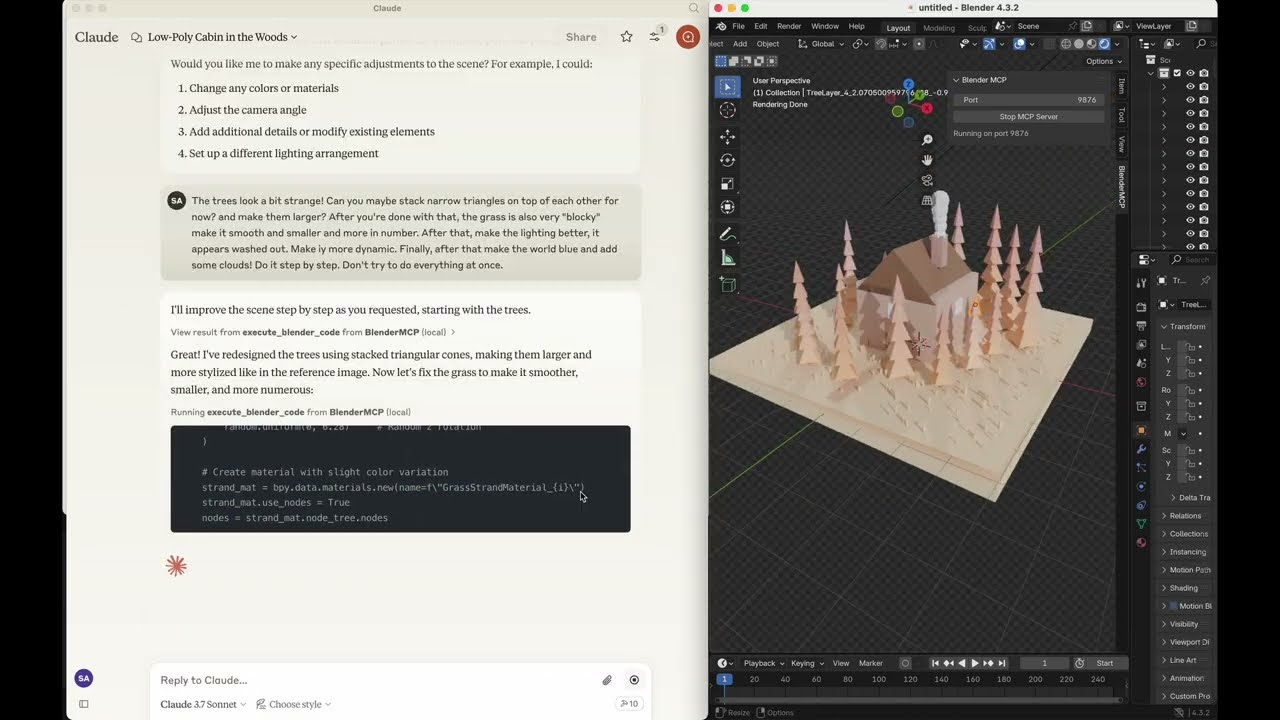
The Execution Layer: MCP Connectors Are Rewriting Who Can Use Game Dev Tools
Nine Claude connectors for Blender, Autodesk, and Adobe dropped in a single release. Meanwhile, community MCP servers have been executing natural-language commands inside Houdini, Maya, and Unreal for months. This isn't just automation — it's a fracture in what tool expertise actually means.
 AI in Gaming
Nexon Bets Big on AI With 'Mono Lake' Platform, Promises More Innovation and Less Code
Arc Raiders' publisher unveiled its end-to-end AI intelligence platform at a Tokyo briefing, claiming billions of player sessions will empower developers — not replace them. The GDC 2026 survey tells a different story about how developers feel.
 AI in Gaming
The AI Paradox: 52% of Game Developers Say AI Is Harmful — While 52% of Studios Adopt It Anyway
The GDC 2026 State of the Industry survey revealed a perfect paradox: developer opposition and corporate adoption have hit the exact same number. Here's what the data actually says, and why the rift between creators and executives is only getting wider.