
The Execution Layer: MCP Connectors Are Rewriting Who Can Use Game Dev Tools
Getting good at Blender used to mean understanding bpy — Blender's Python module — well enough to write scripts that could batch-rename objects, procedurally generate geometry, or automate material assignments across a hundred assets. It meant reading documentation, not just tutorials. It meant knowing what a mesh modifier stack actually was before asking one to do something. A junior 3D artist who couldn't touch bpy was locked out of a whole category of production work.
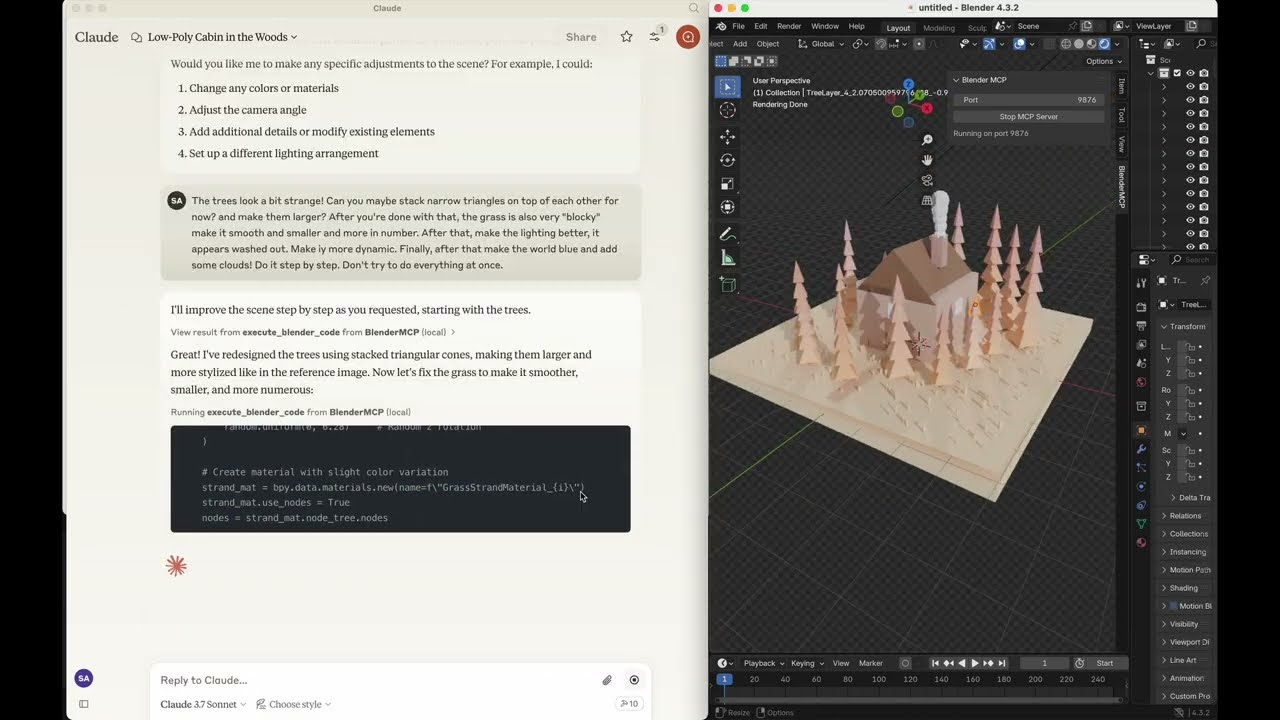
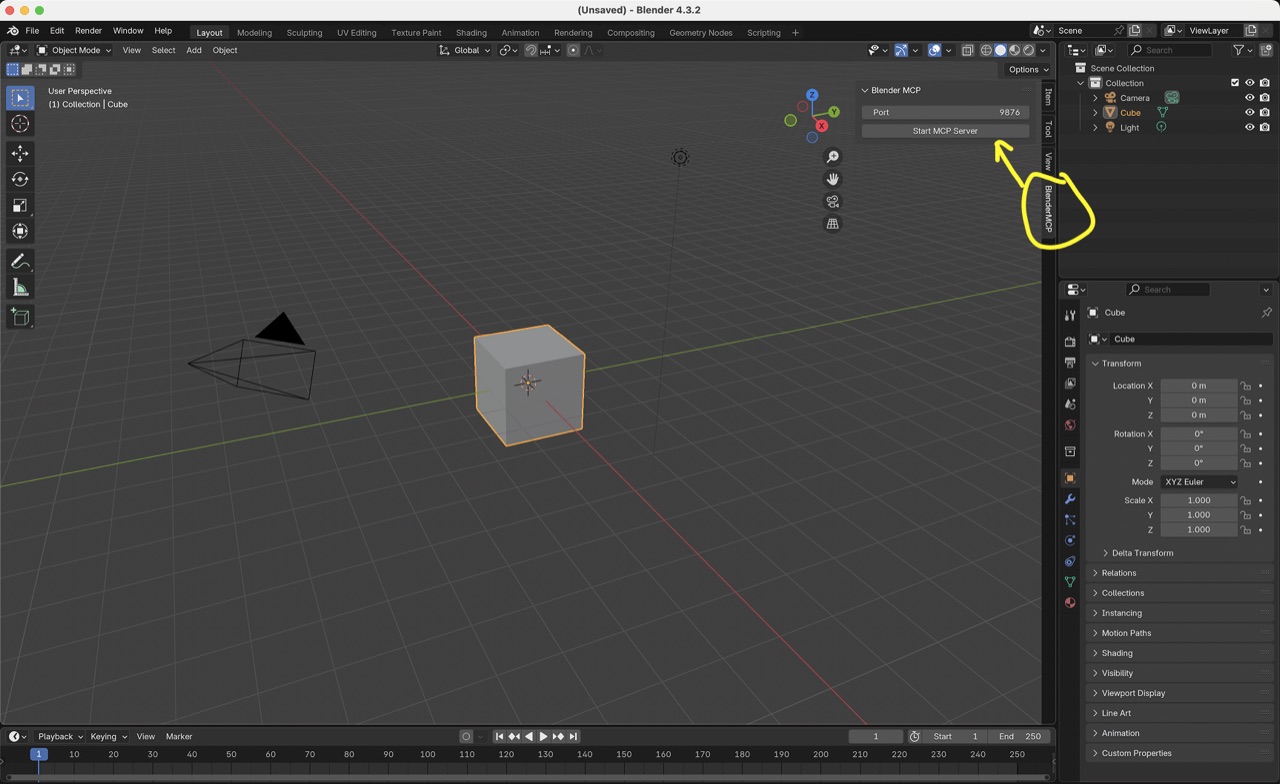
Then the ahujasid/blender-mcp server hit 21,100 GitHub stars and became one of the most-starred MCP repositories on the platform. You describe what you want in English. The MCP server translates that into bpy calls over a TCP socket connection. You don't need to know what bpy is.
That's the contrast. Not theoretical — operational.
Vignette 1: Blender, Where the Community Outran Everyone
The community Blender MCP — version 1.5.5 as of this writing — does more than most people realize. Object creation, modification, deletion. Material control. Arbitrary Python execution inside the Blender environment. Asset downloading directly from Poly Haven and Sketchfab. AI-generated 3D model import via Hyper3D Rodin. All of it accessible by describing intent in plain text.
The 21,100-star count is meaningful not just as a popularity signal but as a stress test. Thousands of developers hammered that server, forked it, built on it. A production-grade fork emerged — PatrykIti/blender-ai-mcp — focused on goal-first routing, deterministic verification, and vision-assisted workflows. A 51-tool implementation followed from poly-mcp. The ecosystem matured before any official party made a move.
Then on April 28, 2026, Anthropic released nine Claude connectors for creative tools in a single drop. Blender. Autodesk Fusion. Adobe Creative Cloud. SketchUp. Nine tools at once, from the company that created MCP in November 2024.
The architectural decision for Blender is important: the connector uses the open MCP protocol, meaning any LLM can connect to it, not just Claude. Anthropic also joined the Blender Development Fund at €240,000 per year — the first AI company to do so. That's not marketing spend. That's infrastructure investment.
What the official connector adds over the community version isn't entirely clear yet. Anthropic's announcement language — "natural-language access to Blender's full Python API; analyze and debug scenes; batch-apply changes; write custom scripts" — describes capabilities the community server already had. No independent technical review has been published as of this writing. The honest read is that Anthropic is formalizing what the community built, while adding the weight of an official partnership and long-term fund commitment.
What the connector cannot do: produce a game-ready asset. Describing "a low-poly character with clean topology for rigging" gets you something. Whether that something has the UV layout, polycount targets, LOD variants, and physics-ready collision mesh a production pipeline requires is a different question entirely.
Vignette 2: Autodesk and the Three-Year Gap
Maya Assist entered private beta in April 2023, running on Azure OpenAI. That's three years ago. As of May 2026, there is no confirmed public release date.
Three years of "private beta" — for a natural language interface to Maya — is not a development timeline. It's a holding pattern.
The community Maya MCP server — PatrickPalmer/MayaMCP — tells a parallel story. Version 0.2.0, Windows-only, 71 GitHub stars against Blender MCP's 21,100. The capability set covers object listing and creation, attribute management, mesh operations (extrude, bevel, subdivide, boolean), material creation, NURBS curves, and Python execution. The documentation is honest about the limitations: "Early days for Maya MCP server and has a minimal set of functionality." A security popup is required each session. Multi-line Python results cannot return values.
The gap between these two parallel tracks — Autodesk's polished marketing and what's actually shipping — is not unusual. At Autodesk University in September 2025, the company unveiled new AI tools "coming to Maya," including the Autodesk Assistant, FaceAnimator for AI facial animation and lip-sync, and expanded assistant capabilities for Maya and 3ds Max. FaceAnimator was described as "very early beta." The Autodesk Assistant was in beta for Revit with Maya timing unspecified.
According to CG Channel's coverage of Autodesk University, the pattern is consistent: Autodesk University announcements have historically taken six months to three years to reach production. The Maya pipeline — the backbone of AAA character work, rigging, animation — is getting AI capabilities on Autodesk's timeline, which is measured in years, not months.
Meanwhile, the people who needed to work today built MayaMCP with 71 stars and Windows-only support and called it version 0.2.0, which at least has the virtue of being honest about what it is.
The open-source/closed-commercial dynamic is made concrete here. When the official tool is in beta for three years, the community ships a minimal working version and ships it now. The version with 71 stars does less than Maya Assist will eventually do. But it exists and it ships.

Vignette 3: The Engine Makers Are Absent
Neither Epic Games nor Valve has shipped an official MCP integration for their engines. Unity's official AI direction — announced in Unity 6.2 in August 2025, according to CG Channel — uses a "Generators" paradigm for sprites, textures, animations, and sounds. Not MCP.
The community didn't wait.
For Unreal Engine: multiple community MCP servers exist, including chongdashu/unreal-mcp, flopperam/unreal-engine-mcp, Unreal MCP Pro with over 200 command handlers, and a Universal Unreal MCP claiming 280 commands. Unreal MCP Pro ships with a built-in MCP Streamable HTTP server — no Node.js bridge required — which reduces the integration friction significantly. 200+ command handlers isn't a prototype — that's a surface area.
For Unity: CoplayDev/unity-mcp and IvanMurzak/Unity-MCP exist with community support. For Godot: PurpleJelly Godot MCP is at 162 tools, with Godot MCP Pro following. The Godot implementations introduced something architecturally distinct — an auto-screenshot loop that provides the AI with continuous visual state of the game and editor. Not just command-execute. The AI sees what's happening.
GDC 2026 featured an official session titled "Build Faster, Iterate More: AI-Powered Prototyping with the Model Context Protocol". The same conference where 52% of developers surveyed said AI was negatively impacting the industry.
A Unity Discussions thread — titled "Why are game engines ignoring the potential of MCP?" — captures the frustration directly. Developers who want official engine integration are watching community servers absorb the work while official makers move slowly or not at all.
The engine makers know this. The official absence is a choice.
Vignette 4: Houdini and What Proceduralism Does With MCP
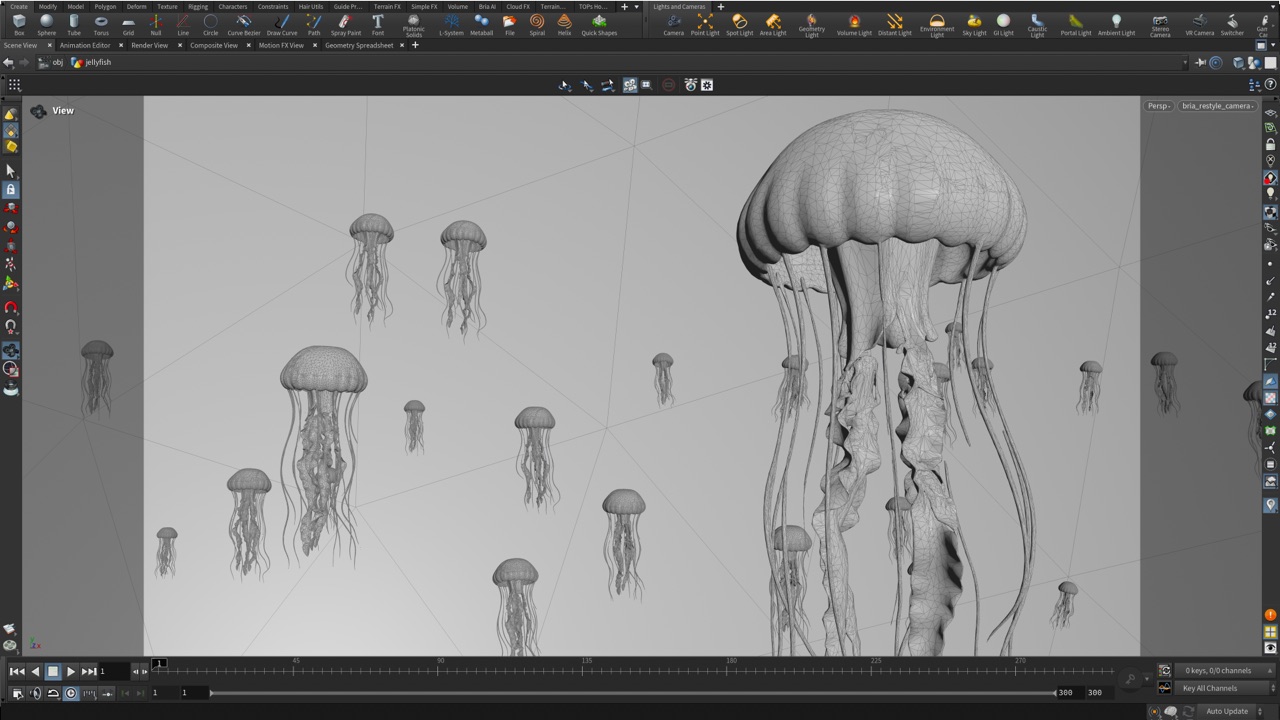
Houdini is worth examining separately because the tool itself is procedural — every operation is a node, every node is composable, and the entire pipeline can be serialized as a graph. That architecture is unusually legible to AI systems.
The oculairmedia/houdini-mcp server (v1.0.0, published December 28, 2025; 17 stars) and eliiik/houdini-mcp (35 tools) cover nodes, parameters, geometry, scene management, Python and HScript execution. The combined tool count across implementations reaches 43 tools in 15 categories, including Karma GPU/CPU render triggers, SOP chain construction from natural language descriptions, and cook error detection. The transport uses hrpyc — Houdini's own remote Python connection interface.
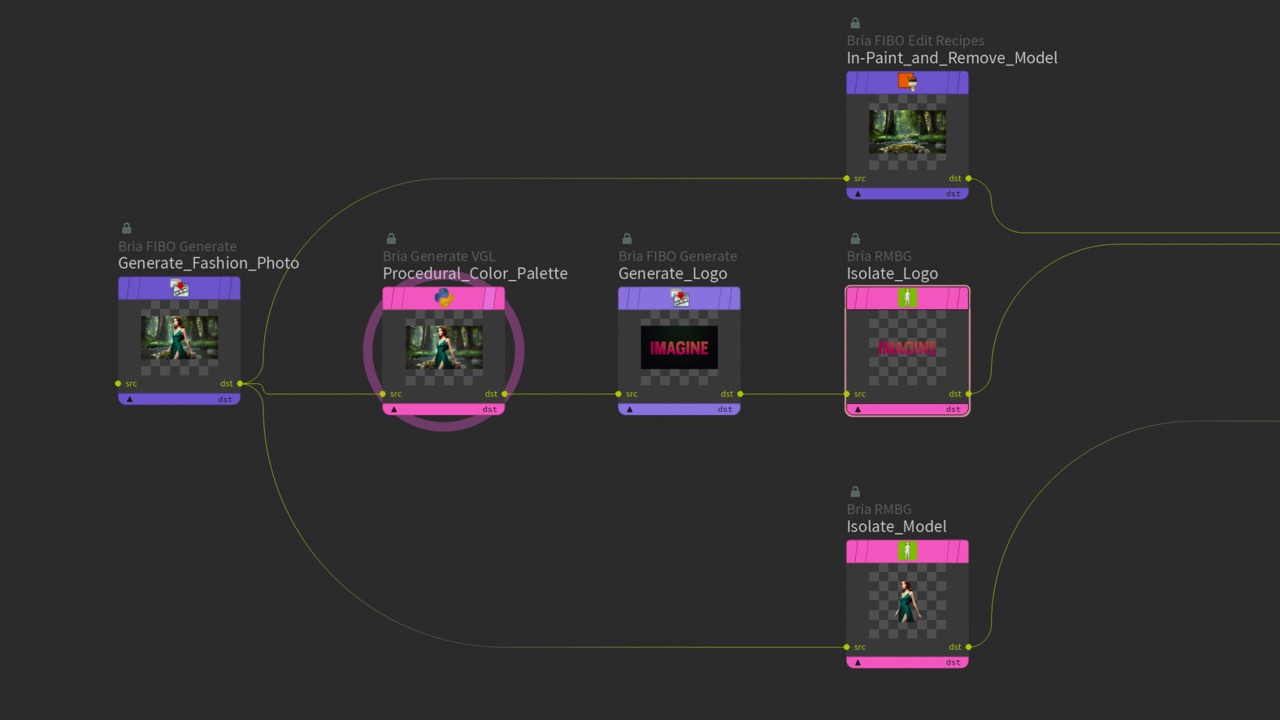
What's notable is that SideFX is running a parallel track on exactly this thesis. Bria AI has 12 generative AI nodes natively integrated into Houdini's Copernicus network: generate, edit, upscale, and batch operations via PDG. SideFX's explicit public position is that proceduralism and generative AI are complementary, not competing. The procedural graph handles deterministic structure; generative AI fills variation and content. That framing isn't marketing hedging — it's a coherent technical argument.
This is what mature AI integration looks like when the official toolmaker has a clear position on how AI fits the existing paradigm. The community MCP servers exist. Bria AI nodes exist. The two don't cancel each other out.
The contrast with Autodesk's three-year beta gap is direct. And it's visible in the star counts: the Houdini community server has 17 stars, not 21,100 — but SideFX gave it a complementary official track rather than leaving it stranded.
The Production Gap Nobody's Closing
A developer who doesn't know what bpy is can now execute complex Blender operations. A developer who doesn't understand UV unwrapping, rig hierarchies, or LOD variants can now describe what they want and get something back.
Whether what they get back is useful is the production problem.
An independent evaluation of AI 3D generators — Tripo, Rodin, Meshy — published in 2025 by SimInsights found roughly 1 in 10 generations are client-ready without rework. This is a single-source assessment, worth treating as directional rather than definitive. But the finding tracks with what technical artists describe in practice: game-ready assets require clean topology for rigging, specific polycount targets, UV unwrapping, LOD variants, physics-ready collision meshes, and adherence to art style guides. Current MCP servers don't address these production-context requirements. They can execute commands. They cannot evaluate whether the output fits a pipeline.
The GDC 2026 State of the Industry survey — 2,300+ respondents — found that visual and technical artists are the most opposed demographic at 64% unfavorable. Game designers and narrative designers: 63% unfavorable. Programmers: 59% unfavorable. Only 19% of respondents use AI for asset generation; only 10% for procedural content generation.
The technical artists are the people closest to the pipeline. That 64% figure isn't arbitrary. These are exactly the people who spend their days thinking about topology, UV layouts, and LOD targets — the things MCP servers don't address. They can see the gap clearly because they know what "production-ready" requires.
There's also a 2025 study cited by sandner.art's "The Sentient Stack" claiming experienced developers were 19% slower when using AI tools — the citation chain isn't fully verified, so take it as directional. The mechanism it describes is credible regardless: prompt construction, output evaluation, and iteration on AI-generated results adds overhead. That overhead favors people who can evaluate quickly, which means people who understand the tool.
The Stack Overflow Developer Survey 2025 puts the trust problem in sharper terms: 84% of developers use AI tools; 46% don't trust AI accuracy — up from 31% the previous year. Only 3% report high trust.
That trust number is doing a lot of work. MCP connectors that execute Python in Blender or construct SOP chains in Houdini are producing output that requires expert review to evaluate. The expert has to know enough to verify the AI's work. Which means the expertise hasn't disappeared — it's been relocated.
What the Industry Hasn't Answered
For 30 years, expertise in DCC tools — Blender, Maya, Houdini, 3ds Max — meant a specific kind of accumulated knowledge. Muscle memory for hotkeys, yes. But more than that: understanding how the tool's internal logic works, what operations are expensive, how constraints interact, where the tool's assumptions break down and produce garbage you have to fix manually. That understanding is what made a technical artist valuable.
MCP connectors lower the floor. A developer with no bpy knowledge can now get things done in Blender. That's real. Per StraySpark's GDC 2026 roundup, indie developers called expertise gap reduction MCP's clearest practical benefit — more than speed, more than prototyping.
But the floor isn't the ceiling. The ceiling is whether the output is production-ready, whether the pipeline holds, whether the person using the tool can evaluate what it produced. And that evaluation requires the understanding that MCP connectors don't teach.
The next layer to watch is whether MCP stays a pipeline tool or bleeds into runtime. The same protocol that connects Claude to Blender is already being explored for AI NPC behavior in shipped games — as we covered in our post on AI NPCs in 2026. Right now those are separate concerns running on the same spec. Whether that convergence produces something coherent or just an overloaded protocol is genuinely unclear. What's clear is the pattern: community builds first, commercial operators watch, then Anthropic joins the Development Fund. Autodesk, Epic, and Unity are in the "watching" phase.
We published a post on this blog about the GDC 2026 developer survey — the one where 52% said AI was hurting the industry. And separately about the AI paradox — developers using tools they distrust because the alternative is falling behind. The MCP connector story sits inside that same tension.
What the industry hasn't answered: if the tools can be operated without being understood, what happens to the understanding? Not in the abstract — concretely. Does the next generation of technical artists learn bpy when describing what they want in English produces results? Does the demand for deep tool expertise compress into a smaller specialist class, while a larger population of "executor" developers uses AI to operate tools they don't own? And if so — when something breaks at production scale, or when the AI produces output that seems right but isn't, who diagnoses it?
The MCP sessions at GDC 2026 were framed around speed and prototyping. The 52% who said AI was hurting the industry were thinking about something else. Both things are true simultaneously. The question of how they resolve — over the next five years, in studios that are already understaffed after a wave of layoffs — is genuinely open.
Sources
- Anthropic: Claude for Creative Work (April 28, 2026)
- 9to5Mac: Anthropic releases 9 new Claude connectors for creative tools
- GitHub: ahujasid/blender-mcp
- GitHub: PatrickPalmer/MayaMCP
- GitHub: oculairmedia/houdini-mcp
- GitHub: chongdashu/unreal-mcp
- CG Channel: Autodesk unveils new AI tools coming to Maya (September 2025)
- CG Channel: Unity rolls out Unity AI in Unity 6.2 (August 2025)
- Bria AI: Bringing generative AI into Houdini natively
- GDC 2026: Build Faster, Iterate More — AI-Powered Prototyping with MCP
- GDC 2026 State of the Game Industry survey
- Stack Overflow Developer Survey 2025 — AI trust findings
- SimInsights: AI 3D generators — production readiness 2025
- StraySpark: GDC 2026 AI takeaways for indie developers
- Sandner.art: The Sentient Stack — deskilling, reskilling, or better education for AI-augmented development

Founder of GGS Blog and Site Reliability Engineer at Box. I write about gaming, AI in gaming, and game development with a technical lens — 10+ years in software engineering, 20+ years as a gamer. My work focuses on what the tech actually means for players.
Never miss a post
Subscribe to the GGS Blog newsletter for gaming news, tech insights, and AI in the game industry — delivered straight to your inbox.
Free. No spam. Unsubscribe in one click.
Comments
What to Read Next
Continue exploring our coverage of gaming, technology, and AI.
 AI in Gaming
Nexon Bets Big on AI With 'Mono Lake' Platform, Promises More Innovation and Less Code
Arc Raiders' publisher unveiled its end-to-end AI intelligence platform at a Tokyo briefing, claiming billions of player sessions will empower developers — not replace them. The GDC 2026 survey tells a different story about how developers feel.
 AI in Gaming
The AI Paradox: 52% of Game Developers Say AI Is Harmful — While 52% of Studios Adopt It Anyway
The GDC 2026 State of the Industry survey revealed a perfect paradox: developer opposition and corporate adoption have hit the exact same number. Here's what the data actually says, and why the rift between creators and executives is only getting wider.
 AI in Gaming
Capcom Says No to AI Art — But Where's the Line?
Capcom publicly declared it won't ship AI-generated materials in final games. But between Street Fighter 6's AI-driven commentary, Monster Hunter Wilds' brainstorming tools, and the DLSS 5 blindside, the distinction between AI-assisted and AI-generated is getting blurry fast.