
The AI Paradox: 52% of Game Developers Say AI Is Harmful — While 52% of Studios Adopt It Anyway
52% Against, 52% Adopting
The GDC 2026 State of the Industry survey landed in January with a data point that reads like a statistical error: 52% of game developers say generative AI is bad for the industry. The same survey found that 52% of studios are now using it anyway.
Two years ago, developer opposition to AI sat at 18%. Last year, 30%. The share who view AI positively has collapsed to just 7%. Over 2,300 game industry professionals — developers, producers, marketers, executives, investors — participated in the survey, and the results describe an industry where the people building the games are losing faith in a technology that the people funding the games keep doubling down on.
That disconnect isn't new. But the speed at which it's widening is.

Who Hates AI and Who's Pushing It
The survey doesn't just give us a headline number. It breaks down sentiment by role — and the pattern is devastating.
64% of visual and technical artists say generative AI is harmful to the industry. These are the people whose work AI most directly threatens and most visibly replicates. When Midjourney can produce a concept art sheet in 30 seconds, the concept artist who spent four years in art school and a decade honing their style sees the writing on the wall.
63% of game designers and narrative writers feel the same way. Game designers live in the world of systems, choices, and player experience — the parts of a game that require understanding human psychology, not pattern matching. Writers have already watched AI-generated dialogue get used as "placeholder" text that never gets replaced. They know what "just a prototype" becomes when deadlines hit.
59% of programmers also view AI unfavorably — notable because programmers are the group most likely to actually use AI tools day-to-day. They'll happily let Copilot autocomplete a function. They just don't want it deciding what the game is.
Now compare that to the executive suite. Only 19% of executives and business operations professionals view AI positively — but crucially, they're the ones making the purchasing decisions, approving the tool licenses, and setting the strategic direction. When your boss thinks AI is the future and you think it's a threat, the boss wins. That's not a debate. That's a mandate.
This is the core tension: the people closest to the creative work are the most opposed to AI, while the people furthest from it are the most enthusiastic. It's a pattern that repeats across every creative industry AI has touched — music, film, illustration, journalism. The executives see efficiency gains on a spreadsheet. The creators see their careers being automated away one task at a time.
The Usage Gap: Companies vs. Individuals
Here's where the paradox gets sharper. While 52% of companies use generative AI, only 36% of individual developers actually use the tools themselves. And at the studio level — where games are actually made, rather than marketed — personal usage drops to just 30%.
The adoption is overwhelmingly top-down. 47% of upper management uses AI tools, compared to 29% of lower-level employees. Publishing companies, marketing teams, and support services have 58% personal usage. The actual game-making side of the business? Half that.
This isn't organic adoption driven by developers discovering useful tools. This is institutional adoption driven by executive mandate. The tools are being purchased and deployed whether the people expected to use them want them or not.
And when developers do use AI, look at what they use it for:
- Research and brainstorming: 81%
- Daily tasks (emails, code assistance): 47%
- Prototyping: 35%
- Testing and debugging: 22%
- Asset generation: 19%
- Procedural content generation: 10%
- Player-facing features: 5%
The message is unambiguous. Developers are comfortable using AI as a back-end productivity tool — a smarter search engine, a code assistant, a brainstorming partner. They are not comfortable using it for anything that touches the creative output players actually see. Only 5% use it for player-facing features. Five percent.
The industry's executives want AI in the product. The industry's developers want AI in the pipeline. These are fundamentally different visions for what the technology is for.
"I'd Rather Quit the Industry"
The survey's open-response sections capture a level of anger that percentages alone can't convey.
"I'd rather quit the industry than use generative AI," one developer wrote. That's not frustration with a buggy tool. That's an ethical line in the sand.
"AI is theft. I have to use it, otherwise I'm gonna get fired," wrote another — encapsulating the impossible position many developers find themselves in. They object to the technology on principle. They use it anyway because the alternative is unemployment in an industry that has shed tens of thousands of jobs in the past two years.
"Why would I replace human creativity with a regurgitated amalgamation of everything that's come before?" asked a third respondent, cutting to the philosophical heart of the argument. Generative AI doesn't create — it recombines. For developers who entered the industry to make something original, that distinction matters enormously.
Not everyone agrees. One pro-AI respondent compared the backlash to "a moral panic similar to when computer graphics started being used in the movie industry." It's a common analogy, and not entirely wrong — every new production technology faces resistance from the craftspeople it displaces. But the analogy breaks down in one critical way: CGI augmented what humans could create. Generative AI often replaces the human entirely.
The most telling quote might be the most pragmatic: "AI can streamline tedious work in STEM but can never replace human creativity and artistic expression." This is the compromise position most developers seem to hold. Use AI for the boring stuff. Keep humans in charge of the creative decisions. It's reasonable, measured, and increasingly irrelevant — because the executives buying the tools aren't drawing the same line.
The Layoff Shadow
You can't understand developer hostility toward AI without understanding the context it exists in: an industry-wide layoff crisis that has gutted studios across every tier.
28% of survey respondents reported losing their jobs in the past two years. In the US specifically, that number rises to 33% — one in three developers. 50% of all respondents said their employer conducted layoffs in the past twelve months. At AAA studios, the figure hits 67%.
Game designers were hit hardest, accounting for 20% of all reported layoffs. These aren't just numbers. They're thousands of experienced professionals — people with shipped titles, specialized skills, and industry knowledge — who are now competing for fewer positions while watching companies invest in tools designed to reduce headcount further.
Against this backdrop, AI isn't an abstract technology debate. It's a survival question. When your studio lays off 30% of its artists and then announces an AI art pipeline, the message is received clearly regardless of how the press release frames it.
This also explains why 82% of US respondents now support unionization, with only 5% opposed. Among younger workers, opposition to unions is nearly nonexistent. The generation entering the industry sees collective bargaining as the only realistic protection against being automated out of their careers before those careers even start. 74% of students express concern about their future job prospects in gaming.
The anti-AI and pro-union movements aren't separate phenomena. They're the same phenomenon expressed through different channels — a workforce that feels disposable demanding some measure of control over its own future.
The Corporate Two-Step
While developers voice their opposition through surveys and social media, studios have developed a remarkably consistent playbook for talking about AI without actually committing to anything.
The formula goes like this: promise players that AI-generated content won't appear in final games, while quietly integrating AI into every stage of the development pipeline.
We wrote about Capcom's version of this dance just three days ago. Their official policy — "we will not implement materials generated by generative AI into game content" — sounds unequivocal until you learn they're actively testing AI across graphics, sound, and programming departments. The line between "AI-assisted development" and "AI-generated content" is wherever Capcom needs it to be on any given day.
Capcom isn't unusual. They're representative. The same two-tier approach shows up everywhere:
Microsoft treats AI as a "foundational platform" for its gaming division. Epic Games CEO Tim Sweeney actively opposes mandatory AI disclosure, arguing that "AI will be involved in nearly all future production." Krafton committed $70 million to a GPU cluster to become an "AI-first company." Square Enix wants AI doing 70% of its QA work by 2027.
On the other end, Nintendo avoids generative AI for core development, viewing it as a threat to authorship. Larian Studios committed to rejecting generative AI entirely, including for prototyping.
Most of the industry sits in the mushy middle with Capcom — wanting the efficiency gains while dodging the reputational cost. EA uses AI for animation and player behavior. Ubisoft built Ghostwriter for placeholder dialogue. Sony focuses AI research on gameplay systems. Bandai Namco researches AI while avoiding visible generative content.
The GDC survey data suggests this middle ground is unstable. When 52% of your workforce thinks the technology is harmful and 7% thinks it's beneficial, "we use it but we don't talk about it" isn't a sustainable communications strategy. It's a pressure cooker.
What a Major Investor Said — And Why It Matters
At the GDC 2026 Luminaries panel, a major investor said they were "shocked and sad" that the games industry is "demonizing" generative AI.
This quote is worth sitting with. An investor — someone whose returns depend on studios producing games more cheaply — is shocked that the people who make those games have concerns about a technology designed to make them cheaper to produce. The disconnect isn't just professional. It's existential.
Investors see AI through the lens of margins, headcount reduction, and production velocity. They measure success in units shipped per dollar spent. From that vantage point, a technology that can generate concept art, write dialogue, test builds, and animate characters represents pure upside.
Developers see AI through the lens of craft, career, and creative ownership. They measure success in whether the thing they made is good — whether it reflects intention, skill, and taste. From that vantage point, a technology that can approximate their output without understanding their intent represents a fundamental devaluation of what they do.
Neither perspective is wrong in isolation. But only one perspective has the power to write checks, set strategy, and decide who gets hired or fired. The GDC survey data suggests the check-writers are winning the policy battle while losing the hearts-and-minds war.

The SAG-AFTRA Factor
One area where workers have won concrete protections is voice acting. The new SAG-AFTRA labor contract — approved by 95% of voting union members — requires consent and disclosure when AI creates digital replicas of performers. The agreement covers studios including Activision, EA, Disney, Insomniac, and WB Games.
This matters for two reasons. First, it proves that collective bargaining can produce real AI guardrails — something the 82% of developers who support unions are surely aware of. Second, it establishes a precedent: certain creative contributions require human consent before AI can replicate them.
But SAG-AFTRA covers voice actors, not game designers, not programmers, not artists. The vast majority of game developers have no equivalent protection. The 12% who are union members have some leverage. The other 88% are navigating the AI transition with nothing but their employment contracts and their market value — both of which are shrinking.
The Question Nobody's Answering
The rift between developers and executives isn't going to close on its own. Studios face financial pressure to cut costs; AI tools promise exactly that. Developers face professional pressure to protect the value of their skills; every task AI absorbs reduces demand for the humans who used to do it. The 28% job losses reported over the past two years aren't a coincidence — they're the early phase of a restructuring.
Some version of adaptation is inevitable. Developers who learn to work alongside AI tools will find roles as operators, curators, and supervisors of AI-assisted pipelines. Studios that handle the transition transparently — with retraining, clear AI policies, and honest communication — will retain talent. Studios that treat AI as a stealth headcount reduction will lose their best people to competitors who don't.
But the survey reveals something the industry hasn't grappled with yet: what happens when the people who make the games no longer trust the direction of the companies they work for? The 7% who still view AI positively may prove correct in the long run — smaller teams, bigger games, lower barriers to entry. But you can't build a healthy industry on a workforce that feels coerced into using tools they believe are undermining their craft.
The 52/52 split isn't a paradox to be resolved. It's a question: can an industry adopt a technology that the majority of its workforce opposes, and still make good games? Nobody has answered that yet.
Sources
- GDC 2026 State of the Game Industry — Official Report
- WinBuzzer: Generative AI Adoption Hits 52%, So Does Opposition
- PC Gamer: Over 50% of Game Developers Now Think Generative AI Is Bad
- Game Developer: One Third of Game Workers Using GenAI, but Half Think It's Bad
- GameSpot: More Developers Than Ever Believe Generative AI Is Hurting The Game Industry
- 80.lv: GDC Survey — Over 50% of Game Devs See Gen AI As Harmful
- PC Gamer: Major Investor "Shocked and Sad" Industry Is "Demonizing" AI
- Aftermath: GDC Was Defined By Anxiety About The Future
- BusinessWire: 2026 State of the Game Industry Report Press Release

Founder of GGS Blog and Site Reliability Engineer at Box. I write about gaming, AI in gaming, and game development with a technical lens — 10+ years in software engineering, 20+ years as a gamer. My work focuses on what the tech actually means for players.
Never miss a post
Subscribe to the GGS Blog newsletter for gaming news, tech insights, and AI in the game industry — delivered straight to your inbox.
Free. No spam. Unsubscribe in one click.
Comments
What to Read Next
Continue exploring our coverage of gaming, technology, and AI.
 AI in Gaming
The Execution Layer: MCP Connectors Are Rewriting Who Can Use Game Dev Tools
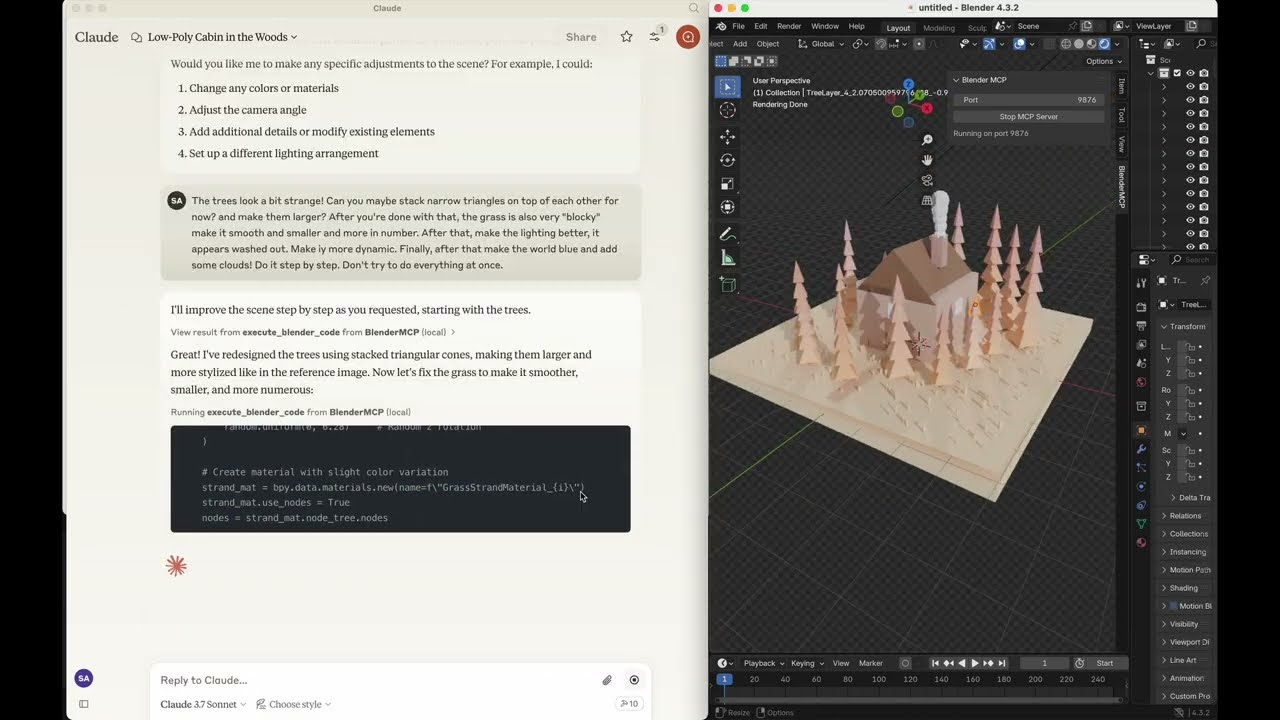
Nine Claude connectors for Blender, Autodesk, and Adobe dropped in a single release. Meanwhile, community MCP servers have been executing natural-language commands inside Houdini, Maya, and Unreal for months. This isn't just automation — it's a fracture in what tool expertise actually means.
 AI in Gaming
Nexon Bets Big on AI With 'Mono Lake' Platform, Promises More Innovation and Less Code
Arc Raiders' publisher unveiled its end-to-end AI intelligence platform at a Tokyo briefing, claiming billions of player sessions will empower developers — not replace them. The GDC 2026 survey tells a different story about how developers feel.
 AI in Gaming
Capcom Says No to AI Art — But Where's the Line?
Capcom publicly declared it won't ship AI-generated materials in final games. But between Street Fighter 6's AI-driven commentary, Monster Hunter Wilds' brainstorming tools, and the DLSS 5 blindside, the distinction between AI-assisted and AI-generated is getting blurry fast.