

Nexon Bets Big on AI With 'Mono Lake' Platform, Promises More Innovation and Less Code
"More time thinking and less time typing. More time innovating; less time writing code." That's how Nexon CEO Junghun Lee described the company's AI ambitions during a capital markets briefing in Tokyo on March 31, 2026. It's the kind of quote that sounds great in a boardroom — concise, optimistic, forward-looking. Whether it lands the same way in a game studio where developers are watching layoffs ripple across the industry is a different question entirely.
Nexon's briefing wasn't a casual update. It was a full-scale presentation of the company's transformation plan, led by Lee alongside Executive Chairman Patrick Söderlund and CFO Shiro Uemura. The centerpiece: an AI platform called Mono Lake that Nexon says will reshape how it builds and operates every game in its portfolio. And with 14 million copies of Arc Raiders sold and a ¥475 billion revenue year behind them, the company has enough momentum to make investors listen.
But Nexon isn't operating in a vacuum. The same week this briefing took place, the gaming industry was still digesting the GDC 2026 State of the Game Industry report, which found that 52% of game developers now believe generative AI is actively harming the industry — up from 30% just a year ago. Nexon's pitch that AI will "liberate" its workforce arrives at a moment when more than half of the people doing the actual work disagree with the premise.
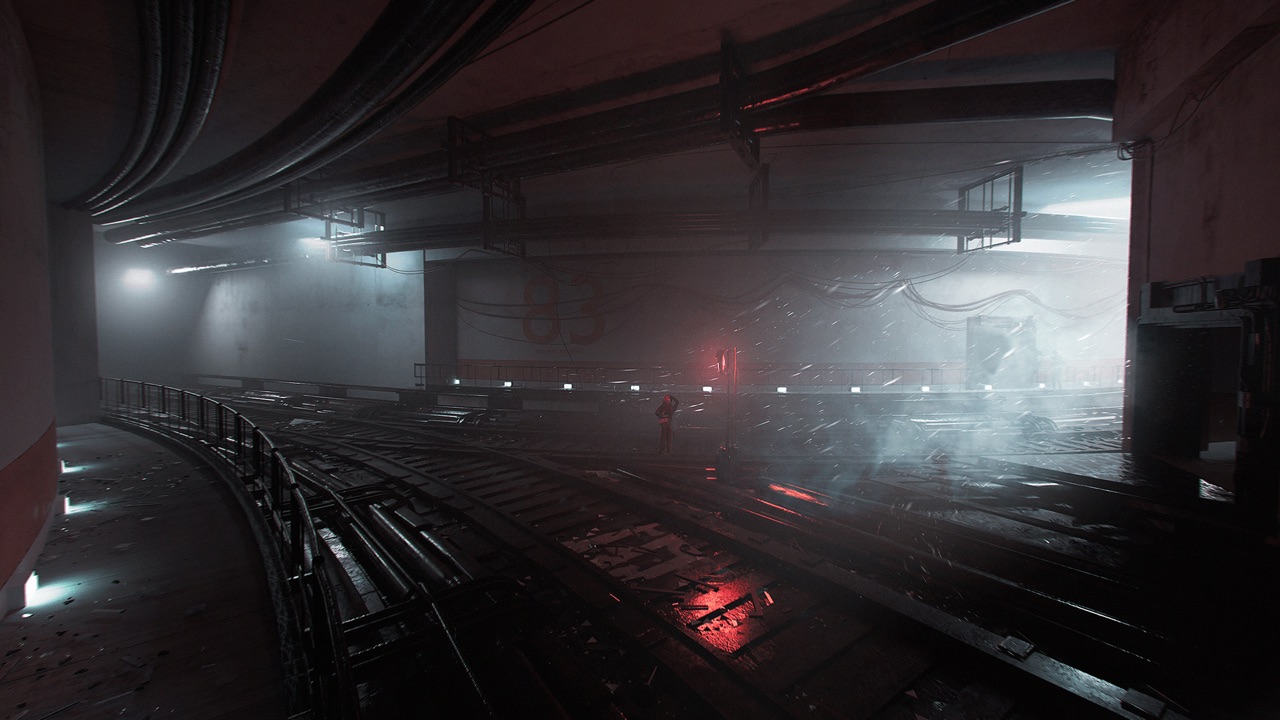
What Mono Lake Actually Is
Strip away the investor-friendly language and Mono Lake is an end-to-end intelligence platform designed to inject data-driven context into every stage of game development and live operations. Nexon says it's been trained on billions of player sessions and decades of live game data — engagement patterns, retention curves, monetization behaviors, and real-time telemetry from across Nexon's portfolio of 40+ games operating in 190+ countries.
The key distinction Nexon is drawing: Mono Lake is not a generative AI tool. It doesn't create art assets or write dialogue. Instead, it functions as a contextual intelligence layer — a system that surfaces player behavior data so developers can make more informed creative and operational decisions.
"Mono Lake makes the intelligence available across everything we build and operate — every developer, every live ops team, every product decision has access to the base of information we've accumulated over decades," Lee said during the briefing.
Lee also emphasized that the platform has been in development for some time. Nexon's Intelligence Labs — an in-house AI R&D team launched back in 2017 — employs approximately 700 engineers focused on AI research. This isn't a pivot chasing the generative AI hype cycle; it's infrastructure Nexon has been building for nearly a decade. According to Lee, Mono Lake is now in "full-fledged execution" mode, with some applications already producing "tangible work results" in 2026.
The practical pitch: if a designer is deciding how to structure a new in-game event, Mono Lake can surface data showing how similar events performed across different player segments, regions, and time windows. If a live ops team is tuning a game's economy, the platform provides behavioral context that would otherwise require weeks of manual analysis. The goal is fewer gut-feel decisions and more evidence-backed ones — without replacing the people making them.
Söderlund's "Fewer Bets, More Conviction" Restructuring
Mono Lake doesn't exist in isolation. It's one piece of a broader restructuring that Söderlund is leading across the entire company. The former EA executive, who built Embark Studios and oversaw Arc Raiders' development, was named Nexon's Executive Chairman in early 2026 while retaining his role as Embark's CEO.
His framing at the briefing was blunt: "We're taking fewer bets with more conviction." In practical terms, that means Nexon is evaluating every project in its pipeline against a new floor for contribution margins. Some projects will receive increased funding. Some will be restructured. Some will be cancelled outright.
The company also signaled it's scrutinizing corporate overhead, shared services, management layers, and contractor relationships. Söderlund framed this as "not a turnaround story" — pointing to Nexon's strong 2025 performance as evidence that the restructuring is proactive rather than reactive. The company posted ¥124 billion in operating income last year and sits on over ¥800 billion in cash and equivalents.
When directly asked about layoffs, Söderlund was unequivocal: "There are absolutely no plans for layoffs." CFO Shiro Uemura added that the company aims to redeploy staff through pipeline adjustments rather than headcount reductions. The messaging is clear: AI and restructuring are about efficiency and focus, not workforce reduction.
It's a notable position in an industry where "AI efficiency" has become shorthand for "fewer jobs" at many companies. Whether Nexon maintains this stance as the restructuring progresses will be worth watching.
The Arc Raiders Factor
Nexon's credibility on the AI question is inseparable from Arc Raiders. The game, developed by Söderlund's Embark Studios, has become one of the biggest commercial successes in Nexon's history — 14 million copies sold with a peak of 960,000 concurrent players in January 2026 and a Very Positive Steam rating across hundreds of thousands of reviews.
But Arc Raiders' path to that success wasn't straightforward. Embark confronted a fundamental problem during development: despite strong technology and visual fidelity, the game wasn't fun. The studio undertook what amounted to a complete reboot — a "massive AAA reset" — restructuring the project from scratch with a focus on clear design pillars. At GDC 2026, developer Caio Braga presented on exactly this process in a talk titled "When Your AAA Game Isn't Fun: The Story of ARC Raiders Starting Over from Scratch with Clear Intent."
The game also showcased some of Embark's technical innovations in AI — specifically physics-based enemy locomotion using reinforcement learning. Rather than relying on traditional animation playback, the system lets AI enemies recognize terrain and teach themselves how to walk, navigate, and fight. Developer Martin Singh-Blom presented on this at GDC 2026 as well. This is a concrete, specific example of AI improving a game in ways players can directly feel — a far cry from the generative AI debates around art assets and voice acting.
Arc Raiders' CCO Stefan Strandberg has stated that the game doesn't use generative AI for art, code, or design — though he acknowledged that Embark does use AI text-to-speech to help build out world detail while keeping the studio small, with "no end goal in replacing any actors." It's a fine but important line that Nexon is trying to walk: AI as a tool for development efficiency and player intelligence, not as a wholesale replacement for human creative work.
What Developers Actually Think
Nexon's optimism about AI stands in sharp contrast to the mood across the broader development community. The GDC 2026 State of the Game Industry survey, published in late January, paints a divided picture.
The headline number: 52% of game industry professionals now say generative AI is negatively impacting the industry. That's up from 30% in 2025 and 18% in 2024 — a trajectory that shows opposition more than doubling in two years. Only 7% said AI's impact has been positive, down from 13% a year earlier.

The opposition isn't uniform across roles. Visual and technical artists are the most hostile at 64%, followed by game designers and narrative writers at 63%, and programmers at 59%. The pattern is intuitive: the closer your work is to creative output, the more threatened you feel by tools that claim to automate it.
Usage tells a different story. 36% of game industry professionals report using generative AI tools in their work. The split between studios and publishers is revealing: only 30% of developers at game studios use AI tools, compared to 58% at publishing companies, marketing firms, and support teams. Business professionals lead adoption at 58%, while the people building games trail significantly behind.
The tools being used skew toward productivity rather than creation. The most common use cases are research and brainstorming (81%), daily administrative tasks (47%), and code assistance (47%). Prototyping sits at just 35%. Developers are comfortable using AI as a knowledge-work assistant but resistant to it touching creative output.
The survey data underscores the tension in Nexon's pitch. When Lee says AI gives developers "more time innovating; less time writing code," he's describing a use case most developers accept — AI for coding assistance is one of the least controversial applications. The backlash tends to concentrate around generative AI for visual art, narrative, and voice work, which is precisely the territory Nexon says it's avoiding with Mono Lake's non-generative, data-intelligence approach.
The "Not Generative" Distinction
Nexon is making a calculated semantic move by positioning Mono Lake outside the generative AI category. Whether that distinction holds up depends on what Mono Lake does in practice as it rolls out across more teams and games.
The company's framing — "Our methodology doesn't replace creative people, it frees them to create with context" — echoes what every tech company says when introducing automation tools. The charitable interpretation is that Nexon genuinely sees a difference between a system that analyzes player data to inform decisions and one that generates art or code to replace human work. The skeptical interpretation is that "intelligence platform" is just a less radioactive label for a company that watched the AI backlash hit competitors and learned to adjust its messaging.
Former Nexon CEO Owen Mahoney, who led the company from 2014 to 2024, has been more direct about AI's implications. In post-departure interviews, Mahoney argued that AAA development is in its "end of days" and that AI will fundamentally rewrite how games are made — enabling AAA-quality games to be built by much smaller teams. He pointed to Embark Studios' earlier title THE FINALS as evidence that AI-driven development could already shrink the creative headcount needed for competitive shooters.
Mahoney's vision and the current Nexon leadership's messaging aren't contradictory, but they have different emphases. Mahoney talks about smaller teams. Söderlund talks about redeployment, not reduction. Both frame AI as liberating. The difference is in who benefits: if AI enables the same output with fewer people, the "liberation" might look different from a developer's chair than from an executive's.
The Broader Industry Context
Nexon isn't the only major publisher leaning into AI. The GDC 2026 survey showed AI adoption becoming a corporate default even as individual developer opposition grows. But the path hasn't been smooth for anyone.
Nvidia's AI rendering features drew widespread criticism for altering character models without developer consent. Larian Studios, riding the massive success of Baldur's Gate 3, publicly walked back its use of generative AI tools for its next Divinity title after fan outrage over CEO Swen Vincke's comments about using gen AI. These high-profile stumbles have made the "AI is good, actually" argument harder to sell to both developers and players.
What makes Nexon's position interesting is the specificity. Most publishers talk about AI in vague, aspirational terms — "AI will transform how we work" — without explaining what that means. Nexon is naming its platform, describing its data sources, quantifying its R&D investment (700 engineers since 2017), and distinguishing between generative and non-generative applications. That level of detail either reflects genuine confidence in the approach or a very well-prepared investor relations strategy. Possibly both.
The "no layoffs" commitment is also unusual. In an industry that shed 28% of its workforce to layoffs over the past two years according to the GDC survey, a major publisher explicitly ruling out headcount cuts while expanding AI reads as either a genuine philosophical commitment or a promise that will be quietly revised when market conditions change. Söderlund's track record at EA — where he oversaw both ambitious expansions and painful restructurings — gives him credibility on both sides of that coin.
What Nexon's Pipeline Tells Us
The briefing also revealed Nexon's near-term game pipeline, which provides a practical lens for understanding how Mono Lake might be applied.
The company announced four new titles in the Dungeon&Fighter franchise: an idle RPG releasing in 2026, a "Classic" version for 2027, ARAD as a global introduction title, and Project OVERKILL as a PC/console action RPG. Alongside those, Vindictus: Defying Fate (a Mabinogi-based action game) and NAKWON: LAST PARADISE (a multiplayer survival game that pulled 37,000 concurrent players in a closed alpha with zero marketing) round out the slate.
That's a lot of simultaneous development for a company claiming to take "fewer bets with more conviction." The reconciliation is likely Mono Lake itself — if the platform works as promised, it should allow Nexon to run more informed development pipelines with better resource allocation. If each team has access to decades of player intelligence data, the theory goes, they make better design decisions earlier and waste less time on features that won't land.
The established franchises — MapleStory, Dungeon&Fighter, FC, and Mabinogi — are also positioned as primary beneficiaries of the AI platform, since they have the deepest player data pools. MapleStory's recent resurgence was cited as "a blueprint for growing large established franchises," suggesting Mono Lake-style intelligence may have already played a role in that turnaround.
Reading Between the Lines
Nexon's AI pitch is more credible than most because it's more specific than most. The company isn't waving generative AI around as a magic wand — it's describing a data intelligence layer trained on proprietary player behavior data, built by a team that's been working on it since 2017, and framed explicitly as non-generative. That's a narrower, more defensible claim than "AI will revolutionize everything."
But the framing still raises questions. "More time innovating; less time writing code" sounds liberating until you ask what happens to the people whose job was writing that code. Söderlund says no layoffs. Lee says redeployment. The 700-person Intelligence Labs team suggests Nexon is creating new AI-focused roles, not just eliminating old ones. Whether that math holds at scale — across all 40+ games and 190+ countries of operation — is the real test.
The gaming industry's AI divide isn't going away. Publishers see efficiency, competitive advantage, and shareholder returns. Developers see threats to their craft, their jobs, and the authenticity of the games they build. Nexon is trying to plant its flag on the side that says AI serves developers rather than replacing them. With Arc Raiders' 14 million sales as proof of concept and Mono Lake as the next chapter, they have a stronger case than most.
Whether "liberation" and "efficiency" end up meaning the same thing for everyone at Nexon — from the C-suite in Tokyo to the engineers at Embark in Stockholm — is the question that no capital markets briefing can fully answer.
Sources
- Game Developer: Arc Raiders publisher Nexon believes AI is the answer
- BusinessWire: Nexon Presents Transformation Plan at Its 2026 Capital Markets Briefing
- Inven Global: Nexon Reveals ARC Raiders Reboot Story at GDC 2026
- GDC: 2026 State of the Game Industry Report
- WinBuzzer: GDC 2026 Generative AI Adoption Hits 52%, So Does Opposition
- PC Gamer: Nexon's CEO defends generative AI in game development
- GameSpot: Former Nexon CEO Says AAA Games Are In End-of-Days

Founder of GGS Blog and Site Reliability Engineer at Box. I write about gaming, AI in gaming, and game development with a technical lens — 10+ years in software engineering, 20+ years as a gamer. My work focuses on what the tech actually means for players.
Never miss a post
Subscribe to the GGS Blog newsletter for gaming news, tech insights, and AI in the game industry — delivered straight to your inbox.
Free. No spam. Unsubscribe in one click.
Comments
What to Read Next
Continue exploring our coverage of gaming, technology, and AI.
 AI in Gaming
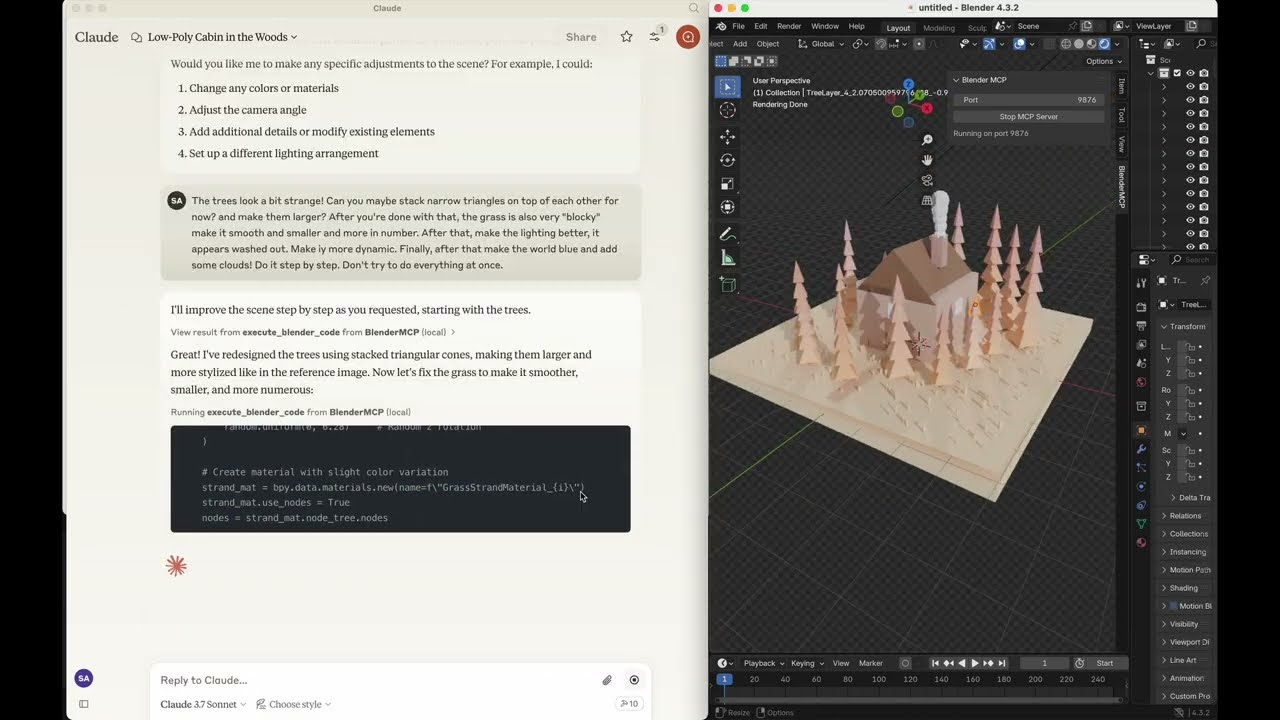
The Execution Layer: MCP Connectors Are Rewriting Who Can Use Game Dev Tools
Nine Claude connectors for Blender, Autodesk, and Adobe dropped in a single release. Meanwhile, community MCP servers have been executing natural-language commands inside Houdini, Maya, and Unreal for months. This isn't just automation — it's a fracture in what tool expertise actually means.
 AI in Gaming
The AI Paradox: 52% of Game Developers Say AI Is Harmful — While 52% of Studios Adopt It Anyway
The GDC 2026 State of the Industry survey revealed a perfect paradox: developer opposition and corporate adoption have hit the exact same number. Here's what the data actually says, and why the rift between creators and executives is only getting wider.
 AI in Gaming
Capcom Says No to AI Art — But Where's the Line?
Capcom publicly declared it won't ship AI-generated materials in final games. But between Street Fighter 6's AI-driven commentary, Monster Hunter Wilds' brainstorming tools, and the DLSS 5 blindside, the distinction between AI-assisted and AI-generated is getting blurry fast.