
Cloud Gaming in 2026: Finally Good Enough — Whether You Like It or Not
25 Milliseconds from Your Thumbs to the Cloud
GeForce NOW is streaming VR games at 90 frames per second to a wireless headset. SoftBank just cut mobile gaming latency by 35% using AI routing. LG is selling a TV that plays AAA games at 4K/120Hz with nothing plugged in except a controller. And Microsoft — the company that makes the Xbox — embedded NVIDIA's competing cloud service inside its own Xbox PC app.
Cloud gaming's "will it ever work?" phase is over. These announcements, all from the past two weeks, describe a technology that has crossed the threshold from interesting demo to practical product. Not perfect. Not the experience a $2,000 gaming PC delivers. But close enough that the industry has started making infrastructure decisions that assume cloud gaming is the default — and nobody polled the players first.
The Numbers: 25 Milliseconds Between You and the Cloud
Let's start with latency, because latency is the reason cloud gaming skeptics have been right for a decade. If you click a button and the game responds 200 milliseconds later, it doesn't matter how good the resolution is. It feels wrong. It feels broken. And for years, that's exactly what cloud gaming felt like.
In 2026, the numbers tell a different story.
GeForce NOW Ultimate — the $19.99/month tier running on RTX 5080 and RTX 5090 server hardware — averages 25 to 40 milliseconds of latency for players on metro-area fiber connections. NVIDIA claims sub-20ms in optimal conditions. Xbox Cloud Gaming, included with Game Pass Ultimate at $29.99/month, sits at 40 to 60 milliseconds at 1080p/60 FPS.
For context: a console playing locally produces roughly 20 to 50 milliseconds of total input lag when you factor in controller latency, pre-rendered frames, and display processing. A wired PC with a high-refresh monitor can go lower. So cloud gaming, at its best, is closing in on what you'd get playing locally — and for most players, the difference is imperceptible outside competitive scenarios.
Is that noticeable? In Counter-Strike 2 or Tekken 8, absolutely. Competitive players will feel every one of those milliseconds. But for the vast majority of games — open-world RPGs, story-driven adventures, turn-based strategy, cooperative shooters, everything that isn't frame-perfect competitive play — that 25-40ms window lands comfortably under the 50ms threshold where most players stop noticing the difference.
The consensus among multiple independent comparisons published in March 2026 is blunt: cloud gaming is "good enough" for the vast majority of gaming scenarios. The exception — competitive esports and fighting games — still demands local hardware.
That split is the number that matters. Most gamers don't play competitive shooters at a level where an extra 15 milliseconds changes outcomes.
GeForce NOW at GDC 2026: VR Streaming, Xbox Integration, and Multi-Cloud Everything
NVIDIA's GDC 2026 announcements collectively paint a picture of a cloud gaming service that is no longer trying to prove it works. It's trying to become the default way people play.
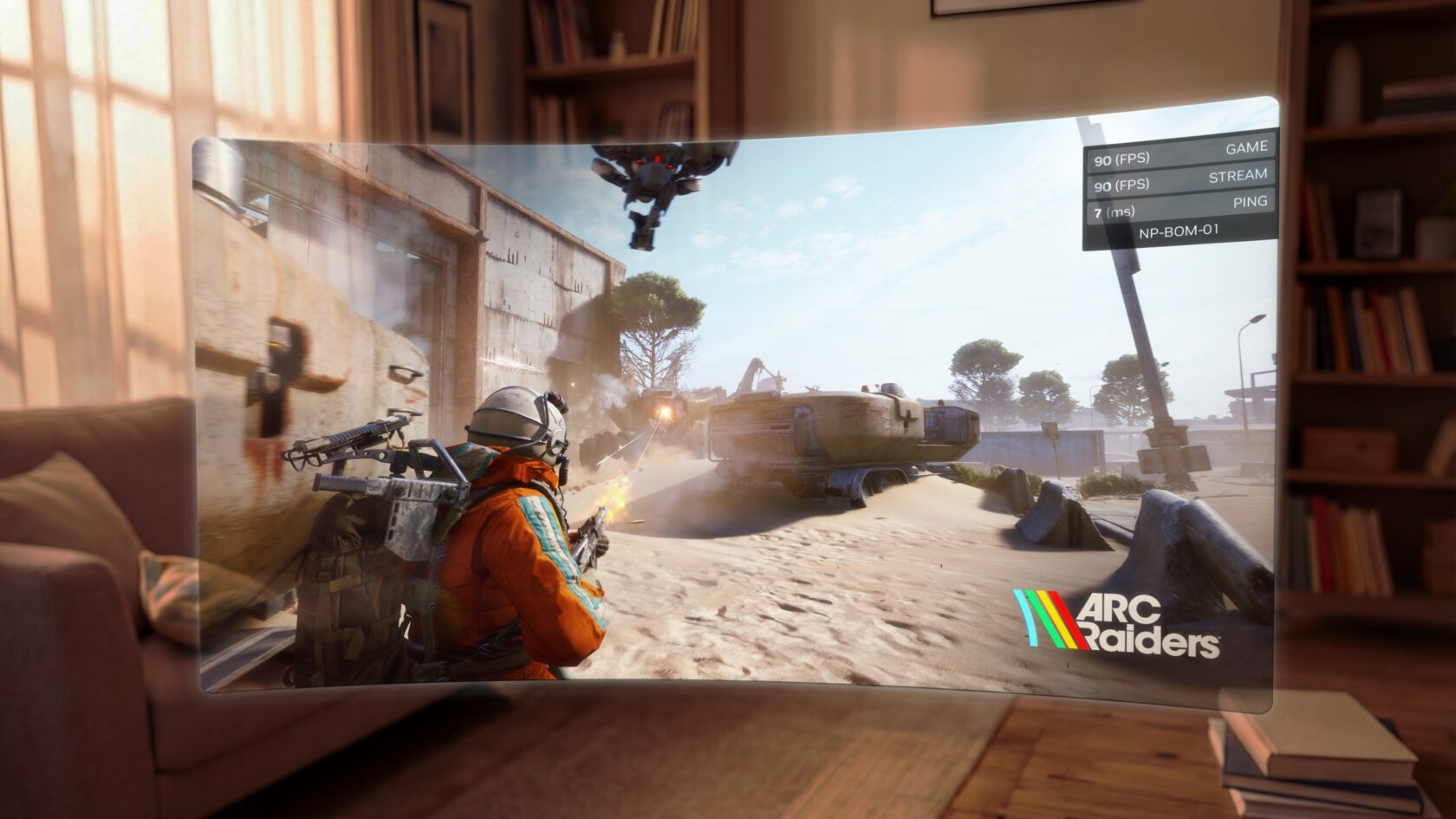
The headline feature is 90 FPS VR streaming for Ultimate members, launching March 19. Apple Vision Pro, Meta Quest, and Pico headsets will all stream at 90 FPS — up from the previous 60 FPS cap. This matters for VR specifically because low frame rates in headsets don't just look bad; they cause motion sickness. The jump from 60 to 90 FPS crosses a physiological threshold. It transforms cloud-streamed VR from "technically possible but uncomfortable" to something you could genuinely play for hours.
Then there's the Xbox Game Pass integration. GeForce NOW will now display in-app labels showing which games in your library are available through connected Xbox Game Pass and Ubisoft+ subscriptions. Link your accounts and the interface tells you what you can play from each service without switching apps. GOG account linking and library syncing are also coming, following the Gaijin single sign-on added in January.
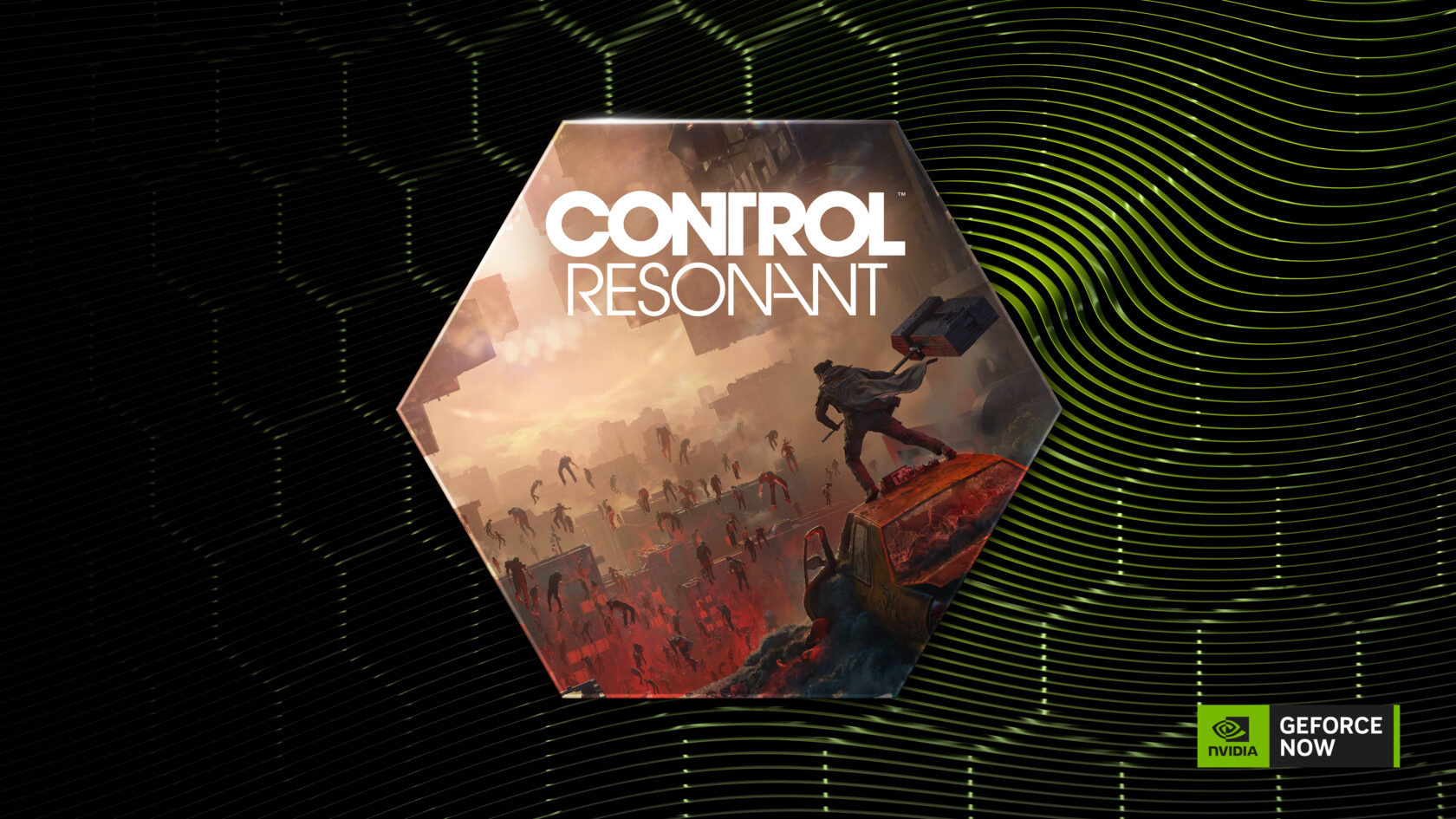
The new games list is solid: CONTROL Resonant (Remedy's latest), Crimson Desert, Resident Evil Requiem, Monster Hunter Stories 3, Warcraft I & II Remastered, and 15 other titles added in March alone. The Install-to-Play library is expanding with Xbox titles like Brutal Legend and Contrast.
But the real signal isn't in the feature list. It's in what Microsoft did.
Microsoft Put a Competitor Inside Its Own App
This is the detail that should stop you cold: the Xbox app on PC now lets you launch GeForce NOW directly to stream supported games. Microsoft — the company that runs Xbox Cloud Gaming, that pays for server infrastructure to stream its own games — put a link to NVIDIA's competing cloud service inside its own application.
The arrangement exists because of Microsoft's 10-year deal with NVIDIA, reportedly tied to the Activision Blizzard acquisition. But the strategic implications go beyond contractual obligation. Microsoft is implicitly acknowledging that GeForce NOW offers something Xbox Cloud Gaming cannot match. GeForce NOW Ultimate streams at up to 1440p/240 FPS or 5K/120 FPS with DLSS 3 and ray tracing at $19.99/month. Xbox Cloud Gaming caps at 1080p/60 FPS (with a recently added 1440p "max quality" option for Game Pass Ultimate subscribers).
Microsoft would rather have you playing Xbox games on a competitor's cloud infrastructure than not playing Xbox games at all. That is a fundamental shift in how platform holders think about their ecosystem. The console war isn't about hardware anymore. It isn't even about software exclusivity. It's about whose subscription you're paying for — and they don't care whose servers run the game as long as you're paying.
This is what multi-cloud gaming looks like. And it's here.
SoftBank's AI Just Solved Cloud Gaming's Mobile Problem
While NVIDIA was making headlines at GDC, SoftBank quietly published results from a field trial that could matter more for cloud gaming's long-term future than any new game announcement.
The technology is called "Autonomous Thinking Distributed Core Routing." SoftBank developed AI agents that monitor network traffic in real time and autonomously select the optimal route for data transmission. In a field trial conducted on SoftBank's commercial 4G mobile network — not a lab, not a 5G testbed, an actual 4G network that real people use — the AI reduced average cloud gaming latency from 41.9 milliseconds to 27.4 milliseconds. That's a 35% reduction, with 99.7% traffic control accuracy.
The technical mechanism: the AI dynamically switches between conventional centrally managed core routing (through a standard User Plane Function) and SRv6 MUP, an IPv6-native protocol that creates more direct routing paths across commercial SRv6 networks. The system uses the CAMARA QoD API, an industry-standard interface for quality-of-demand signaling, which means other carriers could adopt similar approaches.
What makes this significant is the word "4G." Cloud gaming over mobile networks has historically been terrible. Even 5G, despite all the marketing, hasn't consistently delivered the sub-40ms latency that cloud gaming requires for a smooth experience. SoftBank's AI got a 4G network — the kind most of the world still actually uses — down to 27.4ms average latency. That's competitive with wired fiber connections.
SoftBank plans to generalize the technology by training AI agents on diverse application traffic patterns beyond gaming. But the cloud gaming trial was the proof of concept, and the numbers are hard to argue with.
If this approach scales to other carriers, it eliminates one of the last legitimate arguments against cloud gaming: that it only works well on expensive fiber connections in major cities.
Your TV Is Now a Console
At CES 2026, LG announced the OLED Evo G6 — and buried in the spec sheet, alongside the expected brightness improvements and anti-reflection upgrades, was a quiet bombshell: it is the world's first TV to support native 4K 120Hz cloud gaming via GeForce NOW.
Not 1080p. Not 30 FPS. 4K at 120Hz, streamed from NVIDIA's servers, displayed on a television with no console, no PC, and no streaming box connected to it. Pair a Bluetooth controller (LG is adding Bluetooth Ultra Low Latency with sub-3ms response times for supported controllers) and you have a complete gaming setup.
Samsung is right behind, with cloud gaming apps integrated across its 2026 TV lineup. Xbox Cloud Gaming has been available on Samsung TVs since 2022, and the Xbox Game Pass app recently expanded to all Xbox Game Pass members on smart TVs — not just Ultimate subscribers.
TechRadar framed it plainly: "2026 is the year the 'no console' world becomes realistic." The article argued that the convergence of three forces — rising hardware costs making consoles less attractive, cloud gaming quality crossing the "good enough" threshold, and TV manufacturers embedding streaming as a first-class feature — has created the conditions for a genuine shift in how people access games.
The math supports this. A PS5 costs $549 after the August 2025 price increase. An Xbox Series X runs $599 following two price hikes in 2025. A GeForce NOW Ultimate subscription costs $19.99/month — meaning you'd have to subscribe for over two years before matching the upfront cost of a console, and that's before factoring in the TV you were going to buy anyway. If you're a casual gamer who plays 10-15 hours per month, the cloud gaming subscription model is now straightforwardly cheaper than owning hardware — and the gap widened as console prices climbed.
The catch — and there is always a catch — is internet quality. These 4K/120Hz streams require substantial bandwidth. NVIDIA recommends at least 40 Mbps for 4K/60 FPS streaming on GeForce NOW, and 45 Mbps for 4K/120 FPS. The FCC reports that roughly 19 million Americans still lack fixed broadband access — with 14.5 million of those in rural areas — and millions more have connections too slow or unreliable for cloud gaming. The "no console" future is real, but it's real for people who live near data centers with good internet. For rural gamers, the console isn't going anywhere.
Google's Second Act: From Stadia's Ashes to AI Agents
Google Stadia launched in November 2019 with an audacious pitch: the death of hardware, games running in the cloud, instant access from any screen. It shut down in January 2023 with a whimper, having captured somewhere between 0% and 5% market share. Google refunded every game purchase — a generous gesture that also served as a public admission of total failure.
But the people who built Stadia didn't disappear. Jack Buser, who helped create Stadia and spent a decade at Sony working on PlayStation Now, PlayStation Home, and PlayStation Plus before that, is now Google Cloud's global director for games. And at GDC 2026, he unveiled what Google learned from Stadia's failure — and how it's applying those lessons to something potentially more consequential.
Google isn't trying to compete with GeForce NOW or Xbox Cloud Gaming. Instead, it's attacking cloud gaming from the infrastructure layer. Google Cloud launched a suite of autonomous AI agents designed to handle game development's most expensive, tedious tasks: automated playtesting, code generation, content creation pipelines. Developers describe goals in natural language and the AI agents assemble production workflows.
One concrete example: Colony, a game built on Google's Gemini AI, features NPCs with persistent memories that continue operating while players are offline. The NPCs don't reset when you log out. They remember conversations, update their behavior, and evolve the game world asynchronously.
Buser has been candid about the Stadia lesson. Rather than competing against established console makers and cloud gaming services, Google is positioning itself as the backend that powers everyone else. If game development costs have risen 90% since 2017 — a figure Google Cloud cites — then AI that reduces those costs doesn't compete with GeForce NOW. It makes GeForce NOW's library bigger and cheaper to produce.
The Stadia redemption arc is real, but it's happening in a place most gamers will never see: the invisible infrastructure behind the games they play.
The Market Tells the Story
The cloud gaming market has grown rapidly, though the exact size depends on which analyst firm you ask and how they define "cloud gaming." Mordor Intelligence pegs 2026 at $6.23 billion, Statista estimates around $10 billion, and Fortune Business Insights projects $23.79 billion using a broader definition that includes adjacent services. The exact number matters less than the direction: every estimate agrees the market has at least doubled since 2023. The user base is approaching 482 million globally, with a 6.1% penetration rate.
Average revenue per user has roughly doubled, from $14.64 in 2022 to a projected $30.35 in 2026. That doubling is the interesting figure. It means people aren't just trying cloud gaming — they're upgrading to premium tiers. They're moving from free trials and basic plans to GeForce NOW Ultimate at $20/month. The willingness to pay for quality streaming is growing faster than the user base itself.
Regional adoption tells its own story. Norway leads at 22.7% penetration. Ireland follows at 22.2%. Australia sits at 18%. The United States? 10.1%. America — the biggest gaming market in the world by revenue — is middle of the pack in cloud gaming adoption, lagging behind Scandinavian countries by a factor of two.
The most likely explanation is infrastructure. Norway has some of the best broadband coverage on Earth. Rural America has some of the worst. Cloud gaming adoption tracks almost perfectly with broadband quality, which tracks with population density, which tracks with geography. The technology works. The internet doesn't — at least not everywhere.
The Technology That Could Make It All Work
There's a technology stack coming together in 2026 that, if it fully materializes, could resolve cloud gaming's remaining weaknesses faster than most people expect.
DLSS 4.5, launching March 31 for RTX 50 Series GPUs, introduces Dynamic Multi Frame Generation — what NVIDIA describes as "an automatic transmission for your GPU." The new 6X mode generates up to five AI-created frames for every one rendered frame, enabling 240+ FPS path-traced gaming at 4K. The cloud gaming implication is enormous: if servers can render fewer frames and let AI fill in the gaps, it reduces both server GPU load and bandwidth requirements. Render at half the frame rate, let AI generate the rest, stream the result. Cheaper servers, lower bandwidth, same visual quality.
5G edge computing is pushing data processing to the network edge — closer to users rather than centralized data centers. Over 2.5 billion global 5G subscriptions exist in 2026, and adaptive rendering optimization on edge servers is reportedly supporting twice as many simultaneous users on the same GPU infrastructure with 24% higher perceived quality.
Decoupled AI upscaling may be the most significant development of all. A research paper from Simon Fraser University proposes separating video upscaling from the game rendering pipeline in cloud gaming — making AI upscalers engine-independent so they can be deployed flexibly without modifying game source code. Whether the upscaling happens server-side or client-side, the result is the same: lower bandwidth requirements, more efficient server utilization, and better visual quality for the same data throughput. It's the architectural flexibility that could make cloud gaming work at scale even on mediocre internet connections.
Combine all three — AI frame generation on the server, edge computing for low latency, AI upscaling on the client — and you have a system that renders fewer frames, transmits less data, processes closer to the user, and reconstructs the full image locally. Each piece exists today. The integration is what's coming.
The Elephant in the Room: Ownership and Control
Every data point in this article supports the same conclusion: cloud gaming is technically viable in 2026 for the vast majority of gaming scenarios. The latency is acceptable. The quality is impressive. The price is competitive. The platform support is broad and growing.
But technical viability has never been the full objection. The deeper resistance to cloud gaming is about something the latency benchmarks can't measure: control.
When you own a console or a PC, you own your gaming experience. You can play offline. You can mod your games. You can keep playing a game after its publisher goes bankrupt or its servers shut down. You can sell it. You control it.
Cloud gaming inverts that relationship. You're renting access to someone else's hardware running someone else's software. If NVIDIA raises GeForce NOW's price, you pay it or lose access. If a publisher pulls a game from the service, it's gone. If your internet goes down, your entire library disappears until it comes back.
Google Stadia proved this isn't hypothetical. When Google shut Stadia down, every game on the platform became unplayable. Google chose to issue refunds — but they weren't legally obligated to. If GeForce NOW or Xbox Cloud Gaming were to shut down tomorrow, your games wouldn't vanish (you'd still own them on Steam or Xbox), but your ability to play them without buying hardware would.
The industry's push toward cloud gaming is, at its core, a push toward a subscription model where you pay monthly for access and own nothing permanently. This is what the movie and music industries did with Netflix and Spotify. It worked for those industries — but gamers have historically been more resistant to losing ownership than moviegoers. Whether that resistance holds as hardware prices climb and cloud quality improves is the real question of the next few years.
The Trade-Off Nobody's Discussing
Cloud gaming works in 2026. That's no longer debatable. The latency numbers, the smart TV integration, the multi-cloud strategies — the infrastructure is real and improving fast.
What's missing from every corporate announcement is an honest conversation about what gets lost. Game ownership disappears into subscription models. Rural players without reliable broadband get left behind. Competitive players accept input lag that would have been unthinkable five years ago. And the entire model depends on server farms that can be shut down, repriced, or region-locked at any time.
The millions of Americans without broadband aren't part of this story yet. Competitive esports players aren't either. And the people who value owning their games have legitimate concerns that the industry is choosing to ignore rather than address. Cloud gaming's technical problems are largely solved. Its trust problems haven't been touched.
Sources
- Windows Central — "2026 Might Have to Be the Year of Cloud Gaming"
- NVIDIA Blog — GeForce NOW at GDC 2026
- SDxCentral — SoftBank Cuts Latency with AI Agents
- SoftBank — Autonomous Thinking Distributed Core Routing
- TechRadar — Cloud Gaming on TVs: The No Console Future
- TechTimes — Cloud Gaming vs Console Gaming in 2026
- Thurrott — Xbox App Adds GeForce NOW Integration
- Engadget — GeForce NOW 90fps VR and GOG Syncing
- Google Cloud Blog — AI Agents Redefining Gaming
- Variety — Google Cloud Gaming Boss Jack Buser Interview
- TechRadar — LG G6 OLED CES 2026
- Market.us — Cloud Gaming Statistics 2026

Founder of GGS Blog and Site Reliability Engineer at Box. I write about gaming, AI in gaming, and game development with a technical lens — 10+ years in software engineering, 20+ years as a gamer. My work focuses on what the tech actually means for players.
Never miss a post
Subscribe to the GGS Blog newsletter for gaming news, tech insights, and AI in the game industry — delivered straight to your inbox.
Free. No spam. Unsubscribe in one click.
Comments
What to Read Next
Continue exploring our coverage of gaming, technology, and AI.
 Technology
Valve's 44% Steam Deck Hike Is the Only Honest Price in Handhelds
Sony added $100-150, Microsoft $100-150, Nintendo $50. Valve added $240 to a 512GB Steam Deck OLED and said nothing. Only one of those companies has no software subsidy to hide the memory bill behind.
 Technology
You Can't Solo Queue Loneliness: The Real State of AI Gaming Companions
AI teammates that fight, loot, and revive are finally shipping — but they only work in the specific games their publishers built them into. Universal companions exist too, but they're spectators. Neither fully solves what a solo player actually needs.
 Technology
Meta's Horizon Worlds VR Whiplash and the Slow Death of the Metaverse Dream
Meta announced it was killing Horizon Worlds in VR, reversed course 48 hours later, and accidentally wrote the eulogy for a $80 billion bet on virtual reality. Here's what went wrong — and what VR actually needs to survive.