
The AI Divide: Half of Game Devs Think AI Is Hurting the Industry — While Their Bosses Double Down
"I Have to Use It, Otherwise I'm Gonna Get Fired"
That's a senior visual and technical artist responding to the GDC 2026 State of the Game Industry survey. Not an outlier — a representative voice.
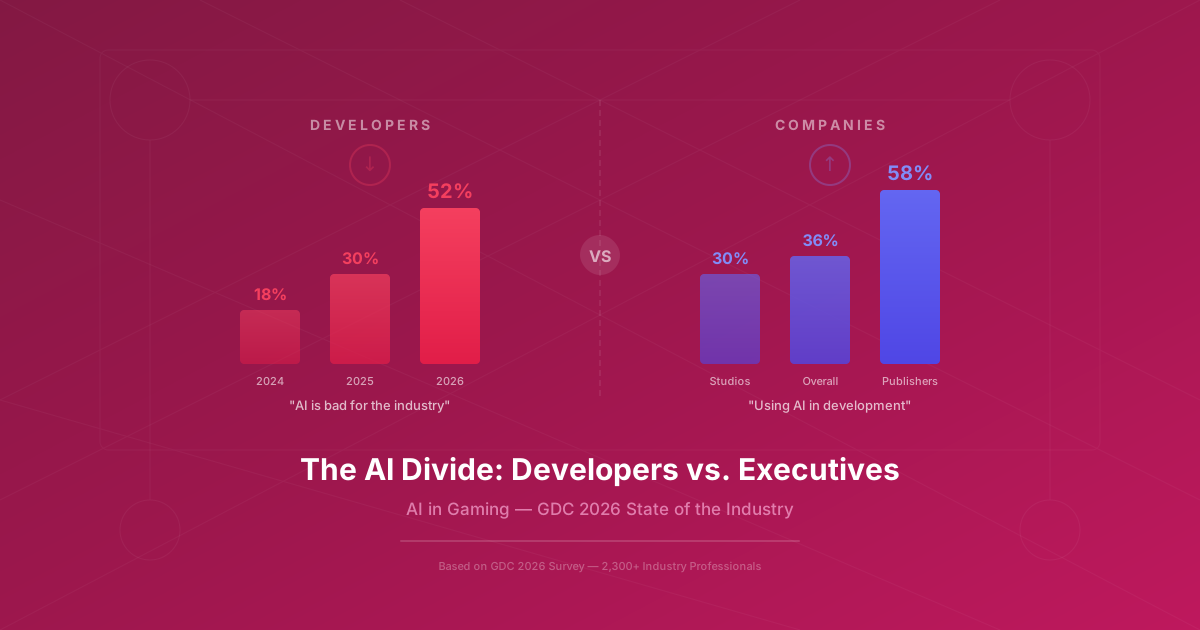
The survey, based on responses from over 2,300 industry professionals, found that 52% of game developers now believe generative AI is having a negative impact on the industry — up from 30% last year and 18% the year before. At the same time, 36% of those same professionals are already using AI tools at work, many not because they believe in the technology, but because they feel the alternative is losing their jobs.
That tension — between personal opposition and professional compliance — runs through every page of the survey data. Developers aren't confused about AI. They have strong opinions. They just don't have the power to act on them.

The Numbers Tell a Story of Deepening Skepticism
The GDC survey tracks sentiment year over year, and the trend line for AI opinion is remarkable in how quickly and consistently it has moved in one direction.
Negative sentiment over three years:
- 2024 survey: 18% said AI was bad for the industry
- 2025 survey: 30% said AI was bad for the industry
- 2026 survey: 52% said AI was bad for the industry
Positive sentiment has cratered in parallel:
- 2025 survey: 13% said AI was having a positive impact
- 2026 survey: 7% said AI was having a positive impact
That 7% figure is worth sitting with. Across 2,300 professionals spanning every discipline in game development — art, design, programming, production, business, QA — only one in fourteen believes generative AI is making things better.
The survey also breaks down sentiment by discipline, and the pattern is exactly what you would expect. The people whose work is most directly threatened by generative AI are the most hostile toward it:
- Visual and technical artists: 64% negative
- Game designers and narrative writers: 63% negative
- Programmers: 59% negative
Meanwhile, executives and business operations staff remain the most optimistic, with 19% in each group viewing AI positively — nearly three times the industry average. This is not a debate between optimists and pessimists. It is a divide between the people who greenlight budgets and the people who open Photoshop at 9 AM.
The Usage Paradox: Developers Use What They Distrust
If 52% of developers think AI is bad for the industry, why are 36% of them using it? Because opposition to a corporate strategy and compliance with that same strategy are not mutually exclusive — especially when the alternative is unemployment.
The survey reveals interesting patterns in how AI gets used across the industry. At game studios — where the actual games get made — only 30% of respondents reported using AI tools. But at publishing companies, support teams, and marketing/PR firms, that number jumps to 58%. The people closest to the creative work are the least likely to use the tools. The people furthest from it are the most enthusiastic adopters.
When developers do use AI, they gravitate toward applications that feel more like augmented search engines than creative replacement:
- Research and brainstorming: 81% of AI users
- Administrative tasks (email, scheduling): 47%
- Code assistance: 47%
- Prototyping: 35%
The most popular tool by a wide margin is ChatGPT, used by 74% of developers who use any AI tool. Google Gemini comes in second at 37%, followed by Microsoft Copilot at 22%.
Notice what is not on the list of primary uses: final art assets, shipped game content, character design, narrative writing for production. Developers are using AI to speed up the boring parts of their jobs — drafting emails, researching APIs, brainstorming ideas they will then develop by hand. They are not using it to replace the creative work itself.
But that distinction may not matter to the executives making the calls.

The Layoff Shadow Over Every AI Conversation
You cannot understand developer hostility toward AI without understanding what the past two years have done to the game industry workforce. The GDC survey asked about layoffs, and the numbers are staggering.
- 28% of respondents were personally laid off in the past two years (33% for US-based workers)
- 50% said their current or most recent employer conducted layoffs in the past 12 months
- Two-thirds of respondents at AAA studios said their company had layoffs, compared to one-third at indie studios
- 74% of students expressed concern about their future job prospects in the industry
The game industry shed an estimated 9,175 jobs in 2025, following an estimated 15,000+ layoffs in 2024 — a year that saw the highest quarterly layoff total in gaming history (8,619 in Q1 2024 alone). Major studios hit included Activision Blizzard (1,900+), Unity (1,800+), and PlayStation Studios (900+). Forecasts predict another 7,500 layoffs in 2026.
When you have watched one-third of your colleagues lose their jobs in two years, and your employer is simultaneously investing in tools that promise to do parts of your job with fewer people, you do not need a PhD in economics to draw a line between A and B.
The survey does not explicitly ask "do you think AI will replace your job?" But the sentiment data provides a proxy. Artists, who have seen the most dramatic demonstrations of generative AI capability in their discipline — and who have also been among the hardest hit by layoffs — hold the most negative views at 64%. That is not a coincidence.
The Executive VP Who Loves It
The survey includes one particularly telling positive quote, from an Executive VP at an independent studio: "We are a small team, so it is making us capable of achieving more than we would without it."
This is the best-case argument for AI in games, and it is not wrong. A five-person indie team using AI to handle placeholder art, generate test dialogue, or accelerate prototyping can genuinely punch above their weight. The problem is that this argument gets deployed to justify AI adoption at 500-person studios where the goal is not to help small teams do more — it is to make big teams smaller.
The Top-Down Problem
Multiple analyses of the GDC data describe developer sentiment as viewing AI adoption as a "top-down executive initiative" rather than a grassroots tool adoption. This framing matters enormously.
When developers adopt a new tool organically — think the rise of Unity, the spread of Git, the adoption of Discord for team communication — it happens because individual practitioners find value and spread the word. The tool proves itself on the ground floor. Management catches up later.
Generative AI in game studios is following the opposite pattern. Executives attend conferences where vendors pitch AI efficiency gains. Board decks feature slide after slide about reducing development costs and timelines. Company-wide mandates follow: integrate AI into your workflow, report on AI usage metrics, attend AI training sessions.

The developers on the receiving end of these mandates see a technology that:
- Produces output that requires heavy human editing to meet professional quality standards
- Raises serious ethical questions about training data, copyright, and the use of scraped artwork
- Threatens their job security in an industry that has already laid off tens of thousands
- Is being pushed by people who do not personally do the work it claims to improve
That last point cuts deepest. When an executive who has never rigged a character model or debugged a shader tells an artist that AI will "empower their creativity," the artist hears something very different from what the executive intends.
The Broader Context: An Industry Under Strain
The AI divide does not exist in isolation. The 2026 GDC survey paints a picture of an industry dealing with compounding pressures from multiple directions.
Rising costs
Hardware costs are climbing due to AI chip demand and trade tariffs. Development budgets at the AAA level have ballooned past $200-400 million. The irony is thick: the same AI infrastructure driving up costs is being sold as a cost-reduction tool for the studios paying those inflated prices.
Platform uncertainty
The survey found that 42% of developers now use Unreal Engine as their primary engine, compared to 30% for Unity — a gap that has widened since Unity's controversial runtime fee debacle in 2023. Platform strategy is also in flux, with Xbox undergoing leadership changes (Asha Sharma replacing Phil Spencer and Sarah Bond) and questions about the future of exclusive console games.
Unionization momentum
Perhaps most telling, 82% of US respondents support unionization in the game industry. Among workers who have been laid off, that number rises to 88%. Only 10% of respondents are currently union members, but 62% expressed interest in joining one. The workforce is not just skeptical of AI — it is actively organizing in response to the conditions that AI adoption represents.
The Steam Deck factor
On a lighter note, 28% of developers are currently developing for Steam Deck, with 40% expressing interest. And 73% of executives prioritize PC for their next project. The platform landscape is shifting toward open ecosystems even as the workforce debates what tools should be used to build for them.
Historical Parallels: We Have Been Here Before
The executive-developer divide on AI is not new technology tension dressed up in new clothes. The game industry has a long history of management pushing tools and processes that practitioners resist.
Outsourcing in the 2000s followed a similar arc. Executives saw labor cost reduction. Developers saw quality degradation and job loss. The industry eventually found a middle ground where outsourcing handles specific tasks (environment art, QA) while core creative work stays in-house. But that equilibrium took a decade to reach and cost many careers along the way.
The mobile/free-to-play pivot of 2012-2015 is another parallel. Console developers were told that mobile was the future, that free-to-play was the only viable business model, and that anyone resisting was clinging to the past. Many of those predictions proved wrong or at least wildly overstated. The console market is bigger than ever. But the pivot still reshaped studios, killed projects, and ended careers.
Crunch culture reform offers perhaps the most instructive comparison. For years, executives defended crunch as necessary to ship great games. Developers pushed back, organized, and eventually shifted industry norms — though the fight is far from over. The pattern is always the same: management identifies a practice that serves institutional goals, workers identify the human cost, and the resolution takes years.
AI in game development will likely follow a similar trajectory. The technology will find its level — probably somewhere between the executive fantasy of 50% cost reduction and the developer fear of wholesale replacement. But the process of finding that level will be painful, and the people who bear the cost will overwhelmingly be the ones who had the least say in the decision.
What Actually Happens Next
The GDC 2026 data suggests a few likely outcomes for the near term.
AI adoption will continue regardless of developer sentiment. The 36% usage rate will likely climb, not because developers change their minds, but because companies will increasingly require it. Expect more studios to add "experience with AI tools" to job postings and to measure teams on AI integration metrics.
The quality question will become unavoidable. As AI-generated or AI-assisted content ships in more games, players will start to notice — and they will have opinions. The backlash against AI art on social media has already been fierce. When that energy meets a $70 game with AI-generated environmental textures or NPC dialogue, the conversation will shift from abstract ethics to concrete product quality.
Unionization will accelerate. The 82% support figure is not an abstraction. Game workers at studios including Bethesda, Activision Blizzard, Sega, and others have already formed unions. The combination of mass layoffs and forced AI adoption is creating exactly the conditions that drive organized labor movements.
Some studios will get AI right. Small and mid-size developers who use AI to accelerate iteration, reduce busywork, and empower individual creators — without using it as a pretext for headcount reduction — will produce good work and attract talent. The technology is not inherently destructive. The problem is how it is being deployed and by whom.
The executive-developer divide will deepen before it narrows. Absent a major AI-related quality failure or a successful union push that forces negotiation on AI policy, there is no mechanism to close the gap between the 19% of executives who see AI positively and the 64% of artists who see it negatively. These two groups are looking at the same technology and seeing completely different things — and neither side is wrong about what they see.
Who Decides How Games Get Made
The GDC 2026 survey data points to a power struggle, not a technology debate. Developers aren't evaluating AI on its technical merits — they're reacting to how it's being deployed: top-down, without consultation, as a cost-cutting measure that directly threatens their livelihoods.
Generative AI promises executives cheaper production. It threatens developers with obsolescence. Those aren't contradictory assessments of the same technology — they're accurate descriptions from different positions in the hierarchy. The 52% who call AI harmful aren't wrong. The executives pushing adoption aren't irrational. They're looking at the same tool from opposite sides of a budget spreadsheet.
The 82% union support figure suggests where this is heading. When workers can't influence decisions through internal channels, they organize. The next chapter of AI in game development won't be written in survey responses — it'll be written in labor negotiations.
Sources
- GDC 2026 State of the Game Industry Report (Official)
- 2026 State of the Game Industry Report — BusinessWire
- One-Third of U.S. Video Game Industry Workers Were Laid Off — Variety
- GDC Survey: Over 50% Of Game Devs Say Generative AI Harms Industry — 80 Level
- Gaming Industry Has Embraced AI But Most Developers Think It's Bad — Digital Trends
- GDC 2026: Key Trends and Challenges — Attractmode
- Generative AI Use Among Game Developers Falls to 29% — Outlook Respawn
- Game Developers Turn on AI: 52% Now Call It Bad — TechBuzz AI
- More Developers Than Ever Believe AI Is Hurting the Industry — GameSpot

Founder of GGS Blog and Site Reliability Engineer at Box. I write about gaming, AI in gaming, and game development with a technical lens — 10+ years in software engineering, 20+ years as a gamer. My work focuses on what the tech actually means for players.
Never miss a post
Subscribe to the GGS Blog newsletter for gaming news, tech insights, and AI in the game industry — delivered straight to your inbox.
Free. No spam. Unsubscribe in one click.
Comments
What to Read Next
Continue exploring our coverage of gaming, technology, and AI.
 AI in Gaming
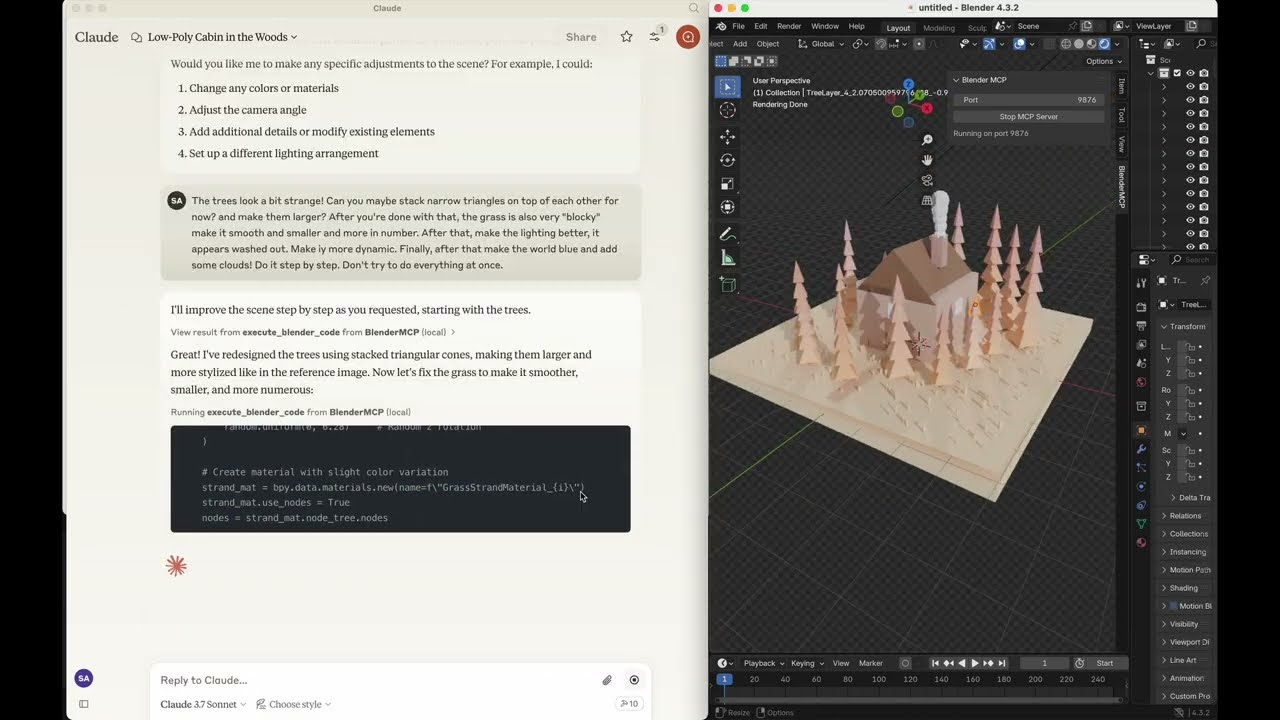
The Execution Layer: MCP Connectors Are Rewriting Who Can Use Game Dev Tools
Nine Claude connectors for Blender, Autodesk, and Adobe dropped in a single release. Meanwhile, community MCP servers have been executing natural-language commands inside Houdini, Maya, and Unreal for months. This isn't just automation — it's a fracture in what tool expertise actually means.
 AI in Gaming
Nexon Bets Big on AI With 'Mono Lake' Platform, Promises More Innovation and Less Code
Arc Raiders' publisher unveiled its end-to-end AI intelligence platform at a Tokyo briefing, claiming billions of player sessions will empower developers — not replace them. The GDC 2026 survey tells a different story about how developers feel.
 AI in Gaming
The AI Paradox: 52% of Game Developers Say AI Is Harmful — While 52% of Studios Adopt It Anyway
The GDC 2026 State of the Industry survey revealed a perfect paradox: developer opposition and corporate adoption have hit the exact same number. Here's what the data actually says, and why the rift between creators and executives is only getting wider.