
Capcom Says No to AI Art — But Where's the Line?
A Promise With a Giant Asterisk
Capcom just told investors something that sounds good on paper: "We will not implement the materials generated by generative AI into game content." The quote came from technical director Kazuki Abe in response to an investor question, surfacing publicly on March 23, 2026 through Capcom's Q&A materials tied to the company's third-quarter financial results.
In the same breath, Abe added that Capcom plans to "actively utilize this technology to improve efficiency and productivity in the game development process," pointing to graphics, sound, and programming as areas under exploration.
If you read that and thought, "Wait — those are basically all the parts of a game," you're not alone.
Capcom is trying to draw a line between using AI as a behind-the-scenes tool and letting AI-generated content ship in the box. It's a distinction that sounds clear in a boardroom presentation. In practice, the line is about as sturdy as wet tissue paper — and Capcom's own recent history proves it.
What Capcom Actually Said (And Didn't Say)
Let's break down the exact language, because precision matters here.
Abe's statement has two halves. The first half — no AI-generated materials in game content — is the headline that gets shared around social media. The second half — active utilization of AI across graphics, sound, and programming — is where the actual strategy lives.
What Capcom didn't say is equally important:
-
They didn't define "materials generated by generative AI." Does a texture that an artist paints over an AI base count? What about a 3D model where AI suggested the proportions but a human modeled the final mesh? If AI generates 500 concept ideas and an artist picks one to develop further, is the final result AI-generated or human-made?
-
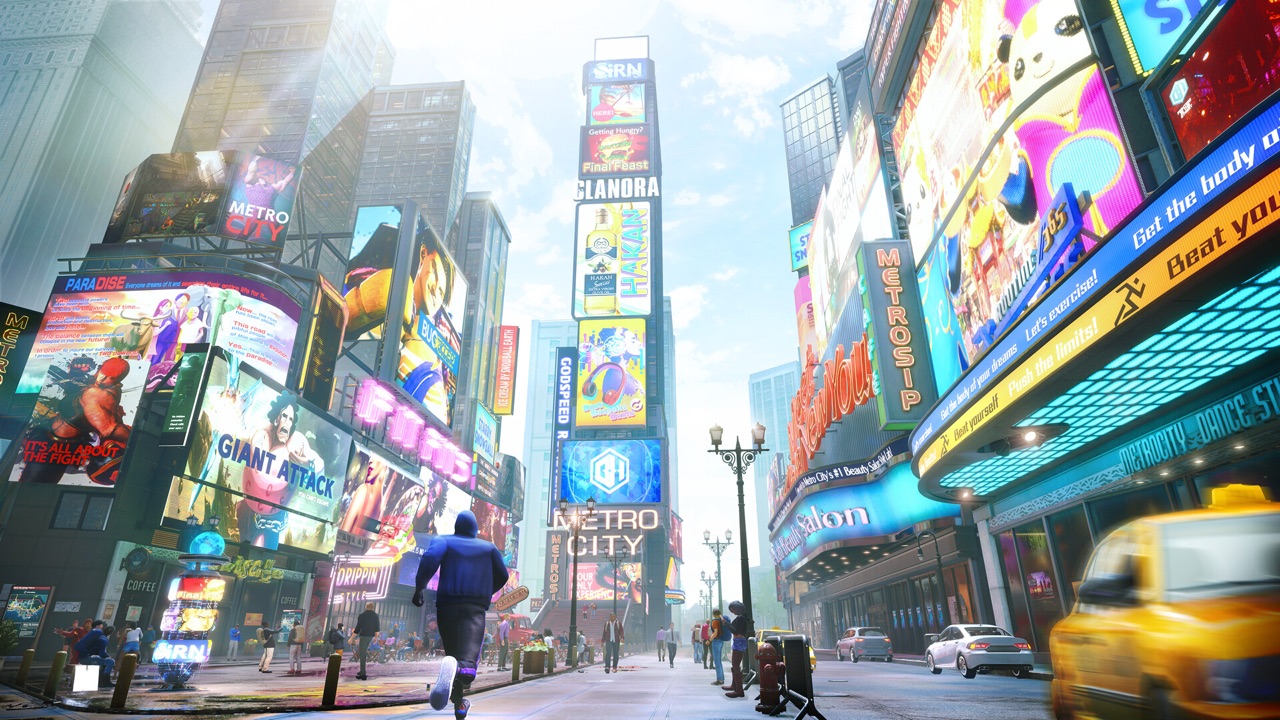
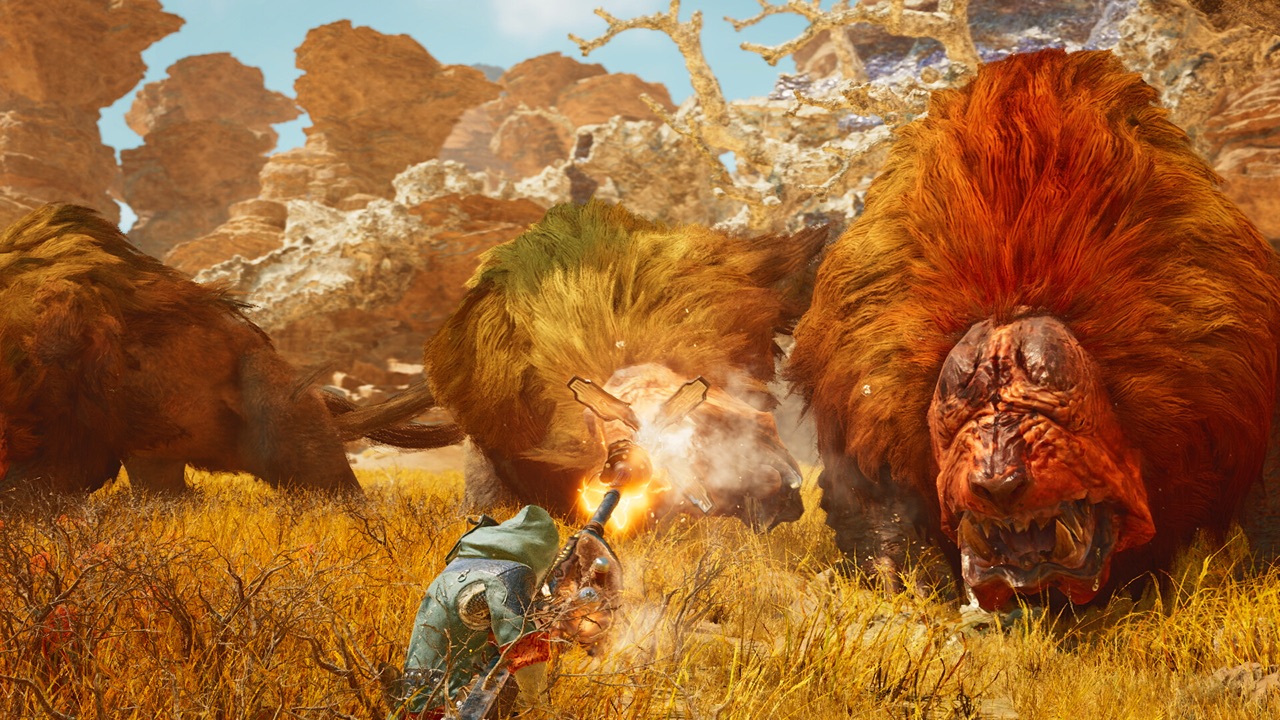
They didn't acknowledge their existing AI implementations. Street Fighter 6 already ships with AI-driven features. Monster Hunter Wilds was developed with AI assistance tools. These aren't hypotheticals.
-
They didn't address DLSS 5 — a technology that literally replaces Capcom's carefully crafted artwork with AI-generated imagery on the player's screen, and one that Capcom's own developers were apparently blindsided by.
The statement reads less like a principled stand and more like a carefully worded hedge designed to satisfy two very different audiences: investors who want AI efficiency gains, and players who don't want AI slop in their games.
The Street Fighter 6 Problem
Here's where things get uncomfortable for Capcom's "no AI in our games" messaging.
Street Fighter 6's Real-Time Commentary feature has been one of the game's most praised innovations since launch, using pre-recorded lines from popular fighting game commentators like Tasty Steve and James Chen that dynamically trigger based on in-game events. That part is clever engineering, not generative AI.
But then came Naevis.
In July 2025, Capcom added Naevis — a South Korean virtual idol from SM Entertainment's aespa project — as the first AI commentator in Street Fighter history. Unlike the human commentators who recorded their lines, Naevis's voice is created through AI speech synthesis using samples from multiple voice actors. She can commentate matches in English, Japanese, and Korean, generating audio that players hear during gameplay.
By any reasonable definition, Naevis is AI-generated content shipping in a final game. Her voice is synthesized, not recorded. The words she speaks during your match were generated by an AI system, not performed by a human actor. The fact that it's commentary rather than, say, a character's main dialogue doesn't change what it fundamentally is.
Then in December 2025, Capcom added streamer Amaki Pururu from esports team REJECT to the commentary system. The Real-Time Commentary feature keeps expanding, and the line between "AI as a feature" and "AI-generated content" keeps blurring.
You could argue — and Capcom probably would — that the commentary system is a gameplay feature that uses AI as a tool, not "AI-generated materials" in the sense Abe meant. Maybe they're drawing the line at art assets, character models, textures, and written dialogue. But that distinction gets fuzzier every time you examine it.
The Kazuki Abe Brainstorming System
Before Abe became the face of Capcom's "no AI content" policy, he was building the exact opposite: a generative AI system designed to create ideas for game content.
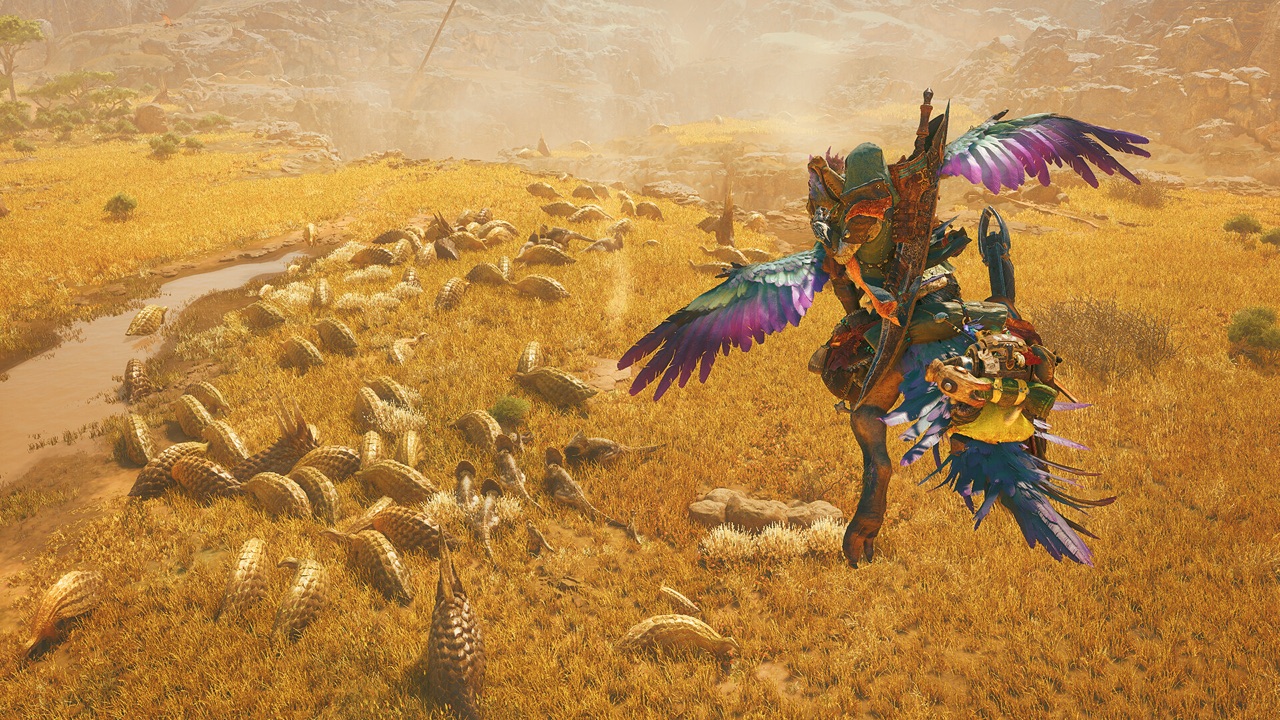
In mid-2025, Abe presented a prototype tool that feeds game design documents into multiple Google Cloud AI models — including Gemini Pro and Imagen — to generate proposals for in-game objects. The logic was straightforward: modern games require thousands to tens of thousands of unique props, and each prop needs unique designs, logos, and visual treatments. Coming up with all those ideas from scratch is one of the most tedious parts of development.
Abe's system doesn't just spit out random suggestions. It reads the game's design documents, generates ideas based on the established art direction, evaluates those ideas against quality criteria, and automatically refines its own outputs. Internal teams reportedly gave it positive feedback.
This is where the distinction between "AI-assisted" and "AI-generated" starts to collapse. If an AI system proposes a design for a television that appears in a game, and an artist then models, textures, and implements that television — is the final prop AI-generated? Capcom would say no. The artist made it. The AI just had the idea.
But if the AI generated 500 prop concepts and the artist selected which ones to develop, the AI has fundamentally shaped the game's visual identity. The human is choosing from a menu the machine wrote. That's a different kind of creative process than a concept artist sketching from their own imagination, informed by their training, experience, and personal aesthetic sensibilities.
This isn't necessarily bad — plenty of design processes involve algorithmic or randomized inputs. But calling it "not AI-generated" requires a very specific reading of what "generated" means.
The DLSS 5 Blindside
If Capcom's investor Q&A statement was partly damage control, the damage it was controlling for came from NVIDIA.
Earlier this month, NVIDIA unveiled DLSS 5 at GTC 2026, showcasing the technology using Capcom's own Resident Evil Requiem. Unlike previous DLSS versions that focused on upscaling and frame generation, DLSS 5 employs neural rendering to generate entirely new image data layered onto the original game frame. The demo showed the technology transforming the face of Resident Evil Requiem character Grace Ashcroft — giving her plumper lips, different skin textures, altered ear geometry, and what critics described as a "yassified" look that bore little resemblance to the artists' original work.
The kicker? Capcom's own developers had no idea it was coming. Multiple reports from TechRadar, PC Gamer, and TheGamer confirmed that Capcom developers found out about the DLSS 5 demo at the same time as the public. One developer at Capcom was reportedly "shocked," as the studio had traditionally been positioned as anti-AI. Others within the studio expressed fear that executives were changing course on the technology without telling the people who actually make the games.
This created a situation where NVIDIA used Capcom's game to demonstrate technology that overwrites Capcom artists' work with AI-generated imagery — and Capcom's leadership either approved it without consulting their development teams or wasn't told either. Neither option looks great.
The timing is hard to ignore. The DLSS 5 controversy hit on March 16. Capcom's "we won't use AI-generated content" statement came on March 23. Seven days. That statement looks a lot like crisis management when you consider the sequence of events.
Crimson Desert's Cautionary Tale
Capcom isn't operating in a vacuum. The Crimson Desert disaster showed the entire industry what happens when "placeholder" AI content accidentally ships.
Pearl Abyss launched Crimson Desert in early March 2026 with AI-generated 2D art assets that were supposed to be replaced before release but slipped through. Players immediately spotted the telltale signs — melting proportions, impossible horse anatomies, perspective errors that no professional concept artist would make. The backlash was instant and devastating.
Pearl Abyss issued a public apology, promised a "comprehensive audit of all in-game assets," and updated the game's Steam disclosure. But the reputational damage was done. The incident also echoed the earlier case of Clair Obscur: Expedition 33, where developer Sandfall Interactive had Game of the Year and Debut Game awards stripped by the Indie Game Awards for AI-generated placeholder textures that were accidentally included in the final build.
This is exactly the scenario Capcom's statement is designed to prevent. By drawing a public line — "no AI-generated materials in game content" — they create plausible deniability and set expectations. If AI artifacts ever surface in a Capcom game, they can point back to this policy and frame it as an error, not a design choice.
But the Crimson Desert situation also illustrates why the line between AI-assisted and AI-generated matters so much. Pearl Abyss also used AI tools during development. The placeholders were always meant to be replaced. The problem wasn't that they used AI — it was that the replacement step failed. When your development pipeline runs AI-generated content through every stage of production, the risk of something slipping through increases proportionally.
Where Capcom Sits in the Industry Spectrum
To understand what Capcom's statement really means, it helps to see where other publishers stand.
The "AI is our future" camp: Microsoft treats AI as a "foundational platform." Epic Games CEO Tim Sweeney actively opposes mandatory AI disclosure, arguing "AI will be involved in nearly all future production." Krafton has committed $70 million on a GPU cluster to become an "AI-first company." Square Enix wants AI doing 70% of its QA work by 2027.
The "AI is a risk" camp: Nintendo avoids generative AI for core development, viewing it as a threat to authorship and originality. Larian Studios made a public commitment to reject generative AI entirely, including for prototyping on their upcoming Divinity project.
The mushy middle: This is where Capcom lives. Alongside companies like EA (using AI for animation and player behavior analysis), Ubisoft (AI tools like Ghostwriter for placeholder dialogue), Sony (AI research focused on gameplay systems like Gran Turismo Sophy), and Bandai Namco (AI research while avoiding visible generative content).
The mushy middle is where most of the industry sits, and it's also the most intellectually dishonest position. These companies want the efficiency gains of generative AI without the reputational cost of being associated with it. They want to use AI everywhere behind the curtain while promising audiences they'll never see it on stage.
The new SAG-AFTRA labor contract — approved by 95% of voting union members — requires consent and disclosure when AI creates digital replicas of performers, covering studios including Activision, EA, Disney, Insomniac, and WB Games. The industry is slowly building guardrails, but the guardrails keep getting built behind where the technology already is.
The Real Question Capcom Should Be Answering
The useful question isn't "does AI-generated content appear in your games?" It's: "How much of your creative process has been delegated to AI systems, and what does that mean for the people who used to do that work?"
If Abe's brainstorming tool generates the concept ideas, and those ideas shape art direction, and that art direction determines what artists model and texture — at what point is the AI a co-creator rather than a tool? If AI commentary in Street Fighter 6 uses voice synthesis to generate words real commentators never said, is that fundamentally different from AI-generated dialogue?
The GDC 2026 survey found that 52% of developers believe AI is bad for the industry, up from 18% just two years ago. That number isn't rising because developers don't understand the technology. It's rising because they understand it very well — and they see how it's being used to consolidate creative decisions upward while the people doing the actual work lose leverage, jobs, and credit.
Meanwhile, companies like xAI are promising fully AI-generated AAA games with zero human developers, pushing the "AI replaces everything" end of the spectrum. Capcom's statement is partly a response to that extreme — a way of saying "we're not those guys." And compared to Musk's fantasies about AI-only game studios, Capcom's approach is genuinely more thoughtful.
But "better than the worst option" is a low bar.

What Would a Real Commitment Look Like?
If Capcom — or any publisher — wanted to make a genuinely meaningful statement about AI, it would look different from what we got. It would include:
Transparency about current usage. Don't just say "we use AI in development." Specify which tools, in which departments, for which purposes. Let players and industry observers evaluate those uses on their merits instead of hiding behind vague language.
Clear definitions. What counts as "AI-generated content"? If an AI generates a concept that a human artist then executes, does that fall inside or outside the policy? Without definitions, the policy means whatever Capcom needs it to mean at any given moment.
Workforce commitments. The elephant in every AI-in-games conversation is jobs. If AI tools make development more efficient, does Capcom commit to maintaining headcount, or will efficiency gains translate to smaller teams? Abe's brainstorming tool was explicitly designed to reduce the labor intensity of generating tens of thousands of prop ideas. That labor was previously done by human concept artists.
Third-party accountability. The DLSS 5 situation showed that even if Capcom controls its own AI usage, its technology partners can inject AI-generated content into the player experience without developer consent. A meaningful policy would address this supply chain.
Larian Studios, to their credit, has come closer to this kind of transparency. Their public commitment to reject generative AI entirely — including during prototyping — is a clearer and more defensible position than Capcom's. It's also more economically costly, which is exactly why it carries more weight.
What to Watch For
Capcom's statement reveals more about the industry's direction than about Capcom itself. The fact that a major publisher feels compelled to publicly promise AI won't appear in their games tells you how normalized AI-assisted development has already become. The debate has moved past "will studios use AI?" to "how visible will it be, and who gets to know?"
For players who care about this, the useful signals aren't press releases — they're disclosure labels on Steam, credit lists that name AI tools alongside human contributors, and voice performances that sound a little too perfectly adapted to your gameplay. Capcom drew a line between "AI-assisted development" and "AI-generated content." Whether that distinction holds up as the tools improve is something the next two years will answer — not Capcom's investor presentation.
Sources
- Capcom Takes a Stand Against AI-Generated Game Content, but It's Still Using AI in Development — Game Rant
- Capcom Doubles Down On No AI Stance, But Will Use It During Development — TheGamer
- Capcom Promises No GenAI In Its Games, But There's A Catch — Kotaku
- Capcom Will Not Implement AI-Generated Assets in its Games, Still Testing the Tech — GamingBolt
- Capcom says it will not be using AI-generated content in its games — AUTOMATON WEST
- Capcom is experimenting with generative AI to help generate ideas — AUTOMATON WEST
- Capcom devs shocked by Nvidia DLSS 5 Resident Evil Requiem demo — NotebookCheck
- Capcom and Ubisoft developers surprised by DLSS 5 announcement — PC Gamer
- Crimson Desert developer apologizes for AI-generated art — Engadget
- Who's Betting on AI and Who's Backing Away — Outlook Respawn
- Video game giants agree to AI rules in new labor contract — Quartz
- Capcom's Stance on Generative AI Following Resident Evil Requiem's DLSS 5 Makeover — Push Square

Founder of GGS Blog and Site Reliability Engineer at Box. I write about gaming, AI in gaming, and game development with a technical lens — 10+ years in software engineering, 20+ years as a gamer. My work focuses on what the tech actually means for players.
Never miss a post
Subscribe to the GGS Blog newsletter for gaming news, tech insights, and AI in the game industry — delivered straight to your inbox.
Free. No spam. Unsubscribe in one click.
Comments
What to Read Next
Continue exploring our coverage of gaming, technology, and AI.
 AI in Gaming
The Execution Layer: MCP Connectors Are Rewriting Who Can Use Game Dev Tools
Nine Claude connectors for Blender, Autodesk, and Adobe dropped in a single release. Meanwhile, community MCP servers have been executing natural-language commands inside Houdini, Maya, and Unreal for months. This isn't just automation — it's a fracture in what tool expertise actually means.
 AI in Gaming
Nexon Bets Big on AI With 'Mono Lake' Platform, Promises More Innovation and Less Code
Arc Raiders' publisher unveiled its end-to-end AI intelligence platform at a Tokyo briefing, claiming billions of player sessions will empower developers — not replace them. The GDC 2026 survey tells a different story about how developers feel.
 AI in Gaming
The AI Paradox: 52% of Game Developers Say AI Is Harmful — While 52% of Studios Adopt It Anyway
The GDC 2026 State of the Industry survey revealed a perfect paradox: developer opposition and corporate adoption have hit the exact same number. Here's what the data actually says, and why the rift between creators and executives is only getting wider.