
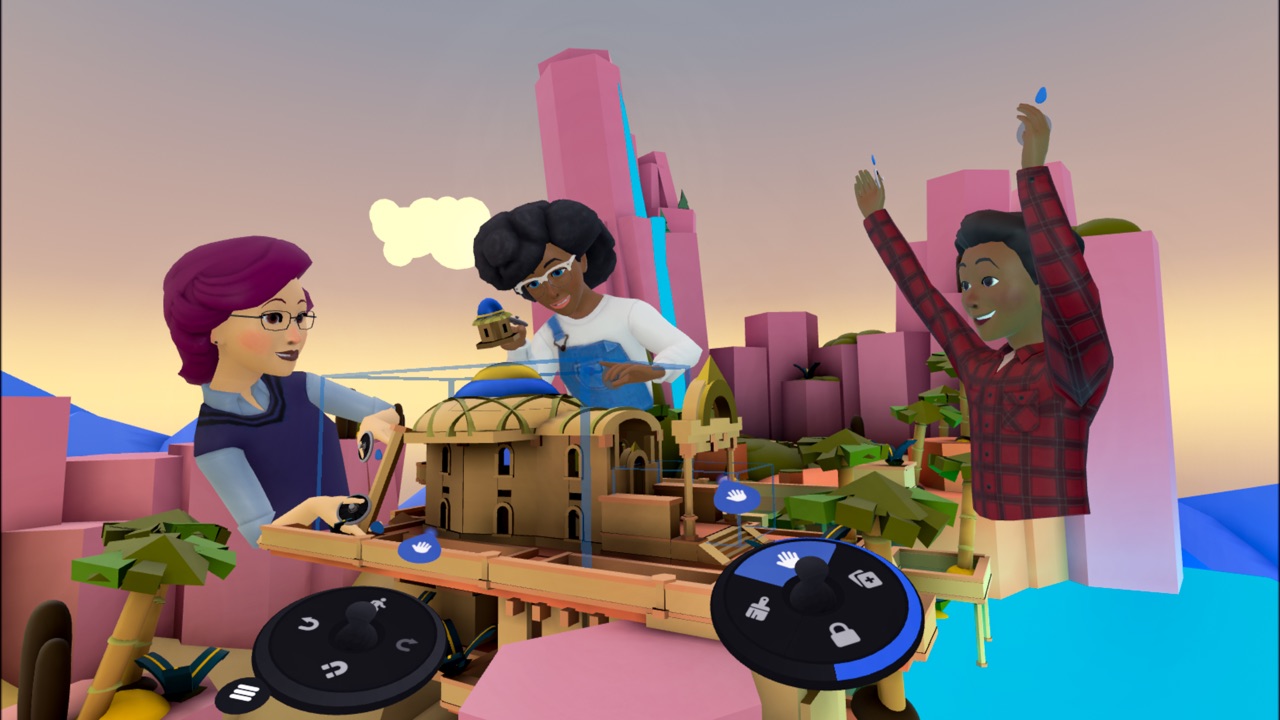
Meta Kills Horizon Worlds VR After Burning $70 Billion on the Metaverse
Meta published a community blog post today with the kind of corporate language that only appears when a company is burying something: "We are separating the two platforms so each can grow with greater focus, and the Horizon Worlds platform will become a mobile-only experience."
Translation: the VR version of Horizon Worlds — the social virtual reality platform that justified Facebook's rebrand to Meta, consumed tens of billions in investment, and was supposed to redefine human interaction — is being shut down. The VR app gets delisted from the Quest store on March 31, with all VR worlds going fully dark on June 15, 2026. A mobile-only version survives, which is the product equivalent of life support.
The Timeline of a $70 Billion Fumble
The arc matters because it explains why nobody should be surprised right now:
October 2021: Mark Zuckerberg renames Facebook to Meta, declaring the metaverse "the next frontier." He writes that "within the next decade, the metaverse will reach a billion people, host hundreds of billions of dollars of digital commerce, and support jobs for millions of creators and developers."
December 2021: Horizon Worlds launches on Quest VR headsets. It's a social platform where legless avatars can interact in virtual 3D spaces. The reception is... not great.
2022: Horizon Worlds becomes a meme factory. Zuckerberg's dead-eyed avatar goes viral. The platform is overrun by children. The virtual spaces feel empty and lifeless. Internal documents leak showing the platform can barely retain users — even Meta employees don't want to use it.
September 2023: Meta launches a mobile version, essentially admitting that tying Horizon Worlds to expensive VR hardware was limiting growth.
2022–2025: Reality Labs, Meta's metaverse division, bleeds money at a staggering rate. Quarterly losses of $4–6 billion become routine. The total? Over $70 billion lost since 2021, according to Business Insider.
January 2026: Meta lays off over 1,000 Reality Labs employees — roughly 10-15% of the VR workforce. Studios working on VR titles, including Ouro Interactive (Meta's in-house Horizon Worlds content studio), are shuttered.
February 2026: Meta CTO Andrew "Boz" Bosworth admits publicly that VR hasn't been growing "as much or as quickly" as hoped. The company announces a restructuring of VR efforts and signals a shift toward mobile for Horizon Worlds.
March 18, 2026 (today): The axe falls. Horizon Worlds VR is officially dead.
Never Found an Audience
The fundamental problem with Horizon Worlds was never the technology — it was that nobody wanted to be there.
CNBC reported that the platform never drew more than "a couple hundred thousand active users a month." For a company with 3+ billion users across its family of apps, that's a rounding error. Meta pumped money into high-profile partnerships — virtual concerts by Imagine Dragons and Coldplay, branded experiences, creator programs — and none of it moved the needle.
Meanwhile, VRChat — a free social VR platform built by a fraction of Meta's workforce with a fraction of the budget — remained consistently more popular. People held virtual raves, attended presidential elections, and built thriving communities there. The difference? VRChat was built by people who understood what VR communities actually want. Meta tried to corporate-engineer a social experience, and users rejected it.
"Meta was trying to solve for a consumer problem that doesn't exist," wrote Mike Proulx, VP and research director at Forrester, in a statement to WIRED. "You can't build a mass social platform reliant on hardware most people neither own nor want to wear for more than short bursts."
Even the r/oculus subreddit greeted the shutdown news with what WIRED described as "borderline glee."
I spent time in Horizon Worlds in late 2022, when it was still getting heavy press coverage. I went in expecting something awkward but functional — the kind of early-stage product that you can squint at and see potential. What I found was a platform that felt genuinely abandoned despite being actively maintained. The spaces were empty. The activities felt like minigame concepts that never made it to a finished prototype. The social interactions with strangers were stilted in a way that felt worse than a video call, not better. I came away thinking the core problem wasn't execution — Horizon Worlds was executed reasonably well as a technical product. The problem was that the social experience it was chasing didn't have a natural constituency. Nobody was waiting for corporate-designed virtual hangouts. They were waiting for a game, and Meta never quite built one.
The AI Pivot
So where does Meta go from here? The answer has been obvious for over a year: AI.
Meta has been aggressively repositioning itself as an AI company. The Reality Labs layoffs freed up resources that are being redirected toward:
- Meta AI — The company's chatbot and assistant ecosystem
- Ray-Ban Meta smart glasses — The Display model launched in the US to strong demand (international launch was delayed due to inventory shortages)
- Orion AR glasses — Still in prototype stage, but representing Meta's next hardware bet
- Llama models — Meta's open-source AI models have become genuinely competitive with OpenAI and Anthropic
The irony is thick: Meta spent $70 billion trying to build the metaverse, failed, and is now pivoting to AI — a field where its primary contribution (Llama) was built at a fraction of the cost and has generated far more developer goodwill than Horizon Worlds ever did.
What Happens to Quest?
Meta was careful to clarify that this isn't the end of Quest VR hardware:
"We have a robust road map of future VR headsets that will be tailored to different audience segments as the market grows and matures," Meta said. "Meta remains the single biggest investor in the VR industry."
The Quest hardware platform isn't going anywhere — it's actually facing more competition than ever. Valve's Steam Frame headset is still on track for 2026. Samsung's Galaxy XR launched in December running Android XR. ByteDance's Pico has Project Swan coming later this year. Apple's Vision Pro got an M5 upgrade last fall.
Meta is repositioning Quest as a gaming and media device rather than a metaverse portal. Which, frankly, is what most Quest owners have been using it for anyway. Beat Saber, Supernatural Fitness, standalone VR games — that's the actual use case that sustained Quest hardware sales, not legless avatars in virtual conference rooms.
The $70 Billion Question
Here's what makes this story so extraordinary: Mark Zuckerberg bet his company's identity on the metaverse. He didn't just invest in VR — he renamed the entire company. He staked his reputation, his shareholders' money, and thousands of employees' livelihoods on the conviction that virtual reality would be "the next computing platform."
Reality Labs has posted operating losses every single quarter since its creation:
- 2022: $13.7 billion loss
- 2023: $16 billion loss
- 2024: $17.7 billion loss
- 2025: $16+ billion loss
- Q4 2025 alone: $6.02 billion loss
The cumulative total exceeds $70 billion. That's more than the GDP of most countries. It's enough to fund NASA for three years. It could have bought every VRChat user a house.
And the man who orchestrated this — who ignored early warnings, doubled down after public mockery, and burned through cash at an unprecedented rate — remains one of the wealthiest people on the planet. There's a lesson in there about who bears the cost when billionaires chase bad ideas, but that's a different article.
What Survives
Horizon Worlds dying doesn't mean VR is dead. VRChat is thriving. Beat Saber still sells headsets. Half-Life: Alyx proved VR can deliver transcendent gaming experiences. The Quest hardware has a real market.
What died is the specific vision Meta sold in 2021: that hundreds of millions of people would spend their days as cartoon avatars in corporate-designed virtual worlds, attending virtual meetings and virtual concerts and buying virtual clothes. That vision was always a solution looking for a problem. After $70 billion and five years, the company that renamed itself for the metaverse has quietly admitted as much.
VR has a future. It just doesn't look like what Mark Zuckerberg described on that stage in October 2021.
Shutdown Timeline
| Date | Action |
|---|---|
| March 31, 2026 | Horizon Worlds delisted from Quest store. Horizon Central, Events Arena, Kaiju, and Bobber Bay worlds removed from VR. |
| June 15, 2026 | All VR worlds shut down. Horizon Worlds app removed from Quest entirely. |
| Ongoing | Mobile-only version continues as separate platform. |
Meta Credits, VR avatars, and some digital purchases will also be removed. Users who downloaded the app before March 31 can continue playing VR worlds until June 15.
Sources
- CNBC: Meta Is Shutting Down VR Social Platform Horizon Worlds
- WIRED: Meta Is Shutting Down Horizon Worlds on Meta Quest
- Bloomberg: Meta Discontinues Horizon Worlds for Quest Headsets
- Engadget: Meta Will Shut Down VR Horizon Worlds Access in June
- MobileSyrup: Meta Axes Horizon Worlds VR After Losing $70 Billion on Metaverse
- TechTimes: Meta Horizon Worlds VR Shutting Down
- Meta Community Forums: Updates to Your Meta Quest Experience in 2026

Founder of GGS Blog and Site Reliability Engineer at Box. I write about gaming, AI in gaming, and game development with a technical lens — 10+ years in software engineering, 20+ years as a gamer. My work focuses on what the tech actually means for players.
Never miss a post
Subscribe to the GGS Blog newsletter for gaming news, tech insights, and AI in the game industry — delivered straight to your inbox.
Free. No spam. Unsubscribe in one click.
Comments
What to Read Next
Continue exploring our coverage of gaming, technology, and AI.
 Technology
Valve's 44% Steam Deck Hike Is the Only Honest Price in Handhelds
Sony added $100-150, Microsoft $100-150, Nintendo $50. Valve added $240 to a 512GB Steam Deck OLED and said nothing. Only one of those companies has no software subsidy to hide the memory bill behind.
 Technology
You Can't Solo Queue Loneliness: The Real State of AI Gaming Companions
AI teammates that fight, loot, and revive are finally shipping — but they only work in the specific games their publishers built them into. Universal companions exist too, but they're spectators. Neither fully solves what a solo player actually needs.
 Technology
Meta's Horizon Worlds VR Whiplash and the Slow Death of the Metaverse Dream
Meta announced it was killing Horizon Worlds in VR, reversed course 48 hours later, and accidentally wrote the eulogy for a $80 billion bet on virtual reality. Here's what went wrong — and what VR actually needs to survive.