
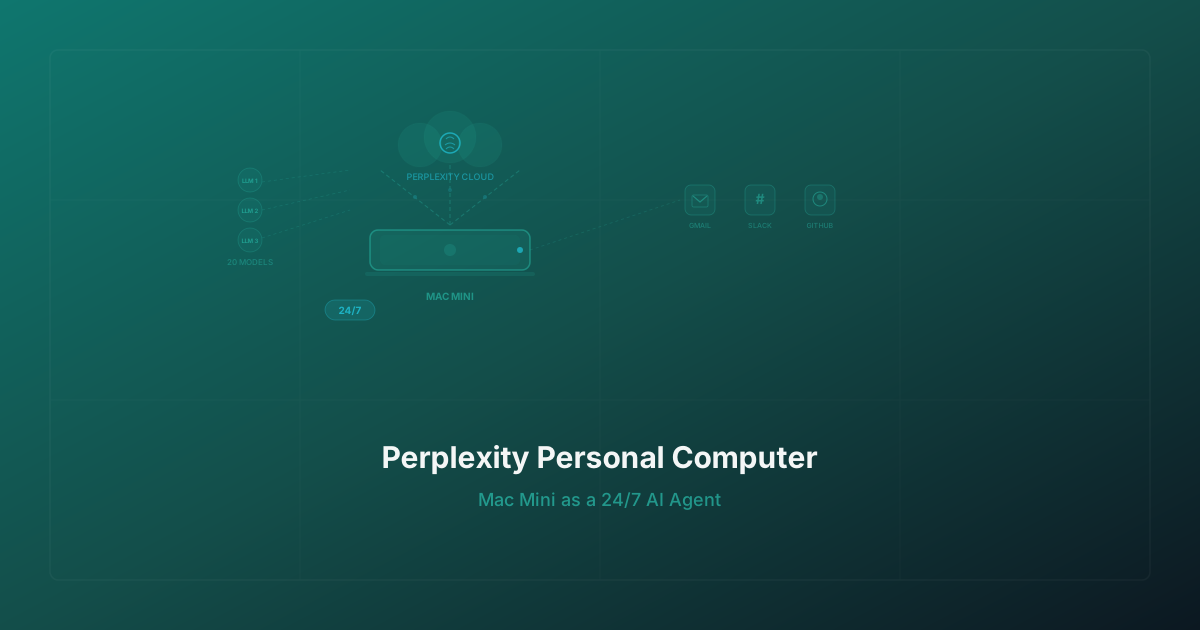
Perplexity's Personal Computer Turns Your Mac Mini Into a 24/7 AI Agent
Perplexity just turned the Mac Mini into something Apple never intended it to be: a dedicated AI brain that works while you sleep. At the company's inaugural Ask 2026 developer conference in San Francisco's North Beach neighborhood on March 11, CEO Aravind Srinivas unveiled Personal Computer — software that runs continuously on a user-supplied Mac Mini, merging your local files, apps, and sessions with Perplexity's cloud-based Computer system. The pitch is bold: "A traditional operating system takes instructions; an AI operating system takes objectives."
This isn't a new piece of hardware. It's not a custom chip or a proprietary box. It's software that hijacks one of the cheapest, most power-efficient desktops Apple makes and converts it into a persistent digital proxy of you — one that monitors your Gmail, responds in Slack, commits to GitHub, updates Notion, and manages Salesforce, all without you being in the room.
The timing is no accident. Just two months ago, the internet went viral over hobbyists stacking Mac Minis to run open-source AI agents locally. Perplexity watched that trend and decided to productize it.
What Personal Computer Actually Does
Strip away the marketing language and Personal Computer is essentially a daemon — a background process that runs 24/7 on your Mac Mini and connects to Perplexity's cloud infrastructure. The Mac handles local file access, app interaction, and session persistence. The AI processing — the actual reasoning, planning, and decision-making — happens on Perplexity's remote servers.
Think of the Mac Mini as the body and Perplexity's cloud as the brain. Your machine provides eyes and hands (file system access, app control, browser automation), while the cloud provides intelligence. The result is an agent that can:
- Monitor and respond to triggers across Gmail, Slack, GitHub, Notion, and Salesforce
- Execute proactive tasks like preparing morning briefs, drafting emails, and conducting research
- Carry work forward across sessions without requiring your presence
- Access your local files and applications directly, not through clunky API integrations
- Run continuously — not just when you open a browser tab
The last point matters more than it sounds. Every other AI assistant on the market — ChatGPT, Claude, Gemini — only works when you're actively talking to it. Personal Computer keeps working after you close your laptop. It's the difference between a tool you use and a worker you employ.
The Multi-Model Architecture
Here's where things get technically interesting. Personal Computer doesn't run on a single AI model. It orchestrates up to 20 frontier models, dynamically choosing which one handles each subtask based on the nature of the work. Users can select from Claude, Gemini, Grok, and others — and can even deploy multiple models simultaneously, letting them communicate with each other to solve complex problems.
This multi-model approach is a direct evolution of Perplexity Computer, which launched in late February 2026 as the company's agentic AI platform. Computer already coordinates 19 models to execute multi-step workflows autonomously. Personal Computer takes that same engine and makes it persistent, local, and proactive.
The model-agnostic philosophy is a deliberate contrast to competitors. OpenAI's Operator is locked to GPT models. Anthropic's tools use Claude. Perplexity treats models as interchangeable workers, routing tasks to whichever model performs best for that specific job. Need deep reasoning? Route to Claude. Need fast code generation? Route to a specialized coding model. Need real-time data analysis? Route to a model with live data access.
Comet Assistant Integration
Personal Computer doesn't work alone. It combines Perplexity Computer's multi-agent workflows with the Comet Assistant — Perplexity's browser-integrated AI companion that launched earlier this year. Comet handles local tasks and browser automation, now enhanced with the ability to remember your preferences and apply them when operating the browser on your behalf.
The integration creates a layered system. Comet handles the immediate, interactive tasks — browsing the web, filling out forms, navigating interfaces. Personal Computer handles the background, persistent tasks — monitoring feeds, processing incoming messages, maintaining ongoing workflows. Together, they create something closer to a full digital assistant than anything currently on the market.
Srinivas has been positioning Perplexity not as a search engine with AI features, but as an entirely new kind of operating system. "AI is the Computer" isn't just a tagline — it's the architectural thesis. The traditional OS manages hardware resources and runs applications. An AI OS manages objectives, delegates to models, and executes workflows that span multiple apps and services.
Security: Learning From Others' Mistakes
Perplexity is clearly aware that giving an AI agent 24/7 access to your files, email, and professional tools is a trust leap that most people aren't ready to take. The security framework reflects that awareness:
- Explicit approval required for sensitive actions — the agent can't send emails, make purchases, or modify important files without your confirmation
- Complete audit trail — every action the agent takes is logged and reviewable
- Kill switch — immediate user control to shut down any action or the entire system
- Secure sandboxing — each query runs in its own isolated sandbox
Perplexity explicitly positions this as more secure than the open-source alternatives that went viral in January. When hobbyists were running AI agents on stacked Mac Minis using open-source frameworks, there were no guardrails — the agents could execute any action without oversight. Personal Computer adds a permission layer and accountability trail that those DIY setups lacked.
The comparison to OpenAI's Operator is also deliberate. Operator runs in the cloud and accesses your services through browser automation, which means it's operating in environments you don't control. Personal Computer runs on your hardware, accessing your local files through direct system access. Perplexity argues this is fundamentally more secure because the data stays on your machine and your network — the cloud only handles the AI reasoning, not the data storage.
Whether this security model holds up under real-world conditions remains to be seen. Any system that has deep access to your email, code repositories, and CRM is a high-value target. The audit trail and kill switch are good starts, but the real test will be how Perplexity handles the inevitable edge cases where the agent takes an action that technically had permission but wasn't what the user intended.
Pricing and Availability
Personal Computer is exclusive to Perplexity Max subscribers — the company's highest tier at $200 per month. That subscription includes 10,000 monthly compute credits for computational tasks. The system is Mac-only at launch, and access is through a waitlist that opened on March 11.
The pricing positions Personal Computer squarely in the prosumer-to-enterprise space. At $200/month, it's ten times the cost of a standard Perplexity Pro subscription ($20/month) and matches OpenAI's Pro tier. The 10,000 compute credits suggest Perplexity expects heavy users to burn through significant processing power — those credits cover model inference, multi-agent orchestration, and continuous background operations.
For context, Perplexity's standard Pro plan at $20/month already gave users access to Perplexity Computer with its multi-model agent capabilities. The Max tier adds Personal Computer's always-on persistence, higher credit limits, and priority access to new features. It's a significant upsell, and the value proposition hinges entirely on whether the always-on capability justifies the 10x price increase.
The Mac-only restriction is both practical and strategic. Apple Silicon's power efficiency makes the Mac Mini ideal for 24/7 operation — it draws minimal power compared to equivalent Windows desktops. The M4 Mac Mini starts at $599 for the base model, though Perplexity likely recommends configurations with more RAM (up to 64GB on the M4 Pro) for running the local components of Personal Computer alongside normal operations.
Enterprise Expansion
The consumer product is only half the story. Alongside Personal Computer, Perplexity announced a significant enterprise push designed to compete directly with Microsoft and Salesforce in the AI agent space.
The enterprise version adds features that IT departments demand:
- SOC 2 Type II compliance — the gold standard for SaaS security auditing
- SAML single sign-on — integration with corporate identity providers
- Audit logs and isolated query sandboxing — granular control over what agents can access
- Native integration with Snowflake, Salesforce, HubSpot, and over 100 enterprise platforms
- Direct Slack integration for team-based agent workflows
The enterprise play transforms Perplexity from a consumer search tool into a platform for corporate AI automation. Imagine deploying Personal Computer instances across a sales team — each Mac Mini running an agent that monitors Salesforce leads, drafts follow-up emails, updates CRM records, and generates weekly reports. Or a development team where agents monitor GitHub repos, triage incoming issues, and prepare code reviews.
This is the same territory Microsoft is staking out with Copilot and Salesforce with Agentforce. Perplexity's angle is model flexibility — while Microsoft is locked to OpenAI's models and Salesforce uses its own Einstein platform, Perplexity lets enterprises choose which frontier models power their agents. For organizations that want to avoid vendor lock-in to a single AI provider, that's a compelling differentiator.
Perplexity Finance: The Power User Demo
To showcase what always-on AI agents can actually accomplish, Perplexity also expanded its Finance vertical at the conference. Perplexity Finance now offers direct access to over 40 live data tools, including SEC filings, FactSet, S&P Global, Coinbase, LSEG, and Quartr.
Users can build interactive dashboards, Excel models, and financial applications — all with traceable sources. The finance vertical serves as a proof of concept for the Personal Computer vision: an AI that doesn't just answer questions but actively monitors markets, processes filings, and generates analysis on a continuous basis.
For financial professionals, the combination of Personal Computer and Finance tools creates something genuinely useful — an AI analyst that never sleeps, continuously processes market data, and surfaces insights proactively rather than waiting to be asked. Whether that justifies $200/month depends on your workflow, but the vision is clear.
The Bigger Picture: Why the Mac Mini?
The choice of Mac Mini as the hardware platform deserves closer examination. Apple's smallest desktop has become the default choice for running AI agents locally, and there are solid reasons for that.
Power efficiency. The M4 Mac Mini draws between 3-6 watts at idle, compared to 30-60 watts for a comparable Intel NUC or Windows mini PC. Over 24/7 operation, that's roughly $5-10 per year in electricity versus $40-80 for Windows alternatives. When your agent is running continuously, power costs compound.
Apple Silicon performance. The M4 chip's unified memory architecture gives the local agent components fast access to both CPU and GPU resources without the bottleneck of separate memory pools. The 16-core Neural Engine handles on-device AI inference efficiently, which means the local components of Personal Computer can do lightweight processing without hitting Perplexity's cloud for every operation.
Ecosystem integration. macOS provides native access to system-level features that make agent automation easier — AppleScript, Shortcuts, Accessibility APIs, and deep integration with Apple's own services. An AI agent running on macOS can control applications, read screen content, and manipulate the file system in ways that are more constrained on Windows or Linux.
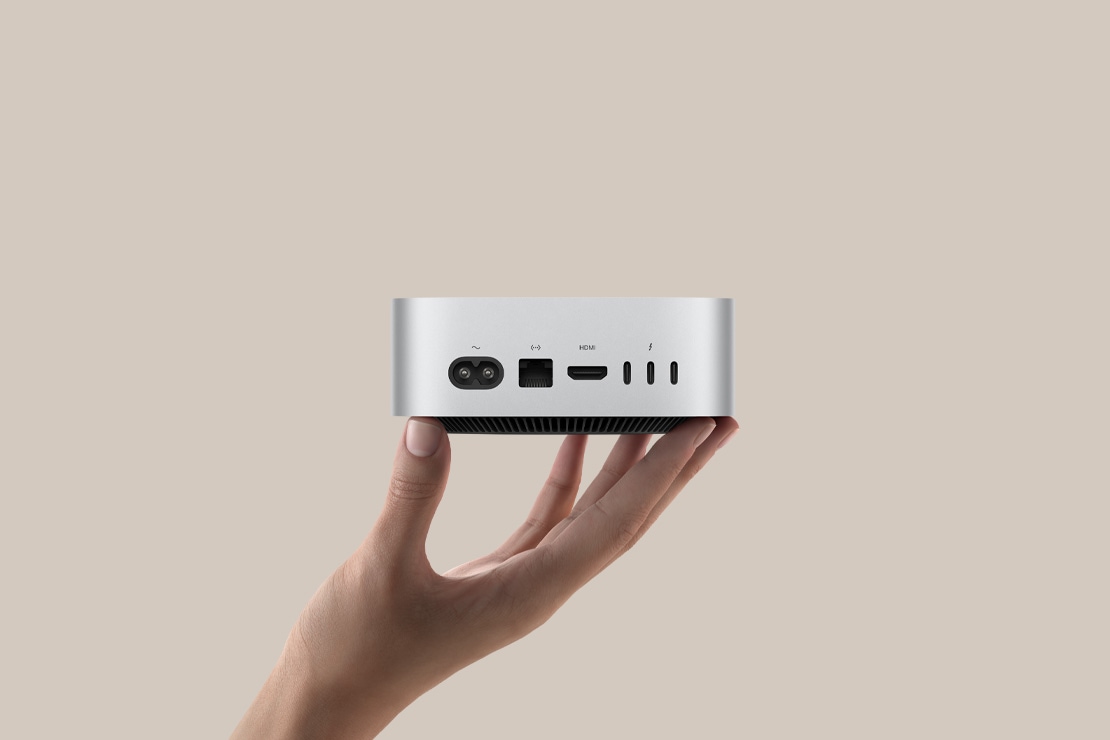
Form factor. The Mac Mini is small, quiet, and designed to run continuously. It doesn't need a monitor, keyboard, or mouse for headless operation. Plug it into your router, set up Personal Computer, and it disappears into your home office setup.
Apple likely didn't anticipate this use case when designing the Mac Mini, but Perplexity is exploiting it perfectly. The question is whether Apple embraces this trend or restricts it. Apple explored acquiring Perplexity before ultimately partnering with Google to integrate Gemini into the redesigned Siri — a decision that now looks increasingly awkward as Perplexity builds an entire platform on top of Apple's hardware.
How This Compares to the Competition
The AI agent space is getting crowded fast. Here's how Personal Computer stacks up:
OpenAI Operator runs entirely in the cloud, using browser automation to interact with your services. It's tied to GPT models and requires a $200/month Pro subscription. Operator leads in raw autonomy but can't access your local files or applications directly. It's also limited to tasks that can be accomplished through a web browser.
Anthropic's Claude offers powerful agentic capabilities through Claude Code and the API, but operates as a tool you invoke rather than a persistent agent. There's no always-on capability — you start a session, Claude works, and the session ends.
Open-source alternatives (the stacked Mac Mini setups that went viral in January) offer maximum flexibility and zero ongoing cost, but lack the security guardrails, multi-model orchestration, and polished integrations that Personal Computer provides. They also require significant technical expertise to set up and maintain.
Personal Computer's unique position is the combination of persistence, multi-model orchestration, local access, and managed security. No other product currently offers all four. Whether that combination is worth $200/month plus the cost of a dedicated Mac Mini is the question every potential user will need to answer.
The Revenue Question
Perplexity isn't just building products — it's chasing an aggressive revenue target. According to VentureBeat, the company had approximately $148 million in annualized revenue as of mid-2025, with a target of $656 million by the end of 2026. That requires roughly 230% growth in about 18 months.
Personal Computer and the enterprise expansion are clearly designed to drive that growth. The $200/month Max tier is a significant revenue lever — if even 50,000 users subscribe, that's $120 million in annual recurring revenue. The enterprise contracts could be even more lucrative, with per-seat pricing across large organizations.
The risk is that Perplexity is spreading itself thin. In the span of two weeks, the company launched Perplexity Computer (the multi-model agent platform), Personal Computer (the always-on Mac Mini agent), enterprise tools, expanded finance capabilities, and new developer APIs. Each of these products needs to work reliably to justify the premium pricing. A single high-profile failure — an agent that sends the wrong email, leaks sensitive data, or makes an unauthorized transaction — could undermine trust in the entire platform.
What This Means for Tech Enthusiasts
For the GGS audience specifically, Personal Computer is worth watching for several reasons.
First, it represents a new paradigm for how we interact with computers. Instead of opening apps, clicking buttons, and managing workflows manually, you set objectives and let an AI figure out the execution. That's the same shift happening in gaming with AI-driven NPCs, procedural generation, and adaptive difficulty — the intelligence moves from the user to the system.
Second, the Mac Mini as a dedicated AI appliance opens interesting possibilities beyond productivity. Imagine an always-on agent that monitors game release dates, tracks Steam sales, manages your gaming backlog, curates news from your favorite developers, and even watches Twitch streams for highlights. Personal Computer's framework supports exactly this kind of continuous monitoring and proactive action.
Third, the multi-model architecture is a preview of where all AI is heading. The idea that a single model does everything is already outdated. Future AI systems will orchestrate specialists — one model for writing, another for coding, another for analysis, another for creative tasks. Personal Computer is an early implementation of this vision at the consumer level.
The waitlist is open now. If you have a spare Mac Mini and $200/month to burn, it might be worth seeing whether an AI agent that never sleeps is as useful as Perplexity promises. Just make sure to read the audit logs.
Sources
- 9to5Mac: Perplexity's Personal Computer is a cloud-based AI agent running on Mac mini
- The Next Web: Perplexity turns your Mac mini into a 24/7 AI agent
- Macworld: Perplexity's Personal Computer is a Mac mini running an AI OS
- TechRadar: 'AI is the Computer' — Perplexity reveals Personal Computer
- Neowin: Perplexity launches Personal Computer to turn your Mac mini into an AI agent
- VentureBeat: Perplexity takes its Computer AI agent into the enterprise
- Axios: Perplexity launches Mac-based AI agent

Founder of GGS Blog and Site Reliability Engineer at Box. I write about gaming, AI in gaming, and game development with a technical lens — 10+ years in software engineering, 20+ years as a gamer. My work focuses on what the tech actually means for players.
Never miss a post
Subscribe to the GGS Blog newsletter for gaming news, tech insights, and AI in the game industry — delivered straight to your inbox.
Free. No spam. Unsubscribe in one click.
Comments
What to Read Next
Continue exploring our coverage of gaming, technology, and AI.
 Technology
Valve's 44% Steam Deck Hike Is the Only Honest Price in Handhelds
Sony added $100-150, Microsoft $100-150, Nintendo $50. Valve added $240 to a 512GB Steam Deck OLED and said nothing. Only one of those companies has no software subsidy to hide the memory bill behind.
 Technology
You Can't Solo Queue Loneliness: The Real State of AI Gaming Companions
AI teammates that fight, loot, and revive are finally shipping — but they only work in the specific games their publishers built them into. Universal companions exist too, but they're spectators. Neither fully solves what a solo player actually needs.
 Technology
Meta's Horizon Worlds VR Whiplash and the Slow Death of the Metaverse Dream
Meta announced it was killing Horizon Worlds in VR, reversed course 48 hours later, and accidentally wrote the eulogy for a $80 billion bet on virtual reality. Here's what went wrong — and what VR actually needs to survive.