
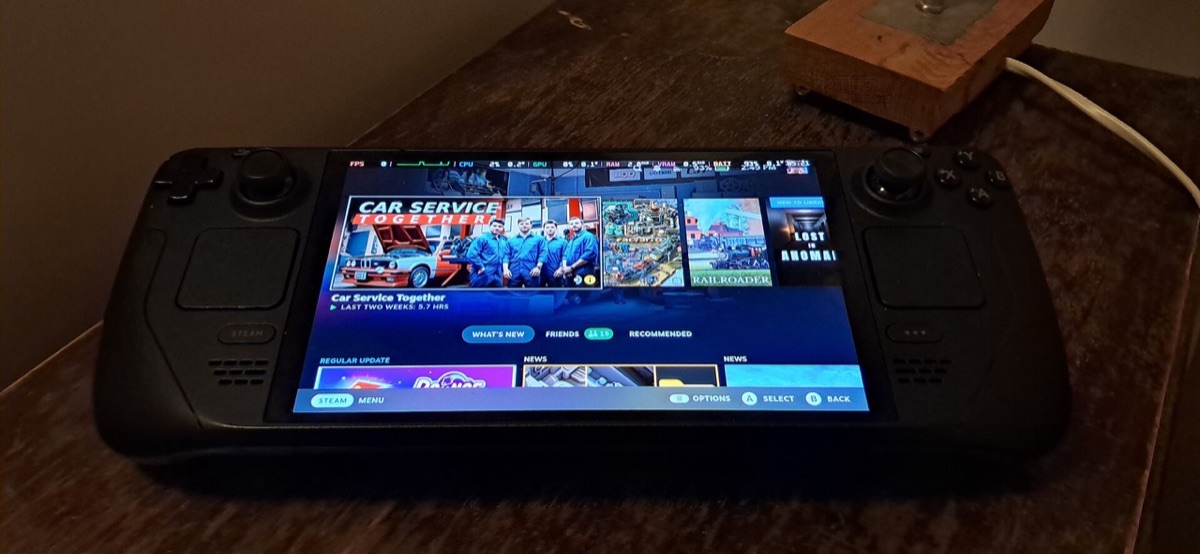
Valve's 44% Steam Deck Hike Is the Only Honest Price in Handhelds
On May 27, 2026, Valve raised the price of the 512GB Steam Deck OLED from $549 to $789 and the 1TB model from $649 to $949 — increases of 44% and 46% on a device whose chip, screen, battery, and storage had not changed. The announcement was a short back-in-stock post. No advance notice, no explanation.
On May 28, 2026, Intel announced Arc G3 and Arc G3 Extreme, the first silicon the company has ever designed exclusively for handheld gaming PCs. Fourteen cores on Intel 18A, Xe3 graphics, a category that had spent four years running laptop parts in a smaller box finally getting purpose-built hardware.
The handheld PC got its best silicon and its worst price on consecutive days.
The Worst Possible Device to Be Selling Right Now
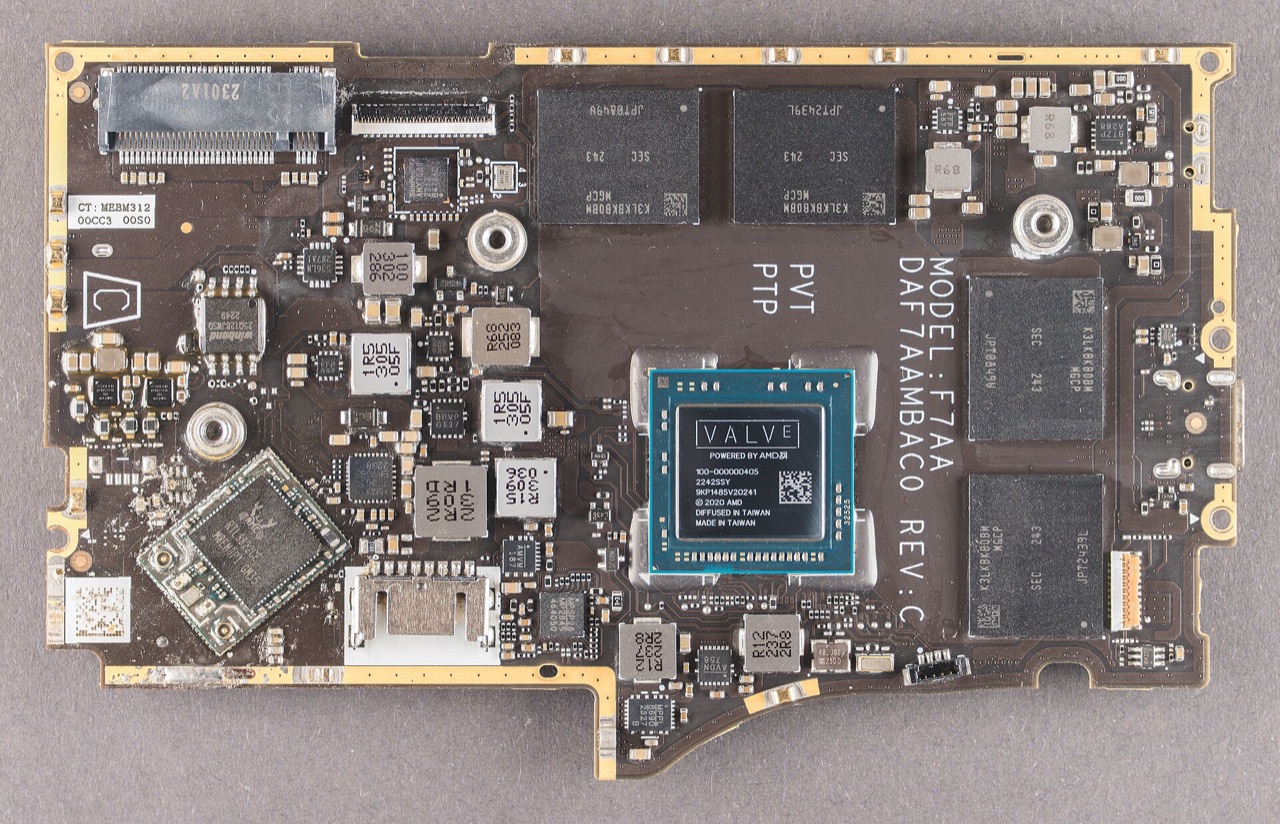
Every consumer electronics category is eating the memory increase. Handhelds are eating it worse than anything except graphics cards, and for reasons that are structural rather than unlucky.
Start with the obvious one: the memory is soldered. A desktop builder staring at DDR5 prices several times what the same capacity cost a year ago has options. Buy 16GB now and add more later. Reuse the kit from the last build. Wait six months. A handheld buyer has none of those. The LPDDR5X is a fixed BOM line, purchased at contract prices months before the device reaches a shelf, and it cannot be downgraded at checkout or upgraded afterward.
Then the capacity problem, which is worse than it looks. Handhelds use unified memory — the integrated GPU carves its framebuffer and texture pool out of the same pool as the operating system and the game. That means a handheld needs more memory than a laptop with a comparable CPU, and the requirement has been ratcheting up. 16GB was the Steam Deck and early ROG Xbox Ally baseline. 24GB is now the flagship standard: the ROG Xbox Ally X ships 24GB of LPDDR5X-8000, and Acer's Predator Atlas 8, due in October, carries 24GB on both SKUs — base and Extreme. High-capacity, high-speed LPDDR5X is precisely the product under the heaviest allocation pressure right now.
And you cannot engineer around it. Bandwidth pins the spec. Swap LPDDR5X-8000 for something slower and cheaper and the iGPU — which is memory-bandwidth-bound by design — loses frames immediately. The normal cost-engineering escape hatch, quietly substituting a cheaper part that most buyers won't notice, does not exist here. It shows up in the benchmark on day one.
Then the second exposure. A modern handheld is also a 1TB NVMe drive, which means it pays the NAND increase at the same time as the DRAM one. TrendForce put client SSD contract prices up more than 40% quarter-over-quarter in 1Q26, driven by suppliers reallocating inventory from client drives to datacenter drives. A 1TB Ally X or Atlas 8 absorbs both curves simultaneously.
How much of the bill is that? Nobody has published a handheld teardown that answers it. The closest available figure is Gartner's estimate that memory reached 23% of a 2026 laptop bill of materials, up from 16% in 2025 — a laptop proxy, not a handheld number. Given the higher memory capacity relative to system cost and the doubled NAND exposure, a handheld almost certainly sits at or above that line. The direction is knowable; the exact figure is not.
Nobody Ran Out of Chips
The DRAM shortage itself is a story I've already written — the mechanics of AI demand, HBM allocation, and what it did to graphics card pricing are in the GPU pricing breakdown from March. What matters for handhelds is the transmission mechanism, which is not quite the one the popular framing assumes.
AI demand started this. The reason there's no relief valve is separate, and it's the more interesting half.
TrendForce's November 2025 supply note is the key document: memory suppliers planned to grow bit output in 2026 primarily through process migration rather than new wafer capacity, with wafer input growth limited to incremental manufacturing optimization. Three companies control the overwhelming majority of DRAM supply, all three remember the 2022-23 price collapse, and all three declined to build their way out of a shortage that was making them money. SK hynix budgeted $20.5B of 2026 memory CapEx, Samsung $20B, Micron $13.5B — meaningful year-over-year increases, aimed at HBM4, 1C, and 1-gamma node transitions rather than at raw wafer starts.
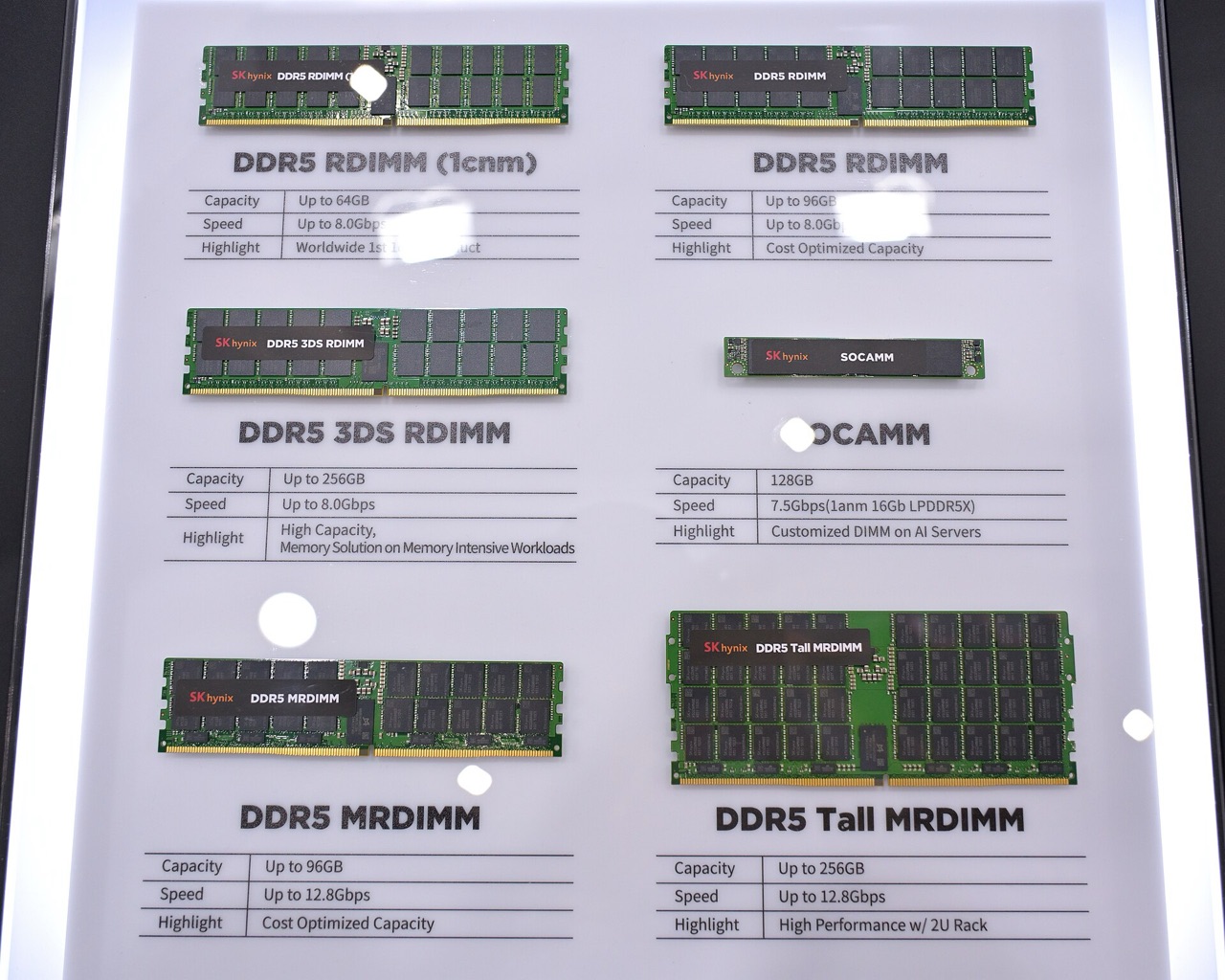
The margin math explains the discipline. TrendForce projected in October 2025 that DDR5 profitability in 2026 would exceed HBM3e. Once conventional DRAM out-earns the AI product, "HBM stole the wafers" stops being a complete explanation. Every memory product became high-margin the moment supply stayed flat against rising demand.
The cleanest proof is Micron's exit from Crucial, announced December 3, 2025, with consumer shipments ending in February 2026. Micron did not run out of chips. It chose to stop selling them to individuals in order to, in its words, "improve supply and support for its larger, strategic customers in faster-growing segments." That is an allocation decision, not a scarcity event. The consumer channel was deprioritized because a better-paying customer existed.
First-quarter results confirmed the strategy worked exactly as intended: DRAM industry revenue hit $97B in 1Q26, up 81% quarter-over-quarter, with Samsung at $37.32B, SK hynix at $27.98B, and Micron at $21.75B.
Three firms decided how expensive a handheld would be in 2026, and none of them make handhelds. That is the context every device maker priced into, and it is where the console makers and Valve part ways.
Valve Has No Subsidy to Spend
Sony raised PlayStation 5 prices around April: +$100 on the Digital edition to $599.99, +$100 on the disc model to $649.99, +$150 on the Pro to $899.99. Microsoft went further on June 25, its third Xbox Series X|S increase since late 2025 — the 512GB Series S from $400 to $500, the 1TB Series S from $450 to $600, the Series X Digital from $600 to $750, the disc model from $650 to $800, and the 2TB Series X discontinued outright. Nintendo will take Switch 2 from $449.99 to $499.99 on September 1, a move widely reported as memory-driven, though Nintendo's own wording has not been quoted directly.
Valve added 44%.
Read those numbers side by side and Valve looks like the greedy one. The business model underneath each device says otherwise.
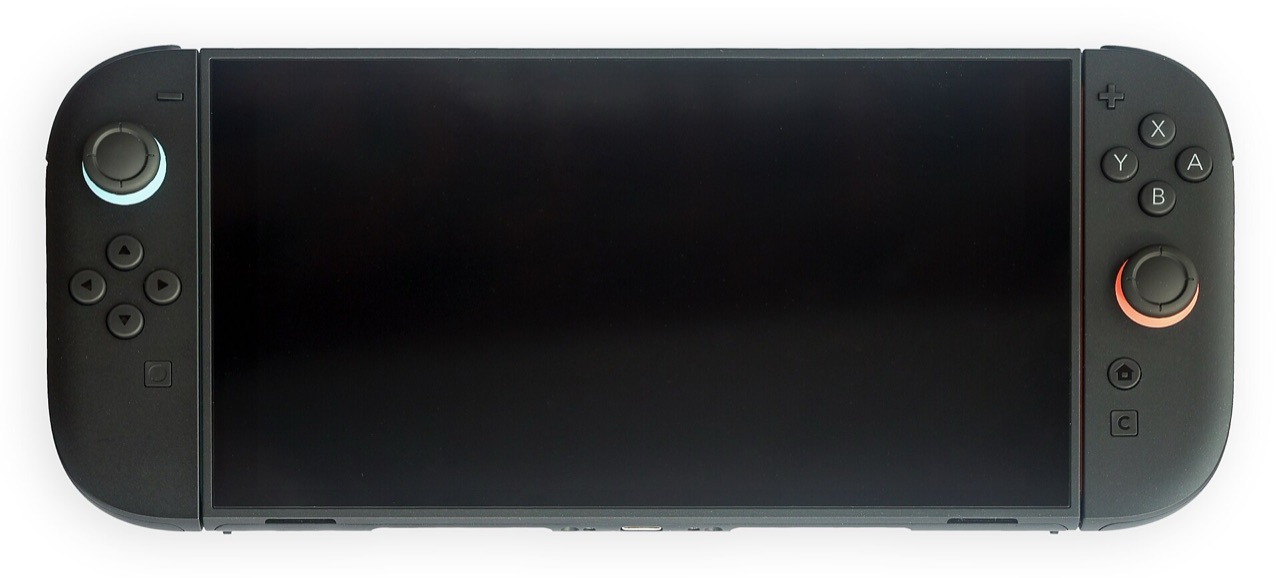
Sony, Microsoft, and Nintendo sell hardware at, near, or below cost. They recover the difference over the life of the console through roughly a 30% cut of every game and every piece of downloadable content sold on the platform. That subsidy is a budget. When memory doubled, they could spend part of it — absorb some of the increase, pass the rest through in $50 and $100 increments, and keep the sticker in politically survivable territory. Every dollar they eat comes back later, spread across a few dozen software transactions per box.
Valve does not have that budget, because Valve already had your software money before it sold you a Steam Deck. The 30% Steam cut existed in 2021 and it exists now, on the same library, whether or not you own a handheld. The Deck was never a loss leader in the console sense. It was a thin-margin delivery vehicle for a Steam client you were already using — a way to move existing purchases into your hands on a bus. There is no incremental platform revenue attached to the sale of a Deck that isn't already attached to the account.
So when the BOM moved, there was nothing to spend. The increase went straight through to the sticker at close to its actual size. Boiling Steam's weighted calculation across the remaining SKUs puts the effective average selling price move at roughly $540 to $835, or +54%.
That is not Valve being uniquely rapacious. That is Valve being the only company in the category that had to show you the invoice.
The evidence that the subsidized players are straining anyway is in Microsoft's own language. In explaining the June hike, Microsoft said "storage and memory prices have recently increased 2.5x, and will double again by the fall of 2027," with Xbox leadership indicating costs have risen roughly fivefold over two years, per Forbes' Paul Tassi. A company with a platform cut, a services business, and Game Pass still raised a $400 console to $500 and killed its 2TB SKU. That is what partial absorption looks like from the inside.
The sharpest version of the criticism aimed at Valve came from Mash Alien, quoted by Steam Deck HQ: "Valve's real problem is that they refuse to do the same thing Microsoft, Nintendo, and Sony do and won't take a loss on an individual console sale." It is the most structurally literate complaint in the whole discourse, and it is still wrong on the mechanics. Refusal implies choice. Taking a per-unit loss is only rational if there is an incremental revenue stream to recover it from, and Valve's revenue stream is not incremental to the hardware. Sony eats $100 on a PS5 because that box unlocks a decade of 30% cuts that would not otherwise exist. Valve eating $240 on a Deck unlocks nothing new — those purchases were already flowing.
The Part Where This Doesn't Excuse Valve
None of the above makes May 27 defensible as a piece of communication, and the anger is fully earned.
u/DarkOx55 on r/linux_gaming: "Given how monstrously profitable Steam is, and how Valve is swimming with billions of excess cash..." — and that is true. Valve is a privately held company with extraordinary margins and no shareholders demanding quarterly hardware profitability. It could have chosen to run the Deck at a loss for a year as a strategic investment in SteamOS installed base. The structural argument explains why it didn't have to; it does not prove it couldn't have.
u/minegen88 on r/pcmasterrace put the community's read on the cost story more bluntly, mock-quoting the defense before anyone made it: "'But poor Valve, they are an indie company that needs to raise prices due to AI...'"
The reason that sarcasm lands is that Valve never made the argument at all. Steam Deck HQ's editorial line — "no heads up, no warning, no explanation of why this happened now" — is the actual indictment, and it is separate from the arithmetic. Valve had a genuinely defensible position and chose to publish a restock notice instead. Compare that to its own February 4 post about Steam Machine and Steam Frame, where the company wrote that "the limited availability and growing prices of these critical components mean we must revisit our exact shipping schedule and pricing (especially around Steam Machine and Steam Frame)," noting shortages had "rapidly escalated." Valve knew how to explain this. In February it did. In May it didn't, and the silence made a cost pass-through read as opportunism.
The pricing was arithmetic. The rollout was indefensible. Both things are true, and collapsing them into one verdict is how most of the coverage got this wrong in both directions.
The Curve Is Rolling Over, and That Matters
The honest counterweight to everything above comes from TrendForce's own forecast, and anyone arguing this is a permanent structural break should have to answer it.
Conventional DRAM contract prices rose 93-98% quarter-over-quarter in 1Q26. The 2Q26 forecast is 58-63%. The 3Q26 forecast narrows to 8-13%, with 4Q26 expected to converge further against weak end demand and elevated inventory. Those are still increases, but that is a curve decelerating hard — the shape of a market absorbing a shock, not one in free fall. If 3Q26 lands anywhere near 8%, "crisis" will look like an overstatement applied to what was, in retrospect, a violent two-quarter repricing.
The counter-view exists and is equally speculative. SK hynix CEO Kwak Noh-Jung has reportedly said demand will outstrip supply past 2030 and expects 2027 to be the tightest supply year in the industry's history. Intel CEO Lip-Bu Tan reportedly sees no meaningful relief before 2028. Gartner projects the end of the affordable PC segment by 2028 on memory costs alone. Microsoft's fall-2027 doubling projection sits in the same bucket.
All of those are forecasts. So is TrendForce's deceleration. Nobody in this argument has data from the future, and the honest position is that the price curve for 2027 handhelds is genuinely unknown.
The Silicon Arrived Anyway
Which brings the calendar back to May 28. Intel's Arc G3 and Arc G3 Extreme are the first SoCs any vendor has designed exclusively for gaming handhelds rather than adapted down from a laptop part — 14 cores on Intel 18A in a 2 P-core, 8 E-core, 4 LP E-core arrangement, Xe3 graphics topping out at Arc B390 on the Extreme and Arc B370 on the standard part, with XeSS 3, hardware ray tracing, a reported 25-80W configurable envelope, and LPDDR5X support. Launch partners are Acer, MSI, and OneXPlayer, with rollout starting in June.
Nobody has published independent benchmarks against AMD's Ryzen Z2 Extreme, so I won't tell you who wins. What I can tell you is the shape of the arrival. Intel built the category's first purpose-designed silicon and shipped it into a market where the memory that silicon needs is plausibly the most expensive thing in the box. The Atlas 8 is the clearest example: 24GB of LPDDR5X on both SKUs, base and Extreme, with pricing still unannounced four months after the reveal and two months from a stated October ship date.
That silence is the story. The chip is finally right. The BOM line it depends on is the one nobody can quote a price for.
What Actually Died Was $399
The category didn't collapse. The top of it is doing fine. Valve's Steam Machine launched June 22 at a reported $1,049 and sold out quickly, which tells you the enthusiast tier is close to price-inelastic. Pricing on several 2026 handhelds, including the Legion Go 2 and the MSI Claw 8 EX AI+, is still reported inconsistently enough that I won't quote a number for either.
What died is the bottom. The 256GB Steam Deck LCD at $399 is discontinued. The cheapest new Steam Deck of any kind is $789. For four years, the answer to "is a handheld worth it?" was "start with the cheap one and find out." That sentence no longer has a referent.
Boiling Steam's tracking suggests the volume followed — its estimate has weekly Steam Deck units falling from roughly 11,000-18,000 down to somewhere around 1,400-3,000. That figure is an inference from Steam's Global Weekly Top Sellers chart rank cross-referenced against revenue bands, not disclosed sales data; PC Gamer accurately described the method as "back of the napkin maths." Treat the magnitude as unverified and the direction as plausible.
I can offer one data point from inside that number, because I'm in it.
I had the 512GB Steam Deck OLED at $549 open in a tab for most of the spring. I kept not buying it. The hesitation was never about whether the hardware was good — it was that $549 sat right at the edge of a purchase I could make without thinking hard about it, and I could not decide whether I'd actually play games on a train or whether it would become a very expensive way to run Balatro on the couch six feet from a PC that runs it better. That's the entire deliberation. A $549 impulse I kept deferring.
On May 27 the number became $789. Same hardware, four years into the product line, $240 more.
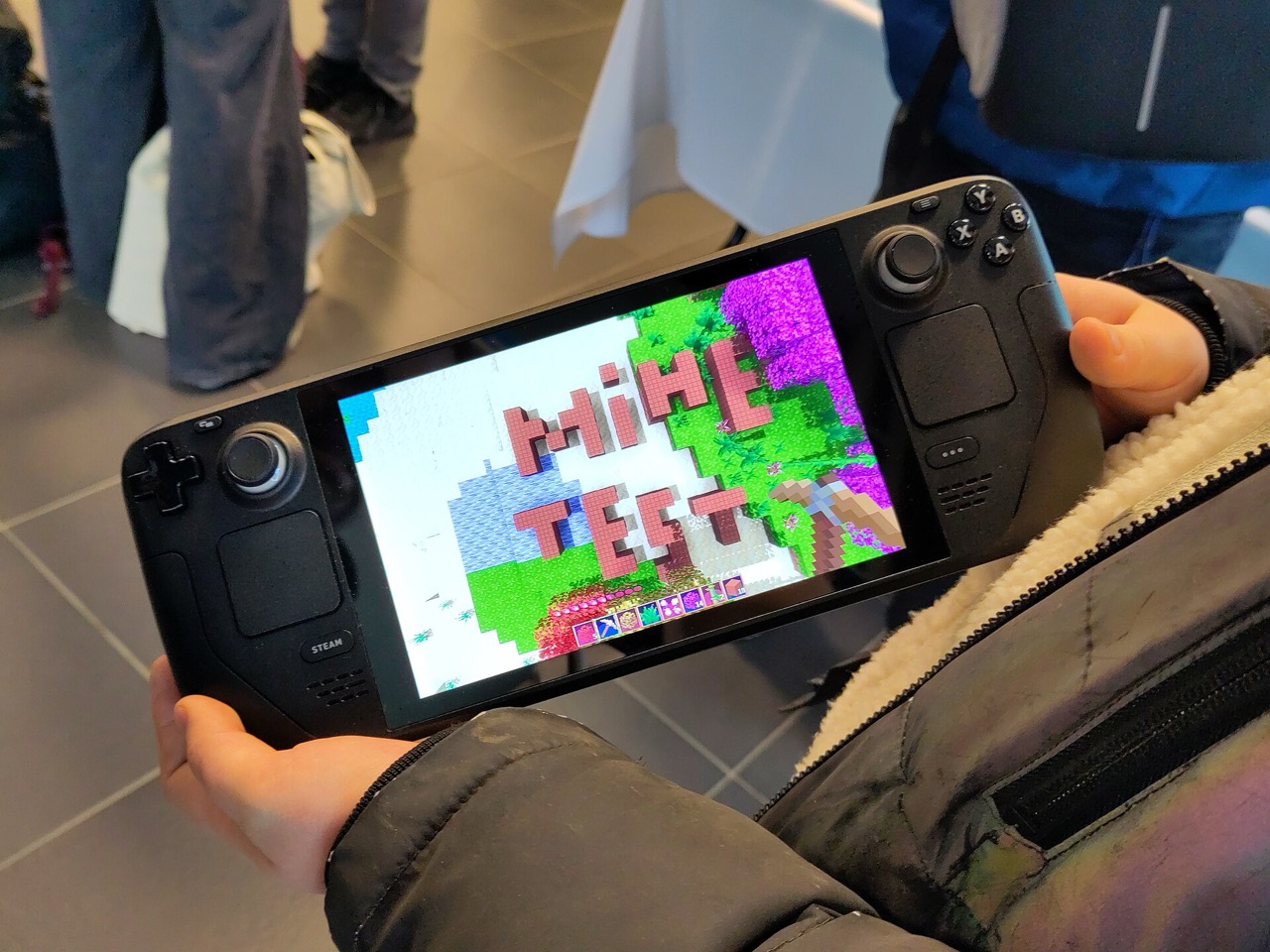
What that $240 changed was not affordability. It was the category of decision. At $549 I was deciding whether to try something. At $789 I was making a considered hardware investment that had to justify itself against alternatives, and once a purchase requires that much justification, "I'm curious about handheld PCs" stops being sufficient reason. I did not buy a competitor. I did not wait for the Legion Go 2 or the Atlas 8. I closed the tab and left the category, and I'd bet a meaningful share of the units Boiling Steam thinks went missing are people who did exactly the same thing — not angry, not boycotting, just no longer the kind of buyer this price is for.
That's the part the percentage doesn't capture. The mass tier isn't a segment that got more expensive. It's a segment that stopped existing.
Some of that demand didn't leave, though — it moved to resale, where it buys nothing for Valve, funds no R&D, and grows no installed base. And a used handheld holding one hundred percent of its original purchase price after four years is not what a dying category looks like. It's what a supply shock looks like.
On r/linux_gaming, u/thebornotaku posted about a Steam Deck OLED they'd owned since launch:
"I sold my 512gb oled for what I paid for it."
Sources
- Valve handled the Steam Deck price increase in the worst way possible — Steam Deck HQ
- The Great Steam Deck Volume Crash — Boiling Steam
- Valve confirms Steam Machine price and release details delayed by exploding component prices — Video Games Chronicle
- Following Apple, Microsoft dramatically hikes Xbox prices again — Forbes — also the outlet whose reporting the April PlayStation 5 increases (+$100 Digital, +$100 disc, +$150 Pro) and the September 1 Switch 2 move to $499.99 are drawn from; both were corroborated across Forbes, ComicBook and Push Square, and no single primary announcement page was retrieved for either
- Intel Arc G-Series processors set a new standard for handheld PC gaming — Intel Newsroom
- Intel makes its handheld play official: Arc G3 and Arc G3 Extreme are here — TheFPSReview
- Acer Predator Atlas 8 announced at Computex 2026 — RetroHandhelds
- 1Q26 DRAM industry revenue reaches $97 billion — TrendForce
- Memory contract prices to surge across all categories in 1Q26 — TrendForce
- Memory industry to maintain cautious CapEx in 2026 — TrendForce
- DDR5 profitability in 2026 expected to surpass HBM3e — TrendForce
- Micron announces exit from Crucial consumer business — Micron Investor Relations
- Gartner predicts the end of the affordable PC segment by 2028 — Notebookcheck
- ROG Xbox Ally X gets its first price increase — Pure Xbox
- SK hynix CEO Kwak Noh-Jung's "past 2030" and "tightest supply year in history" remarks, and Intel CEO Lip-Bu Tan's 2028 relief horizon, appear in secondary coverage only; both are hedged as reported in the body above
- The 2026 GPU Crisis: What to Buy Right Now — GGS Blog

Founder of GGS Blog and Site Reliability Engineer at Box. I write about gaming, AI in gaming, and game development with a technical lens — 10+ years in software engineering, 20+ years as a gamer. My work focuses on what the tech actually means for players.
Never miss a post
Subscribe to the GGS Blog newsletter for gaming news, tech insights, and AI in the game industry — delivered straight to your inbox.
Free. No spam. Unsubscribe in one click.
Comments
What to Read Next
Continue exploring our coverage of gaming, technology, and AI.
 Technology
You Can't Solo Queue Loneliness: The Real State of AI Gaming Companions
AI teammates that fight, loot, and revive are finally shipping — but they only work in the specific games their publishers built them into. Universal companions exist too, but they're spectators. Neither fully solves what a solo player actually needs.
 Technology
Meta's Horizon Worlds VR Whiplash and the Slow Death of the Metaverse Dream
Meta announced it was killing Horizon Worlds in VR, reversed course 48 hours later, and accidentally wrote the eulogy for a $80 billion bet on virtual reality. Here's what went wrong — and what VR actually needs to survive.
 Technology
The 2026 GPU Crisis: What to Buy Right Now (and What to Skip)
MSI is hiking prices up to 30%, Nvidia confirms RTX 50 shortages through year-end, and DRAM costs have quadrupled. Here's your no-nonsense buying guide for every budget.