
xAI Says It'll Make a AAA Game With Zero Humans. The Industry Isn't Buying It.
The Pitch: A Great Game, No Humans Required
Elon Musk wants you to believe that his AI company can do what thousands of skilled artists, designers, engineers, and writers working together for years have struggled to do -- ship a great video game. And he wants you to believe xAI can do it by the end of this year, powered almost entirely by artificial intelligence.
The claim started during the Grok 3 livestream in February 2025, when Musk casually announced xAI was launching a gaming studio. By October, the pitch had escalated: "The xAI game studio will release a great AI-generated game before the end of next year," he wrote on X. Then in early 2026, the goalposts moved further -- Musk predicted xAI would generate "real-time, high-quality shows and video games at scale, customized to the individual" by 2027.
The studio, established in November 2024, is staffed with poached Nvidia researchers, pays "video game tutors" up to $100 an hour to teach Grok how games work, and is offering salaries between $180,000 and $440,000 to build what Musk calls "world models" -- AI systems that simulate physics, object interactions, and environmental dynamics. If it works, the pitch goes, you get infinite replayability, adaptive narratives, and game worlds that feel alive.
If it works.
The gaming industry, which has spent decades learning exactly how hard it is to make something fun, has a different read on the situation. Dead Space creator Glen Schofield put it bluntly: "He's full of crap."
What xAI Is Actually Building
To understand why xAI's promise is so ambitious -- and why skepticism is warranted -- you have to understand what "world models" actually means in this context.
Traditional game development involves artists creating assets, designers building levels, programmers writing gameplay systems, and writers crafting narratives. The whole process typically takes three to seven years for a AAA title, with teams of hundreds or thousands of people and budgets that regularly exceed $200 million.
xAI's approach is fundamentally different. Instead of humans building each component, the idea is to train AI systems that understand how the physical world works -- how gravity pulls objects, how light bounces off surfaces, how characters should move through space. These "world models" would then generate game environments, mechanics, and content in real time, responding dynamically to player actions.
The technology borrows from the same principles driving autonomous vehicles and robotics. xAI recently hired two former Nvidia researchers, Zeeshan Patel and Ethan He, both specialists in simulation and world modeling. Their expertise sits at the intersection of AI and physics simulation -- precisely the kind of talent you'd need to build systems that can generate coherent 3D environments on the fly.
On top of the research hires, xAI is also bringing in what it calls "video games tutors" -- people paid between $45 and $100 per hour to teach Grok about game mechanics, design principles, and what makes games actually fun to play. The broader "omni team" at xAI, which handles image, video, and audio generation, is hiring at salaries ranging from $180,000 to $440,000.
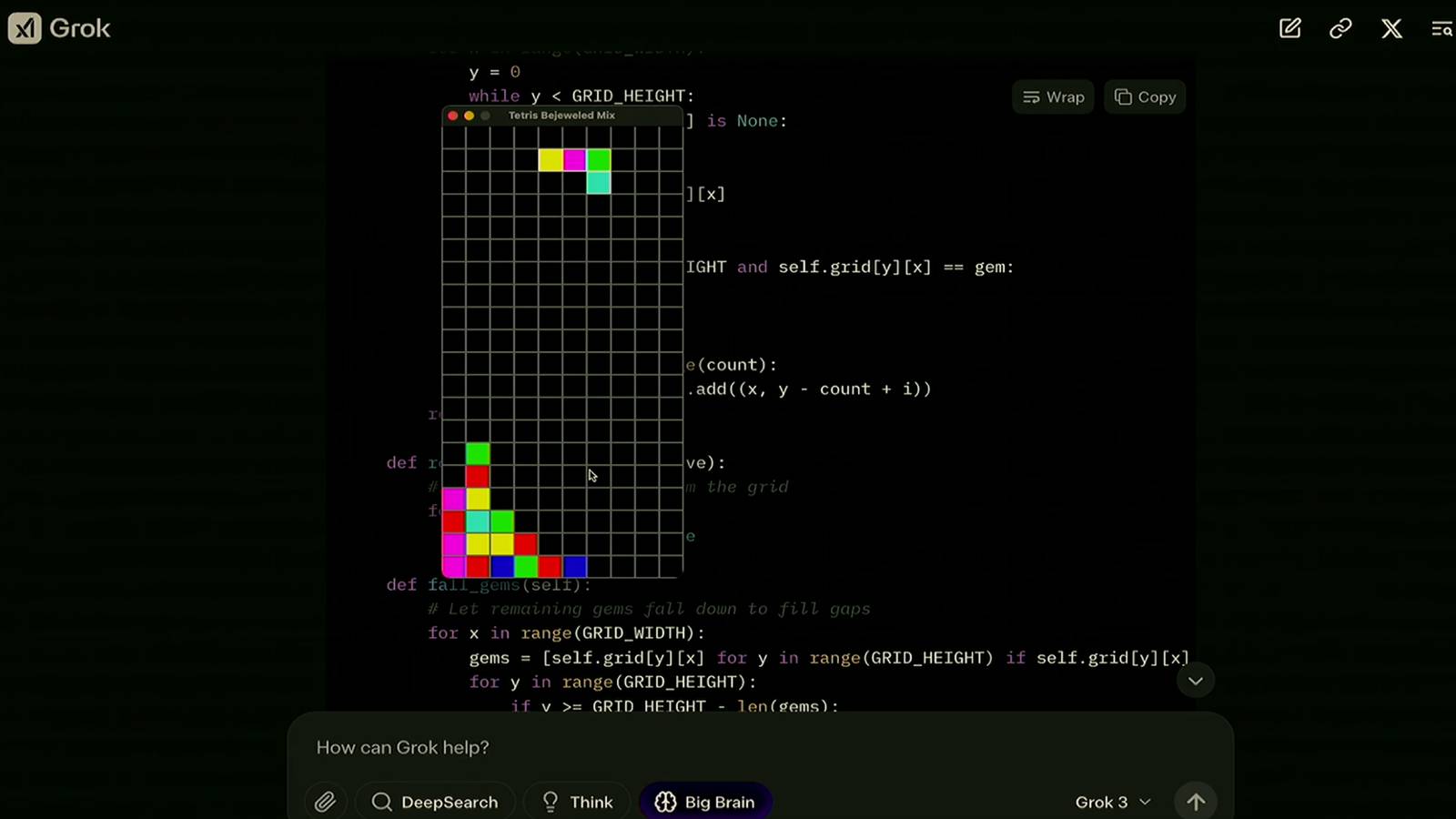
The technical foundation already exists in pieces. Grok's fourth iteration powers the Grok Imagine tool, which can generate short video clips with audio from text prompts. The Aurora model handles image generation. During the Grok 3 launch, Musk demonstrated the AI generating basic playable games -- a Tetris clone, a Bubble Trouble remake -- from simple text prompts. These were crude, but they were functional.
The Gap Between Tetris and Triple-A
Here's where the xAI pitch starts to unravel for anyone who's actually shipped a video game.
Generating a basic Tetris clone from a text prompt is an impressive parlor trick. Tetris has roughly six game rules, one gameplay mechanic, and no narrative. A competent programmer can build Tetris in an afternoon. The distance between "AI generates Tetris" and "AI generates a game people would pay $70 for" is not a straight line -- it's a chasm the width of the Grand Canyon.
Consider what a modern AAA game requires:
- Coherent physics systems that work reliably across thousands of interactions without breaking
- Art direction with consistent visual language, not just randomly generated assets
- Level design that guides players through carefully paced emotional beats
- Narrative structure with character arcs, dialogue trees, and meaningful choices
- Sound design that creates atmosphere and provides gameplay feedback
- Balance and tuning where difficulty curves feel fair across dozens of hours
- Bug testing across millions of possible player state combinations
- Performance optimization across multiple hardware configurations
Each of these disciplines has specialists who spend entire careers mastering them. The idea that a world model can replace all of them simultaneously, in under two years from studio founding to ship date, requires a level of technological optimism that borders on fantasy.
And this isn't just my take. The people who've actually built the games Musk wants to compete with are saying the same thing.
"He's Full of Crap": The Industry Responds
Glen Schofield: Experienced Skeptic
Glen Schofield has been making games since the late 1980s. He created Dead Space, one of the most beloved survival horror franchises ever made, and led development on Call of Duty: Advanced Warfare. When he heard about Musk's end-of-2026 timeline, his response was immediate and unambiguous.
"No, he's full of crap," Schofield said. "I want to actually say that to him."
What makes Schofield's criticism particularly sharp is that he's not anti-AI. At Gamescom Asia in late 2025, he championed generative AI as a development tool, describing how he uses Midjourney to generate over 1,500 concept art pieces during pre-production. "I am 100% behind the technology," he said. "AI is here, just work with it."
His problem isn't with AI -- it's with the timeline and the premise that AI can replace the human judgment that makes games worth playing. Schofield believes that existing AI tools for game development are "problematic" because they're not being developed with input from the developers who actually understand what makes an engaging 3D world. He thinks someone will eventually create a fully playable AI-generated game -- he just doesn't think it's happening in 2026.
Michael Douse: The Craft Argument
Michael Douse, Larian Studios' director of publishing -- the company behind Baldur's Gate 3, one of the most critically acclaimed games of the past decade -- went further. His criticism wasn't just about timelines. It was about the fundamental premise.
"There is no craft without the human touch; the relative skill issue, or 'the exhibition of otherness,'" Douse wrote. "To turn games into digital, emotionless content is to abandon all resonance -- which is why people play!"
Douse argued that the industry doesn't need AI-generated games. It needs better leadership and vision. "AI has its place as a tool, but we have all the tools in the world," he said. The problem, in his view, is that studios lack "cogent direction," and "AI isn't going to solve the big problem of the industry, which is leadership and vision."
This echoes what Baldur's Gate 3 director Swen Vincke said at The Game Awards: that the winning formula for great games is "stupidly simple" but keeps getting lost by companies chasing trends instead of focusing on craft.
The State of AI-Generated Games in 2026
To be fair to xAI, the technology for AI-generated interactive content has advanced dramatically. But the current state of the art also illustrates exactly how far there is to go.
Google's Genie 3, the most advanced publicly available world model, launched as Project Genie in January 2026. It can generate interactive 3D environments from text prompts at 720p resolution and 24 frames per second. Users can navigate these worlds using keyboard controls in real time. That sounds impressive until you look at the fine print: each generated experience lasts exactly 60 seconds, and the worlds lack anything resembling game systems -- no progression, no complex mechanics, no narrative structure, no production-ready assets.
Genie 3 is a genuine technological achievement. It's also approximately where AI video generation was in 2022 -- technically functional, visually rough, and years away from replacing professional output.
The broader AI gaming market tells a more nuanced story. A Google Cloud survey found that 90% of game developers now integrate AI into their workflows in some capacity. But according to the GDC 2026 State of the Game Industry report, the actual usage skews heavily toward mundane tasks: 81% use AI for research and brainstorming, 47% for emails and admin, and just 5% for player-facing features.
Meanwhile, the emergence of what the industry has started calling "gameslop" -- low-effort titles assembled primarily through AI tools with minimal human curation -- has become a real problem. Over 7,300 games on Steam now disclose AI applications, but user review scores for AI-heavy games average 15-20% lower than traditionally developed titles. Players can tell the difference, and they're not kind about it.
Why "World Models" Aren't Magic
The term "world model" sounds sophisticated, and the underlying technology is genuinely interesting. But there's a critical gap between what world models can do and what making a game requires.
A world model, at its core, is an AI system trained to predict what happens next in an environment given certain inputs. It learns physics approximations, spatial relationships, and cause-and-effect chains. In theory, a sufficiently advanced world model could generate a coherent, explorable 3D environment in real time.
In practice, world models face several fundamental limitations:
Consistency over time. Current world models maintain coherence for seconds to minutes, not the dozens of hours a real game demands. Google's Genie 3 starts to break down visually after about 60 seconds. A game needs to remain coherent for 20, 40, or 100+ hours.
Intentional design vs. emergent noise. Great games aren't just coherent -- they're intentionally designed. The opening hours of Red Dead Redemption 2 carefully teach mechanics while building emotional investment. A world model generating content procedurally has no concept of pacing, emotional arc, or player psychology. It can simulate physics, but it can't design an experience.
The fun problem. "Fun" is notoriously difficult to quantify, and it's the single most important quality a game needs. This is precisely why xAI is hiring video game tutors at $100/hour -- to somehow teach Grok what fun feels like. But fun is contextual, subjective, and emerges from the interplay of dozens of systems working in harmony. You can't RLHF your way to fun.
Technical reliability. Real games need to handle edge cases gracefully. What happens when a player does something unexpected? In a hand-crafted game, designers anticipate hundreds of edge cases. In an AI-generated game, every edge case is a potential hallucination waiting to happen.
The Musk Track Record Problem
There's another layer of skepticism that has nothing to do with technology and everything to do with the person making the promise.
Elon Musk has a well-documented history of aggressive timelines that don't materialize. Full self-driving for Tesla has been "next year" for nearly a decade. The Boring Company was supposed to revolutionize urban transit. Neuralink was going to implant chips in human brains by 2020. Some of these projects have made genuine progress -- but almost none of them have hit Musk's stated timelines.
The pattern is consistent: announce something audacious, set an impossible deadline, miss it, quietly extend it, and point to incremental progress as validation. The xAI gaming timeline already shows signs of this pattern. The initial promise was a great AI-generated game by end of 2026. Then came the expansion to "at scale" by 2027. If history is any guide, expect the goalposts to keep moving.
The xAI game studio has also shown nothing publicly that resembles a game in development. The most concrete demo was a Grok Imagine clip of a character on a unicycle charging a burning tank -- which is a video generation demo, not a game demo. There's a significant difference between generating a six-second video clip and generating an interactive experience that responds to player input in real time for hours.
What Could Actually Happen
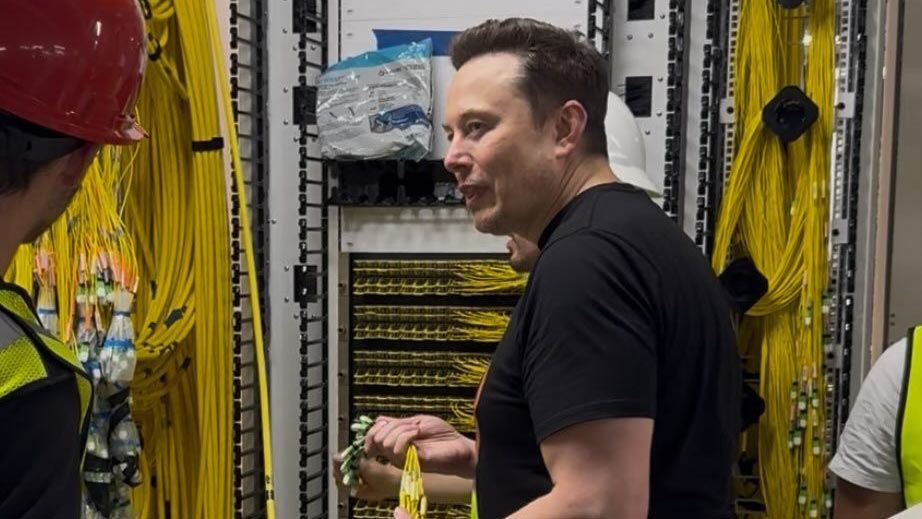
Dismissing xAI entirely would be a mistake. The company has real resources -- including what was reportedly the world's largest AI supercomputer cluster in Memphis -- and has attracted genuinely talented researchers. The question isn't whether AI will change game development. It will. The question is what form that change takes.
Here are the realistic scenarios:
The demo scenario (most likely for 2026). xAI ships something that technically qualifies as an "AI-generated game" but plays more like a tech demo. Think: a procedurally generated environment you can walk around in, with some AI-driven NPC interactions, running at an acceptable frame rate. Impressive as technology, disappointing as a game. Musk declares victory anyway.
The tool scenario (most valuable long-term). xAI's world model research produces tools that help human developers build games faster. AI generates base terrain, populates worlds with NPCs, or creates first-draft assets that artists then refine. This is where most serious studios are already heading, and it's where the real value lies.
The AAA scenario (extremely unlikely for 2026). xAI somehow ships a polished, 20+ hour experience that stands up against traditionally developed games in terms of quality, fun, and coherence. This would require technological breakthroughs that haven't been demonstrated or even hinted at in public demos.
The smart money is on the first scenario with Musk's marketing making it sound like the third.
The Real Threat to Game Developers
The irony of the xAI discourse is that the actual threat to game developers isn't a fully AI-generated AAA game. That's years away, if it's ever truly possible. The real threat is the creeping use of AI to justify cutting creative teams.
When a company like xAI promises games with "zero humans," it gives ammunition to every executive at every publisher who has been looking for reasons to reduce headcount. The games industry has shed an estimated 45,000 jobs since 2022, with 14,600 lost in 2024 alone. If the narrative that AI can replace creative teams gains traction -- even if the technology doesn't support it -- it will be used to justify further cuts.
This is what makes the pushback from people like Schofield and Douse so important. They're not just arguing about technology. They're arguing about the value of human craft in an industry that's increasingly willing to sacrifice it for margins.
As Douse put it: "We don't need another cash grab. We need sustainability."
The Bottom Line
xAI's game studio is real. The money is real. The talent is real. The timeline is not.
Making a great video game is one of the most complex creative and technical challenges in entertainment. It requires art direction, narrative design, systems engineering, player psychology, performance optimization, and thousands of decisions that only make sense in context. No AI system in 2026 -- not Grok, not Genie 3, not anything -- is close to handling all of that simultaneously.
Will AI transform game development? Absolutely, and it already is. Studios are using AI for asset generation, playtesting, NPC behavior, localization, and a dozen other tasks. These applications are genuinely useful and will only get better.
But shipping a "great AI-generated game" by end of 2026? With zero human game designers, zero human artists, zero human writers?
Glen Schofield said it best. He's full of crap.
Sources
- Eneba - Elon Musk Has Announced AI-Generated Video Game Set For 2026 Release
- PC Gamer - Glen Schofield says Elon Musk is 'full of crap'
- PC Gamer - Larian lead calls out Elon Musk's harebrained scheme
- Tom's Hardware - Musk announces Grok 3-powered xAI gaming studio
- TechSpot - Elon Musk's xAI looks to gaming and robotics
- TweakTown - Elon Musk says xAI will generate high-quality video games 'at scale' in 2027
- VGC - Elon Musk says his xAI company will release a 'great AI-generated game' by end of 2026
- Google DeepMind - Genie 3: A new frontier for world models
- Cryptopolitan - Elon Musk's xAI hires Nvidia talent to build 'world models'
- GameSpot - Elon Musk's AI Game Plans Called Out By Larian Studios Lead

Founder of GGS Blog and Site Reliability Engineer at Box. I write about gaming, AI in gaming, and game development with a technical lens — 10+ years in software engineering, 20+ years as a gamer. My work focuses on what the tech actually means for players.
Never miss a post
Subscribe to the GGS Blog newsletter for gaming news, tech insights, and AI in the game industry — delivered straight to your inbox.
Free. No spam. Unsubscribe in one click.
Comments
What to Read Next
Continue exploring our coverage of gaming, technology, and AI.
 AI in Gaming
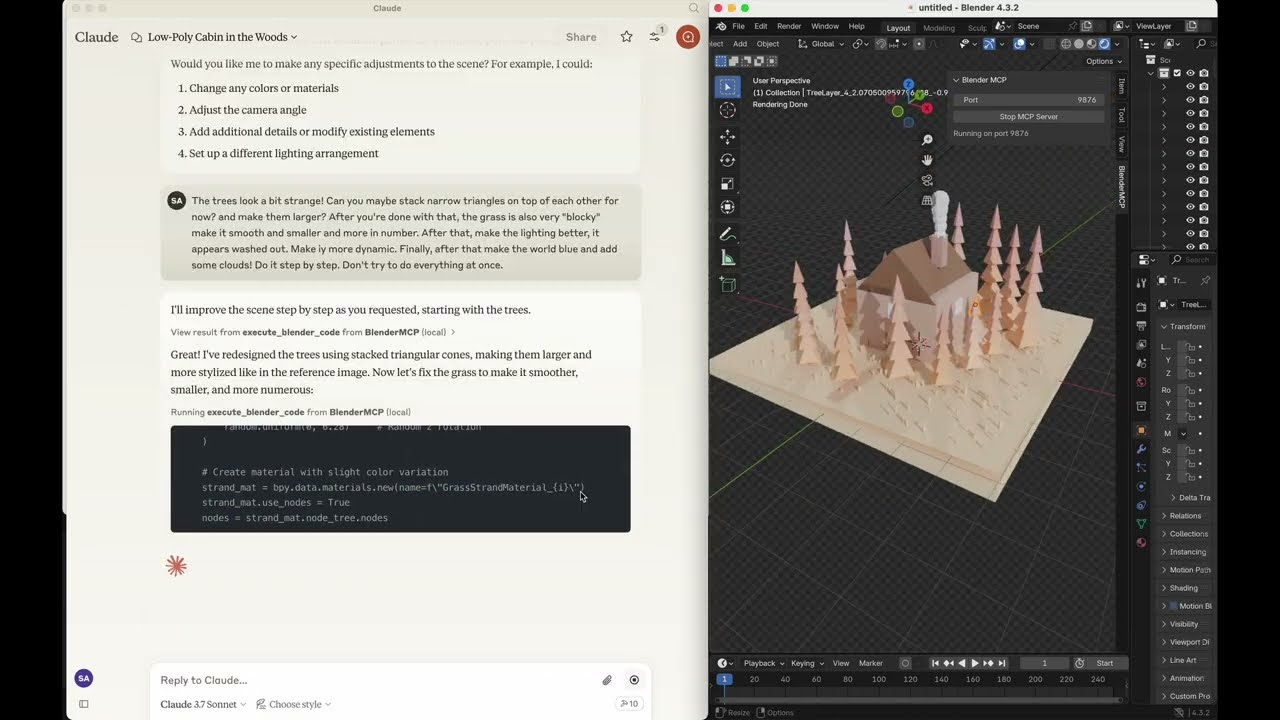
The Execution Layer: MCP Connectors Are Rewriting Who Can Use Game Dev Tools
Nine Claude connectors for Blender, Autodesk, and Adobe dropped in a single release. Meanwhile, community MCP servers have been executing natural-language commands inside Houdini, Maya, and Unreal for months. This isn't just automation — it's a fracture in what tool expertise actually means.
 AI in Gaming
Nexon Bets Big on AI With 'Mono Lake' Platform, Promises More Innovation and Less Code
Arc Raiders' publisher unveiled its end-to-end AI intelligence platform at a Tokyo briefing, claiming billions of player sessions will empower developers — not replace them. The GDC 2026 survey tells a different story about how developers feel.
 AI in Gaming
The AI Paradox: 52% of Game Developers Say AI Is Harmful — While 52% of Studios Adopt It Anyway
The GDC 2026 State of the Industry survey revealed a perfect paradox: developer opposition and corporate adoption have hit the exact same number. Here's what the data actually says, and why the rift between creators and executives is only getting wider.