
Xbox's AI Copilot Is Here — But Can Microsoft Keep Its 'No Slop' Promise?
Microsoft Wants to Be the 'Good Guy' of Gaming AI
At GDC 2026, Microsoft did something unusual for a company that has spent the last three years injecting Copilot into every product it sells: it asked gamers to trust it.
Gaming AI General Manager Haiyan Zhang and Product Manager Sonali Yadav took the stage to unveil three AI features heading to Xbox — Gaming Copilot on consoles, Auto Super Resolution for the ROG Xbox Ally X, and an AI-powered highlight reel. But the presentation was less about the tech and more about the vibe. The word that kept coming up was not "revolutionary" or "transformative." It was "assistive." Microsoft wants you to know that its AI is here to help, not to replace anyone or anything.
This messaging did not happen in a vacuum. New Microsoft Gaming CEO Asha Sharma, who succeeded the retiring Phil Spencer on February 23, 2026 after serving as president of product in Microsoft's CoreAI division, opened her tenure with a direct promise: "I will not flood our ecosystem with slop. We won't have careless output, we won't have derivative work."
It is the right thing to say. Whether Microsoft can actually follow through — while Satya Nadella continues to bet the entire company on AI — is the trillion-dollar question.
What Gaming Copilot Actually Does
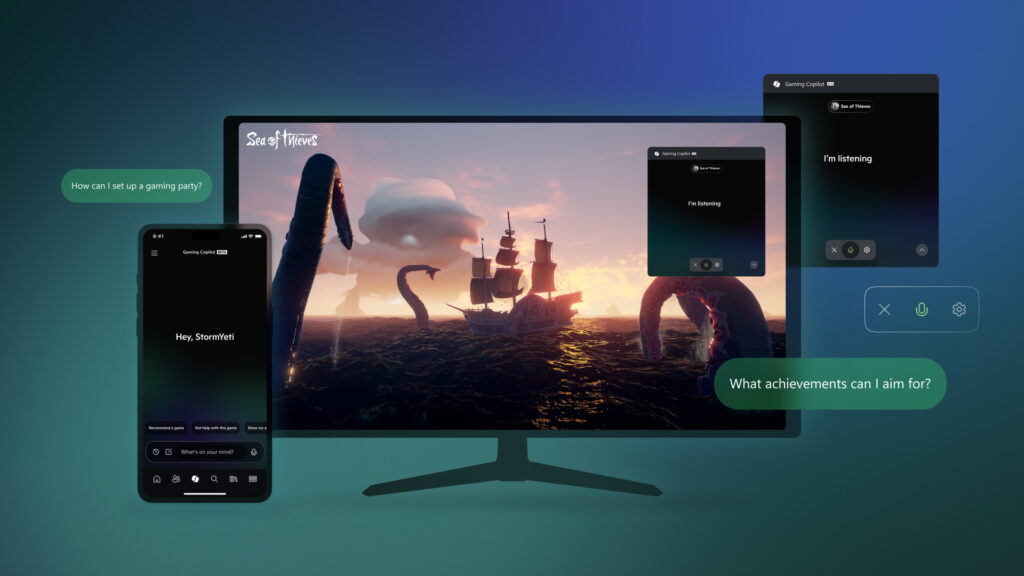
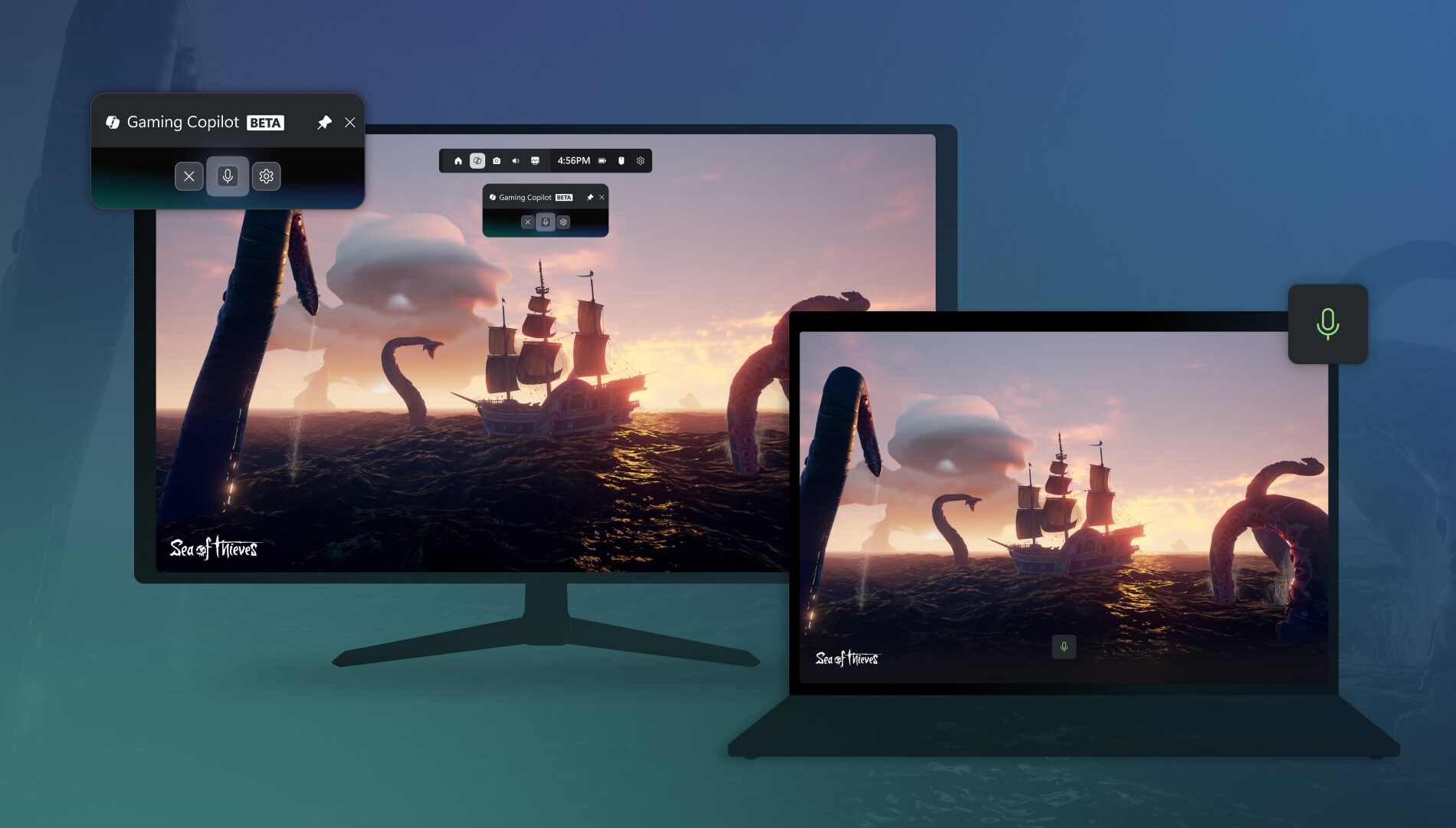
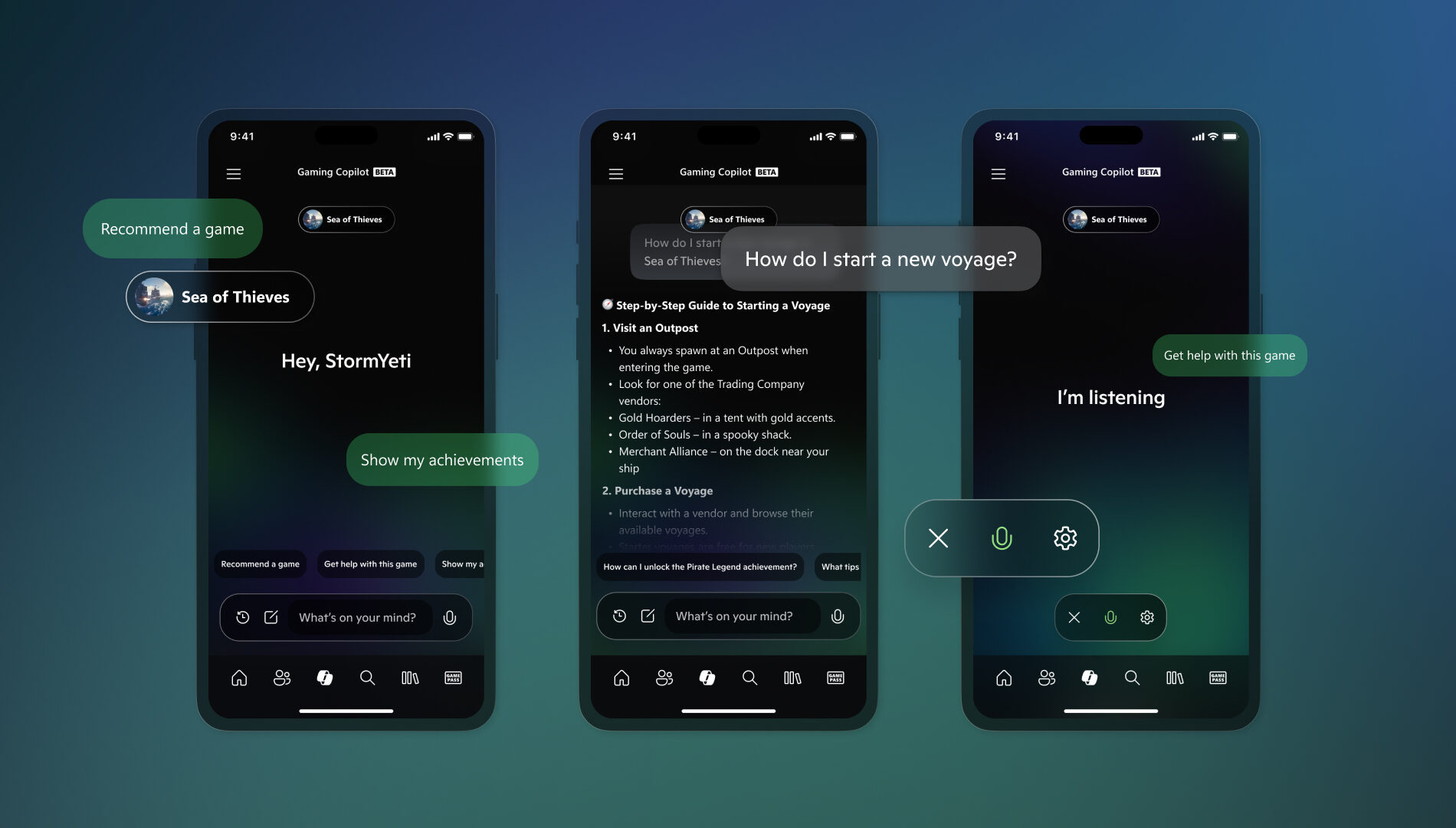
Strip away the corporate language and Gaming Copilot is, at its core, an LLM-powered chatbot that knows what game you are playing. It has been in public beta on Windows via the Xbox Game Bar since mid-2025, and it rolled out to the Xbox mobile app and select handheld devices later that year. The GDC 2026 announcement confirmed what many expected: it is coming to Xbox Series X|S consoles later this year.
The demo showed three specific use cases:
- Forza Horizon: A player asks how to optimally tune a Ford Escort for a specific race. Copilot provides voice-guided instructions on suspension, tire pressure, and gear ratios.
- Sea of Thieves: A new player asks for beginner tips. Copilot explains crew roles, sailing basics, and combat fundamentals.
- Diablo 4: A player wants to know where to earn a specific quest drop. Copilot identifies the zone, the enemy type, and the drop rate.
None of this is magic. Any of these answers could come from a GameFAQs walkthrough, a YouTube tutorial, or a five-second Google search. The value proposition is context and convenience — Copilot knows you are currently in Forza and can see your screen, so it skips the preamble and gives you relevant answers immediately. Think of it as having a friend who has already finished the game sitting on the couch next to you, except that friend is a large language model running on Microsoft's Azure servers.
The Usage Data Tells an Interesting Story
Microsoft shared early testing data that reveals how people actually use the thing, and the breakdown is more revealing than the feature list:
| Usage Type | Percentage |
|---|---|
| Direct game help | 30% |
| Game discovery | 25% |
| Casual conversation | 19% |
| Other | 26% |
The 30% game help figure is expected — that is the core pitch. But 25% using it for discovery is significant. Players are asking Copilot to navigate the Xbox Game Pass catalog and recommend games based on their play history. That is not just an AI assistant; it is an AI salesperson for Microsoft's subscription service. And 19% are just... chatting with it. Nearly one in five users treats Gaming Copilot as a conversational companion while gaming.
Auto Super Resolution: The AI Feature Nobody Will Complain About
While Gaming Copilot will inevitably spark debates about AI's role in gaming, the second announcement from GDC is the kind of AI application that just works: Automatic Super Resolution (Auto SR) is coming to the ROG Xbox Ally X handheld in April 2026.
Auto SR operates at the OS level. It renders games at a lower internal resolution to hit higher frame rates, then runs a convolutional neural network to upscale the output back to native resolution — all without game developers needing to integrate anything. It works on supported DirectX 11 and DirectX 12 titles automatically.
The performance numbers are compelling. In a demo using Forza Horizon 5 at 1440p Ultra settings on the Ally X, frame rates jumped from approximately 38 FPS to 51 FPS — a roughly 30% improvement. That is the difference between "barely playable" and "smooth enough to enjoy" on a handheld device, and it comes for free via a software update.
There is a catch: Auto SR requires a Neural Processing Unit (NPU), which means it only works on the Ally X with its AMD Ryzen AI Z2 Extreme processor. The standard, cheaper ROG Xbox Ally does not have the hardware. This is a preview of a future where NPU-equipped handhelds get meaningful performance advantages through software alone — and where the budget options fall further behind.
The third AI feature, an AI-powered highlight reel, automatically clips notable gameplay moments like boss defeats and multiplayer kills. It recently launched for Xbox Insiders on Ally devices. It is a nice quality-of-life addition, though hardly groundbreaking — PlayStation and NVIDIA's GeForce Experience have offered similar features for years.
The 'No Slop' Pledge and Why It Matters
Asha Sharma's appointment as Microsoft Gaming CEO was itself a statement. She came from Microsoft's CoreAI products division — the heart of the company's AI push. In any other context, hiring an AI executive to run your gaming division would signal an acceleration of AI integration. Instead, Sharma's first public move was to draw a line.
"I think that with any new technology, it brings possibilities as a tool, but even more important, especially now — we need to draw lines on what we won't do," Sharma said.
Chief Content Officer Matt Booty reinforced the message: "We've got no pressure from Microsoft, there are no directives on AI coming down. Our teams are free to use any technologies that might be beneficial, whether it's helping write code or check for bugs — things more in the production pipeline."
And Haiyan Zhang added the developer-facing reassurance: "We really believe that creative control should always stay with the game creators, the game development team. With the AI features that we are experimenting and exploring, this is really to support the vision of the team."
This is a lot of executives saying the same thing three different ways, which is either a sign of genuine alignment or a very well-coordinated PR strategy. Probably both.
Why the Skepticism Is Warranted
Here is the uncomfortable reality. Microsoft owns Activision Blizzard, Bethesda, id Software, Obsidian, Ninja Theory, Double Fine, inXile, Mojang, and MachineGames. That is a staggering portfolio of studios. The financial pressure to use AI to reduce headcount and accelerate production timelines at these studios is immense — particularly after Microsoft laid off 1,900 gaming employees in January 2024 and another 650 in September — shedding roughly 2,550 jobs in a single year.
Saying "we won't make AI slop" while simultaneously integrating an AI assistant into every Xbox is a tightrope walk. The distinction Microsoft is drawing — AI as a player-facing assistant versus AI as a replacement for creative labor — is valid but fragile. Today's assistive tool has a way of becoming tomorrow's mandatory workflow.
The gaming industry has seen this before. Microtransactions started as "just cosmetics." Season passes started as "just extra content." Every controversial monetization model began with modest, reasonable-sounding promises. Players are right to view "no AI slop" with the same scrutiny.
The Content Creator Problem Microsoft Cannot Ignore
Perhaps the most interesting detail from the GDC presentation was buried in the fine print: Microsoft is "exploring" licensing deals to compensate content creators whose guides and walkthroughs are used to train Gaming Copilot.
This is a massive issue hiding in plain sight. When a player asks Gaming Copilot how to tune a car in Forza, where does that answer come from? It comes from the hundreds of YouTube videos, Reddit posts, and dedicated guide websites created by content creators who monetize their work through ads and sponsorships. Gaming Copilot effectively distills their knowledge into an instant answer — and the player never visits their website or watches their video.
Sonali Yadav acknowledged the tension during the GDC presentation but offered no specifics on how compensation would work, how much money would change hands, or when any deals might materialize. The word "exploring" is doing an enormous amount of heavy lifting.
Microsoft does have some broader infrastructure here. The company launched its Publisher Content Marketplace in early 2026, a platform designed to broker licensing deals between AI companies and content publishers. Publishers can set their own terms and pricing. But gaming content creators — individual YouTubers, small guide websites, Reddit communities — are not the same as institutional publishers. The logistics of fairly compensating thousands of individual creators for their collective contribution to an AI's knowledge base is a problem nobody has solved.
The alternative — simply scraping the internet and calling it "fair use" — is what most AI companies do. Microsoft is at least acknowledging the ethical question. But acknowledging a problem and solving it are very different things.
How This Compares to the Competition
Microsoft is not the only company pushing AI into gaming, but it is the furthest along in terms of a console-level integration strategy.
Sony has been notably quieter about AI. PlayStation's approach has centered on AI-enhanced features within specific first-party titles rather than a platform-wide AI assistant. The PS5 Pro's machine learning upscaler operates at the hardware level but does not have the conversational layer that Gaming Copilot offers.
Nintendo has taken a narrower approach with the Switch 2, leveraging NVIDIA's Tensor Cores for DLSS upscaling and AI-powered GameChat features like face tracking and background removal. But there is no conversational AI assistant — Nintendo is using AI for graphics and communication, not gameplay guidance.
NVIDIA continues to push DLSS as its AI flagship, with version 4.5 generating up to five AI-predicted frames for every real rendered frame. But NVIDIA's AI operates exclusively at the graphics pipeline level — it makes games look and run better, but it does not talk to you about them.
Steam and Epic Games Store have no announced AI assistant features, though both platforms use recommendation algorithms.
This puts Xbox in a unique position: it is the only console platform attempting to integrate a conversational AI assistant directly into the gaming experience. Whether that is visionary or premature depends entirely on execution.
The Real Test Is Coming
Gaming Copilot on PC and mobile has been a controlled experiment. The user base is smaller, the expectations are lower, and the backlash threshold is higher because PC gamers are accustomed to optional overlay features. Consoles are different.
When Gaming Copilot arrives on Xbox Series X|S later this year, it will be in front of tens of millions of users who did not ask for it. The console audience is less tolerant of unwanted features, more sensitive to privacy concerns (is Microsoft watching my gameplay?), and more likely to view any AI integration as a step toward the "soulless slop" that Sharma promised to avoid.
Microsoft will need to navigate several specific challenges:
- Opt-in vs. opt-out: If Gaming Copilot is enabled by default, the backlash will be immediate. If it is buried in settings, adoption will be minimal. The middle ground — prominent but optional — is narrow.
- Data usage transparency: Players will want to know exactly what screen data and gameplay information is being sent to Microsoft's servers. The privacy policy needs to be crystal clear.
- Accuracy: Every wrong answer from Gaming Copilot will be screenshot and shared on social media. LLMs hallucinate. When Copilot tells a player to go to the wrong zone in Diablo 4, the memes write themselves.
- Impact on creators: If Gaming Copilot visibly reduces traffic to guide websites and YouTube channels, the creator community will mobilize — and that community has significant influence over public perception.
Where This Goes From Here
Microsoft is making a calculated bet. The company believes that AI assistants will become a standard feature of gaming platforms within the next few years, and it wants to be first. Being first means absorbing the criticism, working through the ethical questions, and building trust before competitors arrive with their own versions.
The "no slop" promise is the foundation of that trust-building exercise. Sharma, Booty, and Zhang are all saying the right things. The developer-facing message is clear: AI will not be forced on your creative process. The player-facing message is clear: AI is here to help you, not replace your experience. The creator-facing message is... developing.
The strongest signal from GDC 2026 is not any single feature — it is Microsoft's apparent recognition that the gaming community will not accept AI integration the way enterprise customers accepted Copilot in Microsoft 365. Gamers are a fundamentally different audience. They care about authenticity, about creative integrity, about the human element in the experiences they pay for. You cannot Copilot your way through that skepticism.
Asha Sharma has drawn a line. The next 12 months will determine whether Microsoft can hold it — or whether the gravitational pull of the company's broader AI ambitions drags Xbox across it.
Sources
- Xbox AI: GDC 2026 Reveals Gaming Copilot & No "AI Slop" - Outlook Respawn
- Microsoft's Xbox AI assistant Gaming Copilot is coming to consoles this year - Windows Central
- Xbox Is Marching Forward With AI Features But Says It Wants To Protect Content Creators - Kotaku
- New Xbox boss promises no 'soulless AI slop' - PC Gamer
- New Xbox CEO Asha Sharma doubles down on 'no AI slop' promise - PCGamesN
- ROG Xbox Ally X to get Auto Super Resolution boost in April - Tom's Hardware
- Gaming Copilot AI Assistant Is Coming To Current-Gen Xbox Consoles This Year - GameSpot
- Gaming Copilot (Beta): Your personal gaming sidekick - Xbox.com
- Your Personal Gaming Sidekick Awaits: Gaming Copilot (Beta) - Xbox Wire
- Asha Sharma named EVP and CEO, Microsoft Gaming - Microsoft Blog

Founder of GGS Blog and Site Reliability Engineer at Box. I write about gaming, AI in gaming, and game development with a technical lens — 10+ years in software engineering, 20+ years as a gamer. My work focuses on what the tech actually means for players.
Never miss a post
Subscribe to the GGS Blog newsletter for gaming news, tech insights, and AI in the game industry — delivered straight to your inbox.
Free. No spam. Unsubscribe in one click.
Comments
What to Read Next
Continue exploring our coverage of gaming, technology, and AI.
 AI in Gaming
The Execution Layer: MCP Connectors Are Rewriting Who Can Use Game Dev Tools
Nine Claude connectors for Blender, Autodesk, and Adobe dropped in a single release. Meanwhile, community MCP servers have been executing natural-language commands inside Houdini, Maya, and Unreal for months. This isn't just automation — it's a fracture in what tool expertise actually means.
 AI in Gaming
Nexon Bets Big on AI With 'Mono Lake' Platform, Promises More Innovation and Less Code
Arc Raiders' publisher unveiled its end-to-end AI intelligence platform at a Tokyo briefing, claiming billions of player sessions will empower developers — not replace them. The GDC 2026 survey tells a different story about how developers feel.
 AI in Gaming
The AI Paradox: 52% of Game Developers Say AI Is Harmful — While 52% of Studios Adopt It Anyway
The GDC 2026 State of the Industry survey revealed a perfect paradox: developer opposition and corporate adoption have hit the exact same number. Here's what the data actually says, and why the rift between creators and executives is only getting wider.